
Halloween: 10 Must-Watch Films for an October 31st Marathon
From Psycho to Trick 'r Treat: The Perfect Playlist for All Hallows' Eve

October 31st doesn't call for just any film—it demands the right one, something that captures the essence of carved pumpkins, creaking doors, and trick-or-treating. This list brings together ten titles that have shaped how we imagine this beloved holiday, spanning absolute genre classics, thematic cult favorites, and horror films built for binge-watching. The order isn't chronological but rather follows the night's iconic progression: from foundational ritual to party-night chaos, culminating in the cursed chapter that turned Halloween into a franchise.
-
Halloween - The Night of Witches
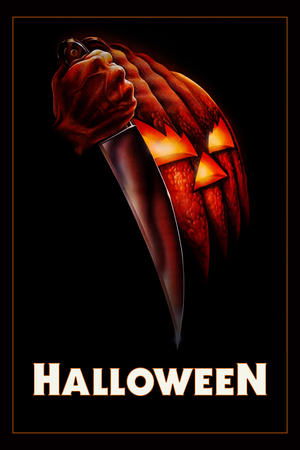
Halloween (1978)You can't talk about Halloween night without starting here. In 1978, John Carpenter takes a white mask, a mechanic's suit, and a kitchen knife, and transforms a small-town party into a ritual of terror that never ends. Michael Myers has no motive and no psychology: he is Evil returning home, and his slow walk has become the very heartbeat of the holiday.
The film essentially invents the modern slasher, but does so with lean direction and a soundtrack—composed by Carpenter himself—that is now as synonymous with Halloween as jack-o'-lanterns. The opening subjective sequence, the 5/4 theme, Jamie Lee Curtis as Laurie Strode: every element has entered the collective vocabulary of fear.
Watching it again on October 31st isn't nostalgia, it's a ritual. It's the film that taught genre cinema that the most effective horror doesn't need explanations: just a night, a house, and someone waiting in the dark.
-
Trick 'r Treat
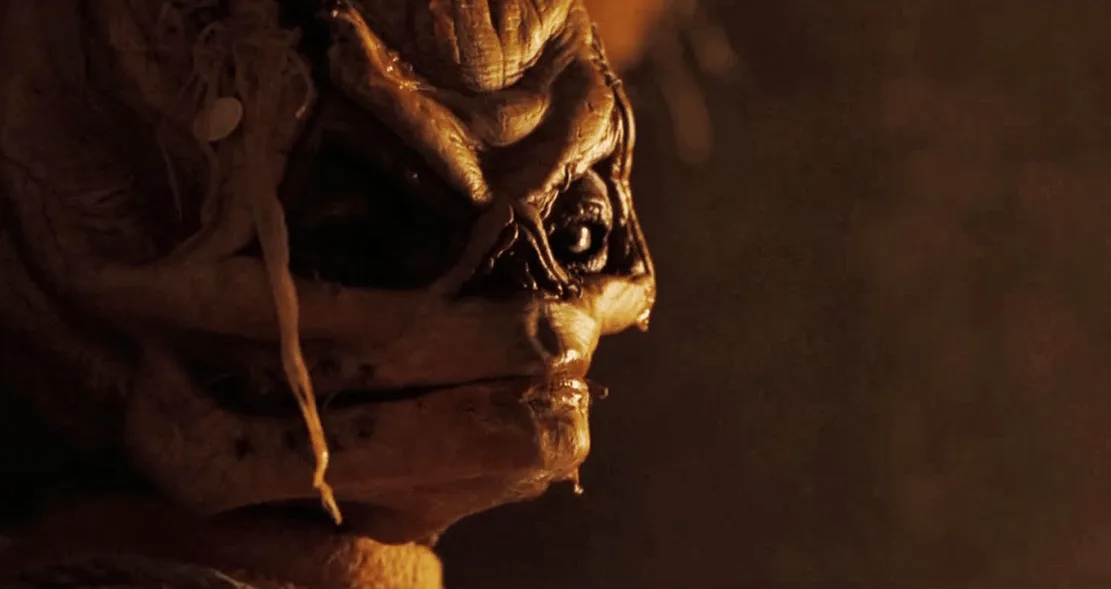
Trick 'r Treat (2007)If Halloween had an official manifesto, this would be it. Michael Dougherty's directorial debut weaves four stories into a single night, bound together by Sam, a child in a burlap sack who punishes those who break the rules of the holiday. Released quietly in 2007, it has grown into an absolute cult classic over the years, eventually becoming the quintessential Halloween film.
Its anthology structure allows it to shift tone with each segment: dark fairy tale, body horror, revenge, grotesque comedy. It's a kaleidoscope that celebrates the holiday through every cliché—jack-o'-lanterns, costumes, poisoned candy—without ever taking itself too seriously.
Perfect for a group viewing, it's the film you recommend to anyone seeking the full "Halloween atmosphere" condensed into ninety minutes. And Sam has become a genre icon, ranking alongside Ghostface and Myers.
-
The Exorcist
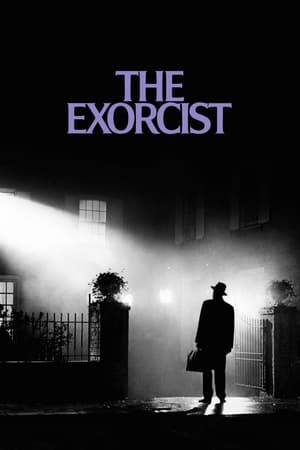
The Exorcist (1973)Halloween calls for the film that sent audiences fleeing theaters in sheer panic. In 1973, William Friedkin adapted William Peter Blatty's novel and delivered cinema's definitive metaphysical horror: the possession of twelve-year-old Regan MacNeil and the battle of faith between two priests. No masks, no slashers—just the creeping dread that evil could slip into any ordinary bedroom.
This is a classic that works best watched with others and the lights on. Its power lies in the deliberate pacing that builds to an explosion, in the creation of an atmosphere that we'd now call slow burn but was then pure dramatic tension.
It works at Halloween because it taps into our most primal fear: one you can't outrun. It's the "serious" choice of the evening—the film that cuts through a horror marathon and raises the stakes.
-
Shining
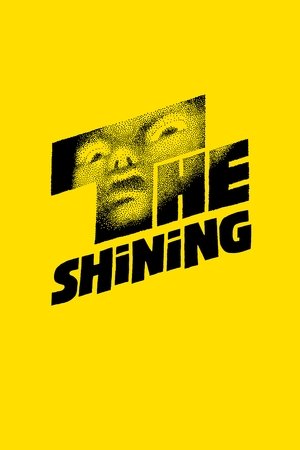
The Shining (1980)Stanley Kubrick transforms Stephen King's novel into a maze of neuroses, symmetries, and impossible corridors. The Overlook Hotel is cinema's most famous haunted house, but the real monster is Jack Torrance's descent into madness—a performance by Jack Nicholson that slides into insanity one smile at a time. Perfect for October 31st, when the line between waking and nightmare blurs.
Every frame is a puzzle: corridors leading nowhere, blood flooding the elevator, the twins in the ballroom. Kubrick constructs a cold, geometric horror that deepens with each viewing and has spawned decades of theories.
It's the ideal choice for those seeking horror that's also great cinema: a claustrophobic nightmare that, like the snow surrounding the Overlook, never truly melts away.
-
Nightmare - Dal Profondo della Notte
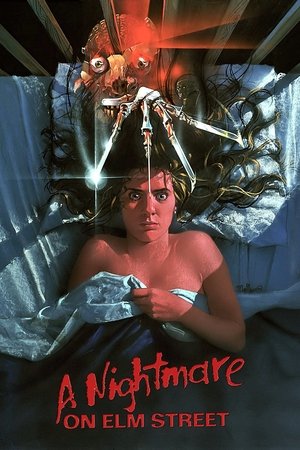
A Nightmare on Elm Street (1984)In 1984, Wes Craven rewrites the rules of horror: the killer doesn't lurk in the basement—he waits for you in your dreams. Freddy Krueger, burned alive by the parents of the neighborhood, returns in the nightmares of Elm Street's teenagers and kills them where no one can come to their rescue. The concept is brilliant because it preys on our most vulnerable moment: when we close our eyes.
The film is also a visual powerhouse: the boundaries between dream and reality blur and distort, the body becomes a playground for terror, and Tina's death remains one of the most brutal sequences in the genre to this day. Robert Englund crafts a charismatic and theatrical villain, terrifying and oddly entertaining at once.
It works at Halloween because it exploits the most primal fear of all: the fear of falling asleep. And after binge-watching, every twisted dream will feel a little more real.
-
Psycho
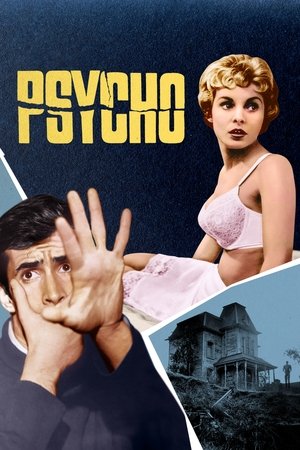
Psycho (1960)It all starts here. In 1960, Alfred Hitchcock takes a true crime story and transforms it into the film that taught audiences to fear the shower. The Bates Motel sequence has become legendary in cinema history, but Psycho is far more than a notorious murder—it's a study of a broken man, Anthony Perkins, and a woman who no longer exists.
Hitchcock plays with the viewer, switching protagonists halfway through and proving that no one is safe. It's psychological horror without monsters, where fear comes from masterful direction and Bernard Herrmann's piercing score.
For Halloween night, this is essential viewing: the film that explains where everything else comes from. A classic that, sixty years later, hasn't lost an ounce of tension.
-
The Texas Chain Saw Massacre
The Texas Chain Saw Massacre (1974)In 1974, Tobe Hooper made a film on a shoestring budget that looks like a raw documentary and still leaves audiences breathless today. The story of five young people traveling through rural Texas and the family of butchers they encounter is a visceral nightmare shot as if it were real. Leatherface has become one of the most disturbing faces in the genre.
There's no irony, no distance: the film puts the heat, sweat, and dust on you, dragging you through an escalation that's almost unbearable. It's the kind of horror that proved how little you need to terrify an audience if the director knows where to point the camera.
For Halloween, this is the "heavy" title of the evening—one for strong stomachs. Handle with care, but essential for understanding the evolution of the genre.
-
Poltergeist - Demoniache Presenze
Poltergeist (1982)Produced and partly conceived by Steven Spielberg and directed by Tobe Hooper, Poltergeist is the quintessential haunted house. The Freeling family lives in a perfect suburban neighborhood until spirits abduct their youngest daughter through the television screen. This is horror that transforms the family living room—the safest place we know—into a theater of terror.
The film blends Spielberg's sense of adventure with Hooper's tension, and the result is a classic that works both as spectacle and as nightmare. The scene of the television turning on by itself has become an iconic image, quoted and parodied countless times.
Perfect for a Halloween marathon because it speaks to family, home, and what lurks beneath the floorboards: the simplest fears, the ones that linger.
-
Scream
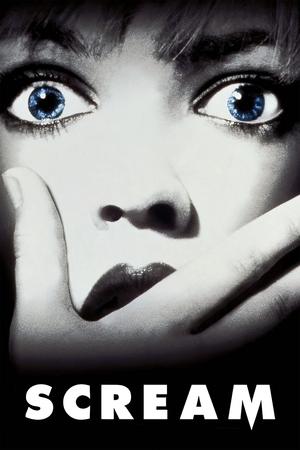
Scream (1996)In 1996, Wes Craven rewrites the horror genre, this time playing with the rules themselves. Scream is a meta-film: the characters know the clichés, they reference them, and because of this, they die. Ghostface becomes an iconic mask, and Kevin Williamson's screenplay transforms terror into an intellectual game without losing an ounce of suspense.
The film is also a celebration: packed with references, witty lines, and jump scares orchestrated with precision. It's the perfect title for the final stretch of a horror marathon, when the group is more relaxed and you can laugh and jump out of your seat in the same breath.
It works at Halloween because it's horror meant for company: the kind you watch with friends, commenting, screaming, and guessing who the killer is. A modern classic that defined an entire generation of horror fans.
-
Halloween III: Season of the Witch
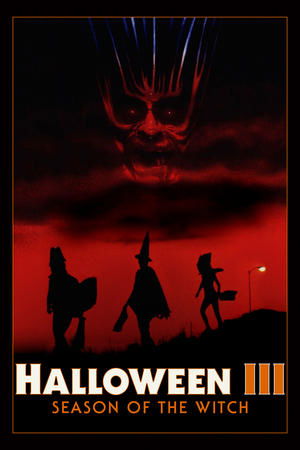
Halloween III: Season of the Witch (1982)It's the cursed chapter, the one that blindsided audiences back then because it had nothing to do with Michael Myers. And that's precisely why it's now the most authentically Halloween film in the entire franchise. Tommy Lee Wallace directs a story of witchcraft, Halloween masks, and candy factories hiding a diabolical scheme for the night of October 31st. A failed anthology attempt, a daring experiment, a cult film that time has vindicated.
The film is saturated with atmosphere: the soundtrack, the Silver Shamrock masks, the jingle that gets stuck in your head. It's a tribute to the holiday itself, crafted with a taste for the grotesque and paranoid that feels surprisingly contemporary today.
Ending with this title is a way to celebrate Halloween without Michael Myers, yet with everything that makes the holiday iconic. The chapter nobody wanted and now can't imagine living without.



 Enter
Comments
Delete Comment?
Are you sure you want to delete this comment? Its text and images are erased immediately and cannot be recovered.
Report comment
Select the reason for reporting