










The Verdict
Clay is the sole heir to the financial empire left by his father. He is engaged to Samantha, his mother's secretary, and the two seem intent on getting married.
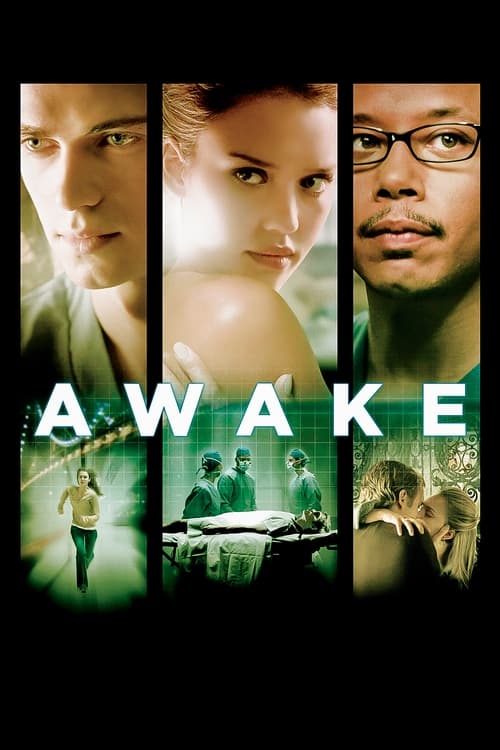
Clay is the sole heir to the financial empire left by his father. He is engaged to Samantha, his mother's secretary, and the two seem intent on getting married. Clay suffers from a serious heart condition and needs an operation. After his marriage to Samantha, Clay is hospitalized: a heart is available for the transplant he needs. In the operating room, Clay is anesthetized; a few minutes later, he realizes that while his body is motionless, his mind is still conscious, as is his perception of pain. Meanwhile, the operation begins... After an initial part where the characters are introduced and their relationships are outlined, Joby Harold's film transforms completely. From the moment Clay enters the operating room and is subjected to anesthesia, the film takes a visionary turn that the director fails to handle adequately, ending up lost in a grotesque and confusing cinematic dimension. The director starts with a very interesting narrative idea: there are cases where the mix of medications used for anesthesia does not have the desired effect; the body immobilizes but the patient remains conscious. Centered on this idea, the story is then divided into three acts. The first is an introduction, the second concerns the experience of "conscious anesthesia," and the third reorganizes the first two into a thriller structure, reinterpreting the previous data from a new perspective that will make both the story told so far and the characters appear from another point of view. The problem is that the central part crumbles in its own ambition to be a continuous flow of the protagonist's thoughts. To show the experience of conscious anesthesia, the director uses various cinematic tools: the protagonist's voice-over, which invades the screen with a series of expressions that (because of the Italian dubbing?) become unintentionally ironic, and the alternating montage of the protagonist's memories, brief flashes of his girlfriend, his mother, his father's death, in a sort of self-hypnosis that should take him away from the pain he is feeling during the operation but that in reality creates a visual confusion that fails to transform, as we said, into a stream of consciousness. In cinema, one of the most difficult things is to turn into images what in literature is called the "narrating I." It is a complex operation and requires extreme cinematic skill to prevent it from being reduced to a voice-over or over (that of a narrator, usually) that tells us the events of the story. The horror elements are only found in brief inserts of anatomical images that are glimpsed during the operation, to make the viewer a part of the pain experienced by the protagonist. The forced plot, the final reversal of roles, the inevitable twists that serve to create that minimum of narrative tension that brings the film to its conclusion are not enough to give solidity to a film always on the verge of collapsing on itself. And indeed, the film escapes the director's control, dissolves into its ambitions, and ends with simple and feel-good narrative solutions. The fear remains under the skin. Without managing to shake nerves and mind. In an anesthesia of the senses and thought that at least in this case seems really to work.
Comments
Comments (0)










Comments