











The Verdict
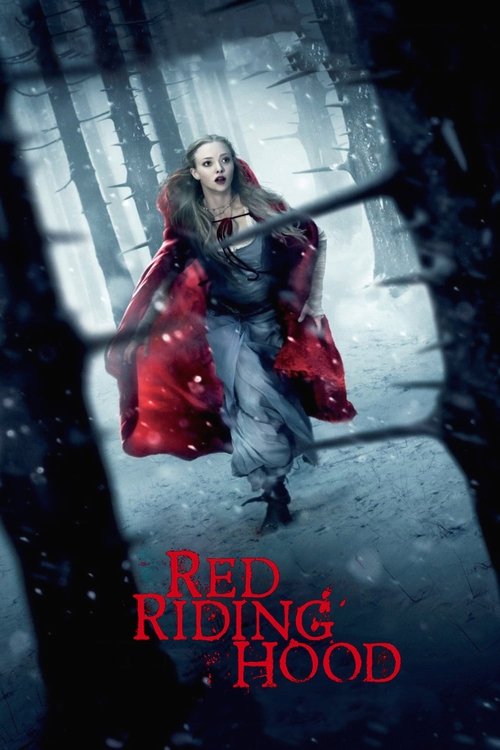
In a distant past, a village nestled in the woods and covered in snow is periodically visited by a huge wolf to which the inhabitants offer an animal as a sacrifice for each visit. One day, the wolf breaks the truce and kills a girl, unleashing fear and anger in the villagers who call upon Father Solomon, a wolf hunter who must free the village from the threat.
In a distant past, a village nestled in the woods and covered in snow is periodically visited by a huge wolf to which the inhabitants offer an animal as a sacrifice for each visit. One day, the wolf breaks the truce and kills a girl, unleashing fear and anger in the villagers who call upon Father Solomon, a wolf hunter who must free the village from the threat. Upon arriving at the location, Father Solomon reveals to the villagers that it is not a simple wolf, but a werewolf, and that during the day the culprit has human appearance and is surely hiding among them. During the new attack of the beast, Valeria, the sister of the murdered girl, has a close encounter with the monster who speaks to her, telling her to flee with him. At this point, the girl begins to suspect that the werewolf is one of her two suitors, the shy fiancé Henri or the charming Peter, whom she has always been in love with.
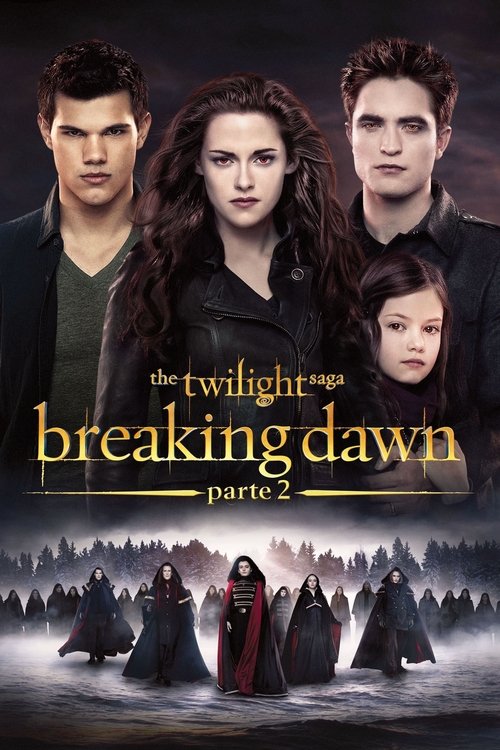
Vampires and werewolves are in vogue in cinema today, and we can understand where this success comes from. It is called "Twilight": first a literary saga that soon became cinematic, the target audience is female and ranges from 12 to 20 years old, it launched a handful of young actors into Hollywood's firmament, and the success was global. Of course, the vampires and werewolves that roam there are not those dear to the horror audience, they are not the bloodthirsty monsters that ancient legends have told us about, they are romantic teens who do not suck, do not bite, do not scratch but only give chaste kisses… in short, they are as fearsome as a kitten and less scary than the Pink Panther. But why talk about "Twilight" in the territory of "Red Riding Hood"? Only because there are also werewolves and teenagers here? Obviously, the reason is broader and starts with a certain Catherine Hardwicke, director of this and that film, who seems to have found a stylistic signature in the sentimental drama slightly (but moooolto slightly) contaminated with horror.
"Red Riding Hood" follows the Twilight formula to the letter, inherits the director, and thus aims at the same audience. Fortunately, there is less sloppiness, less saccharine, and the marginal contribution of Perrault's fairy tale gives it an extra edge. As can be understood from the plot, the fairy tale from which this film takes its title has little to do with it and appears as a simple pretext to create a familiar context for the audience. The wolf predictably becomes a werewolf, Red Riding Hood is no longer a child, the hunter is a man of the Church with silver-plated nails, and there is even an ambiguous grandmother, who in a dream scene becomes even the protagonist of the famous exchange of lines with her granddaughter "What big eyes you have! - To see you better!...".
Hardwicke directs the screenplay by David Johnson ("Orphan") without much fantasy, relying exclusively on a patinated aesthetic taste very stylish. In this regard, Mandy Walker's photography ("Australia"; "Beastly") is commendable, highlighting the red of the protagonist's cloak against the white snow, accentuating the contrasts. The wooded and snowy sets are also suggestive, reminiscent of those in "Sleepy Hollow" and consequently of some works by Hammer Film in the 60s.
As for the screenplay, if the whodunit mechanism (who is the werewolf?) works well with a decent plot twist, the same cannot be said for the characterization of the characters, all flat and almost interchangeable among themselves, starting with the protagonists. Amanda Seyfried ("Jennifer's Body"; "Letters to Juliet") does nothing but widen her eyes but does not seem very involved in the story, even worse the two anonymous contenders Shiloh Fernandez ("Jericho") and Max Irons ("Dorian Gray"). Gary Oldman ("The Dark Knight") puts all his professionalism into the role of the wolf hunter, but his character is not developed beyond the trauma of the wife killed, while Virginia Madsen ("Number 23"; "The Messenger"), who like wine improves with age, has such a marginal role that she seems wasted.
You can forget purely horror scenes. The big black wolf in computer graphics does not scare at all, does not transform directly, and the little blood it spills does it off-screen or in the dark.
"Red Riding Hood" is a mere aesthetic exercise that seeks to ride the wave of "Twilight's" success, aiming at the same audience. Visually sumptuous, artistically irrelevant, horrifically null. If you want a worthy horror adaptation of the Red Riding Hood fairy tale, then it is better to dust off Neil Jordan's "The Company of Wolves"… it's a whole other story!
Comments
Comments (0)










Comments