









The Verdict
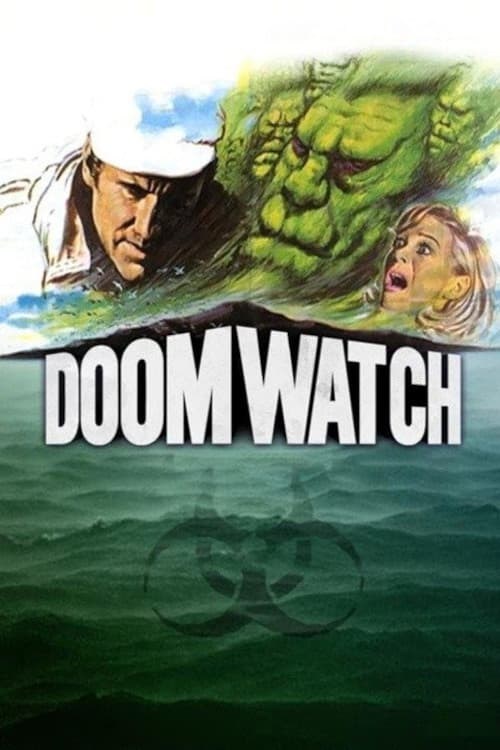
Dr. Del Shaw is sent by the Central Anti-Pollution Institute (better known as Doomwatch) to the British island of Balfe to check the level of water pollution.
Dr. Del Shaw is sent by the Central Anti-Pollution Institute (better known as Doomwatch) to the British island of Balfe to check the level of water pollution. Shaw immediately finds the distrust of the locals, who never appear cooperative, except for teacher Victoria Brown, who has been transferred to Balfe for two years now. Alarmed by some disturbing events that occur during his investigation, Shaw also discovers that some inhabitants of the country are affected by acromegaly, an illness caused by a hormone that affects the pituitary gland and physically transforms those affected, driving them to madness.
An interesting genesis behind "Doomwatch - The Monsters of 2001": born as a TV series for the BBC in 1970, "Doomwatch" hits the cinema in 1972, the year the show was canceled. Three television years for a series that addressed the ecological issue by linking it to the classic tropes of science fiction, sometimes contaminated by horror. The film directed by Peter Sasdy, already the author for the Hammer of "A Taste of Evil," "Prey" and "Hands of the Ripper," is produced by one of the direct competitors of the Hammer, the Tigon, another English production company that had already dealt with "The Witch Who Came from the Sea" and "Witchfinder General."
"Doomwatch" starts from the inevitable ecological anti-pollution premise to tell a story that initially has a strongly Lovecraftian flavor: the common man, representative of reason and believer in the rational, finds himself immersed in a dimension that has something illogical, almost supernatural. I say almost because, unlike Lovecraft where one delves into horrors that have nothing tangible, in "Doomwatch" science can explain and solve everything. These "Monsters of 2001," as the Italian subtitle somewhat naively proclaims, are creatures generated by human recklessness and anchored to a hypothetical reality verifiable in a not-too-distant future, that 2001 that Kubrick had established as the date of the man's futuristic rebirth.
Sasdy's film has countless potentialities, linked above all to an attractive subject, which are never really exploited, indeed they manage to be culpably reduced by a monotonous screenplay that especially in the final scenes seems to fear the confrontation with genre cinema. "Doomwatch" continuously travels the line of "I could but I don't want to," assumes a somewhat pretentious tone of someone who would like to suggest a moral without really having the ability/possibility. Praiseworthy and interesting is the ecological trail, which gives an original key to the story and provides reflections strongly linked to the times in which the film was made, capable of generating suggestions of fanta-horror of all respect. However, the horror is continuously suggested and never really explored, in continuous coitus interruptus that in the long run are frustrating. The mutants are there, it is said that they are also quite violent but in reality they never do anything. The tension practically does not exist, except for the scene of the attack in the barn, and one never really manages to perceive that atmosphere of danger in which the main character should be immersed. Even the ending, then, presents an anticlimax that brings the various elements to an implosion, managing to leave a bitter taste in the viewer's mouth that is not understood if it is due to the bad happy ending or the lack of a pregnant event that concludes the story.
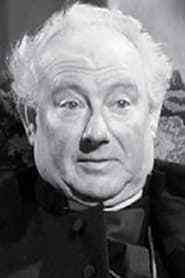
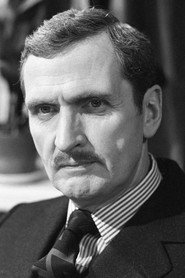
The protagonists of the TV series, Dr. Quist and Dr. Ridge (always played by John Paul and Simon Oates) appear in marginal roles, while it was decided to elect as protagonist a character created ex novo for the film, Dr. Shaw, played by good Ian Bannen ("Braveheart"). The teacher played by Judy Geeson ("The Offence"; "Inseminoid") is instead a character of rare uselessness, inserted in a too evident manner to give a hold with the "civilization" external to Dr. Shaw and lay the foundations for an inevitable romantic subplot that however in this film does not manage to blossom.
"Doomwarch - The Monsters of 2001" therefore presents itself as a poorly executed film, as interesting as incomplete and above all poorly managed, to which also contributes negatively the somewhat too slow pace. Certainly to be recovered for the originality of the subject and the topic treated, even if it is right to be prepared for the viewing.
Recently distributed for the first time in Italian DVD by Mosaico Media in the complete edition.
Rating rounded up.
Comments
Comments (0)





Comments