


















The Verdict
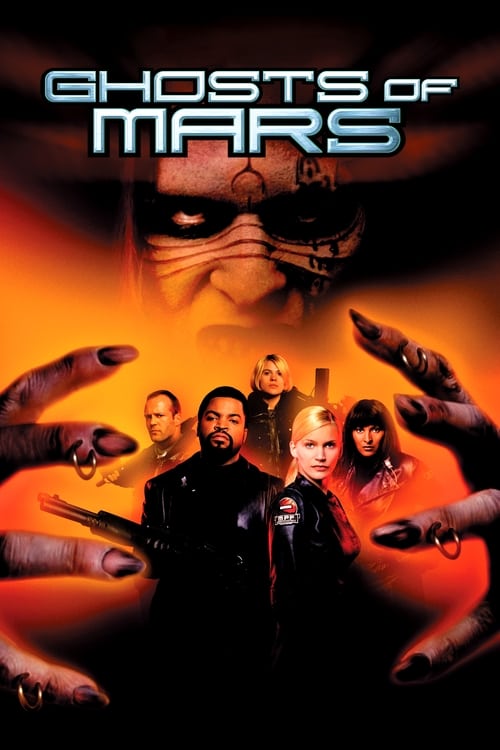
Mars, year 2176: a team of special police forces must go to a remote outpost to transfer the dangerous criminal "Desolation" Williams from the local prison to the maximum-security prisons of the city of Chryse. Upon arrival, they soon discover that the entire province has been invaded by a mysterious force that has transformed the miners, and anyone who has come into contact with them, into bloodthirsty mutants.
Mars, year 2176: a team of special police forces must go to a remote outpost to transfer the dangerous criminal "Desolation" Williams from the local prison to the maximum-security prisons of the city of Chryse. Upon arrival, they soon discover that the entire province has been invaded by a mysterious force that has transformed the miners, and anyone who has come into contact with them, into bloodthirsty mutants. Police and criminals join forces to escape the terrible threat. Absent from the scene since "Vampires" (1998), John Carpenter returns with this "Ghosts of Mars" (presented, out of competition, at the Venice Film Festival) which represents a sort of sum of the peculiarities of his cinema: the strong and "indestructible" heroine (Natasha Henstridge takes the place of Jamie Lee Curtis in "Fog" and "Halloween"), the alien force that, hidden behind human appearances, is ready to take over humanity ("The Thing", "They Live"), the western setting (very similar to "Vampires") with a siege of the fort, where criminals and police join forces to save their skins ("Assault on Precinct 13"). The only novelty is represented by the narrative style: the story, in fact, told through a series of flashbacks, unfolds through the accounts of the various protagonists that intertwine, something unusual for a Carpenter film, a director who prefers a "classic" approach, focused on the idea of space-time unity. The cast is of a decent level, but while the idea of entrusting the beautiful Natasha Henstridge ("Species" and "Species 2") with the role of the heroine-policewoman seems successful, the same cannot be said for the choice of rapper Ice Cube for the role of the criminal "Desolation" Williams: walk and style of a rapper, excessive gesticulation, and ruddy face do not suit the figure of a "terrible criminal" that his character was supposed to convey. For fans of the genre, there are no shortage of splatter sequences, with limbs and heads chopped off everywhere, while the digital effects, probably due to the low budget available, do not prove to be up to modern productions. In short, Carpenter gives us a film full of his unmistakable style (with a typically Carpenterian soundtrack) and, at times, suggestive, but perhaps, as already happened with Argento with "Sleepless", it turns out to be a bit too self-celebratory and lacking in real elements of novelty; rather far from masterpieces like "The Thing" or "The Seme of Madness" but still enjoyable, especially for fans of the director.
Comments
Comments (0)










Comments