






The Verdict
Martha Caldwell became mute following the trauma of witnessing her parents' death when she was only a child. Now Martha is a woman and lives in a large villa in the French countryside with her uncle Ralph.
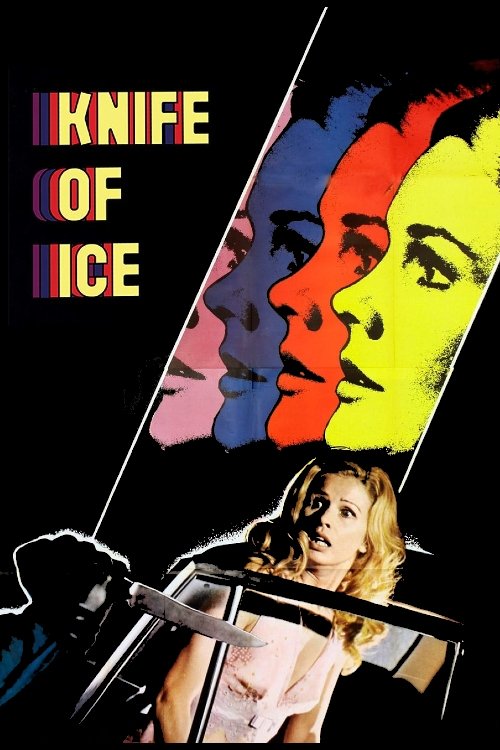
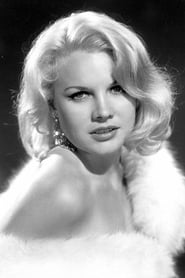
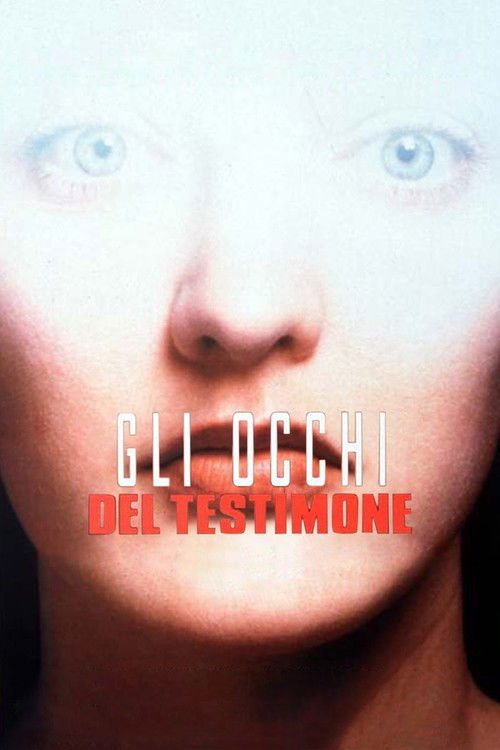
Martha Caldwell became mute following the trauma of witnessing her parents' death when she was only a child. Now Martha is a woman and lives in a large villa in the French countryside with her uncle Ralph. One day, her cousin Jenny arrives to visit, but on the very night of her arrival, she is murdered in the villa's garage. After a second murder and the discovery of strange satanic symbols, the police begin to follow the serial killer's trail, identifying a strange man with unsettling eyes and a heroin addict as the possible killer. After a series of soft-erotic thrillers ("Orgasmo", "So Sweet... So Perverse", "Paranoia"), Umberto Lenzi meets his fetish actress of the period Carroll Baker for the last time, and together they create "The Ice Sickle," a gripping thriller capable of differentiating itself from the rest. In fact, at that time – we are in 1972 – the trend was to produce thrillers that more or less explicitly referenced the atmospheres and stories of Dario Argento's early films, and Lenzi himself was not immune to this, since "Seven Orchids Stained with Red" is from the same year. With "The Ice Sickle," however, he looks elsewhere, breathes an international air that seems to aspire to Hitchcockian suggestions, immersing everything in a more intimate, typically nostrano setting. Indeed, it is the family the environment in which the narration takes place, among secrets, ambiguities, tragic pasts, jealousies, and complicity; but it is not the usual "little giallo" that sees the exhaustion of the plot in the usual family disputes over inheritance and horns, but the family is the glue and at the same time the background of the entire story. Blood ties are never at the center of the plot although they seem fundamental for the resolution of the knots, the characters are united by kinship but never appear inserted into the story forcibly as a function of their background; rather, one can note a constant functionality of the roles separated from the ostentation of the parental bond, and already only for this characteristic "The Ice Sickle" shows itself to be "different" and particularly attentive to writing. Yet not everything works perfectly in the script, cared for by Lenzi himself in collaboration with Luis G. de Blain ("When Marta Screamed from the Grave"). The story/misleading that concerns the satanist heroin addict – a character clearly modeled on the figure of Charles Manson, starting with the name Randy Mason – has too much space in the first part of the film, then being abruptly abandoned in the second, and the same motive that drives the killer to kill is as improbable as flimsy. These are not real trifles, but they are not elements capable of compromising the success of the film either. In favor, there is an interesting and well-conceived story, supported by some well-drawn and well-acted characters, such as Uncle Ralph, played by the genre veteran George Rigaud ("All the Colors of the Dark"; "Why Those Strange Drops of Blood on Jennifer's Body?") and above all Martha, the mute protagonist played by a very convincing Carroll Baker, here in one of the best performances of her career. Less convincing appears Alan Scott ("The Serpent"; "Emanuelle's Desires"), who plays the role of Dr. Laurent, a character too standardized and whose role in the story seems almost obligatory by tradition (the handsome man who becomes romantically involved with the protagonist) rather than by real narrative needs. Lovers of Italian exploitation will not find enough bread for their teeth this time, as Lenzi does not use the cards of violence and erotica, reducing the former to a minimum and completely excluding the latter. However, fans of good spaghetti thrillers have nothing to complain about, as "The Ice Sickle" is a worthy and original representative.
Comments
Comments (0)




Comments