












The Verdict
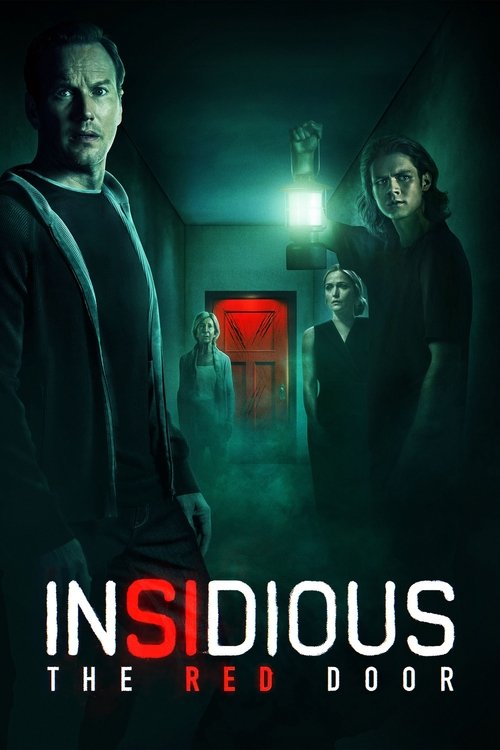
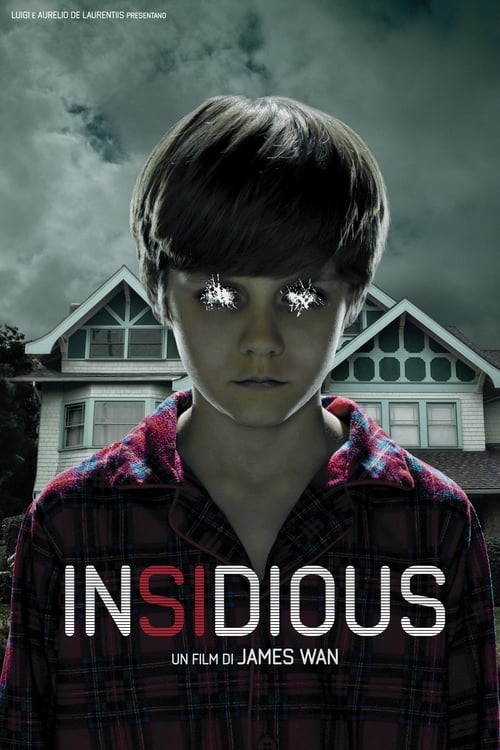
Ten years after *Insidious: Chapter 2* and a full thirteen years after the first film that started it all, the horror saga created by James Wan and Leigh Whannell returns to tell the story of the Lambert family, who taught us to fear astral journeys into the eerie dimension between life and death known as the Further.
Ten years after *Insidious: Chapter 2* and a full thirteen years after the first film that started it all, the horror saga created by James Wan and Leigh Whannell returns to tell the story of the Lambert family, who taught us to fear astral journeys into the eerie dimension between life and death known as the Further. Indeed, over the past decade, the *Insidious* saga has continued exploring prequel stories centered around the character of medium Elise Rainier, who died in the epilogue of the 2010 film. Now, with *Insidious: The Red Door*, the fifth film in the franchise, we face the first true sequel to the original storyline, bringing back all the actors from the first two films.
Nine years ago, young Dalton and his father Josh underwent an incredible experience that left the boy in a three-month coma, trapped in a limbo between life and death at the mercy of a horrific demon, and the father possessed by the spirit of a serial killer who nearly drove him to massacre his entire family. After these events, the memory of Dalton and Josh's last year was erased through hypnosis, and they lived in oblivion... until now.
Josh, who has since divorced his wife Renai, has just lost his mother Lorraine and has started experiencing strange hallucinations that prompted him to undergo medical tests. Dalton, meanwhile, who has a strained relationship with his father, is starting college and is also experiencing something unusual in his life. Specifically, the boy can travel outside his body when he sleeps and sees strange individuals who should be dead. Additionally, during an art class, he draws a red door that seems to remind him of something he can't quite pinpoint.
The memories of that traumatic year are slowly resurfacing, and eerie presences from the Further seem to be claiming both Dalton and Josh.
The primary interest in *Insidious: The Red Door* lies fundamentally in observing the lives of the Lambert family members, or rather the consequences of what they've been through. But this time, unlike the first two films that told a single story without time gaps, time has passed and left many wounds in the protagonists. It's no coincidence that *Insidious: The Red Door* opens with the funeral of Lorraine Lambert, a cornerstone in Josh's life and the true keeper of family secrets. But the death of the matriarch is just the latest in the turbulent events that have struck the Lamberts over the years, as the divorce between Josh and Renai has opened a true chasm in the man's psyche and directly led to another major issue: the deep conflict between Dalton and his father. It's clear that all these events, combined, make the protagonists particularly vulnerable, easily paving the way for the re-emergence of the repressed—a terrifying repressed that the film lets us experience by alternating between Josh's and Dalton's stories.
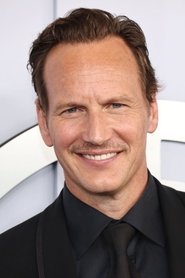
On one hand, *Insidious: The Red Door* follows the dynamics of teen-horror that partially emerged here and there in the two prequel chapters, tracking the college adventures of the introverted Dalton, once again played by Ty Simpkins. His friendship with the eccentric Chris (Sinclair Daniel), fraternity parties, art classes—all, of course, steeped in a funereal black and sprinkled with jump scares as if there were no tomorrow. On the other hand, we follow the much less interesting storyline of Josh, still portrayed by Patrick Wilson, who also makes his directorial debut here, seeking truths about his past and a father who might be the origin of all supernatural events in the Lambert family.
Although Patrick Wilson's direction is very focused on achieving the goal of scaring with the "see but don't see," a gloomy atmosphere, and violent sound jumps, showing good consistency with the saga's objectives, Scott Teems' (*Firestarter*, *Halloween Kills*) screenplay seems very uncertain about the path to follow to reintroduce the high concept at the heart of *Insidious*.
First of all, the film takes far too long to get to the heart of the matter, which is unnecessary given that this is the fifth chapter of a saga and it's assumed that the audience is already familiar with the narrative dynamics. Instead, Teems takes his time, giving more space than necessary to the protagonists' phase of realization, emphasizing how important it is to confront traumas rather than repress them.
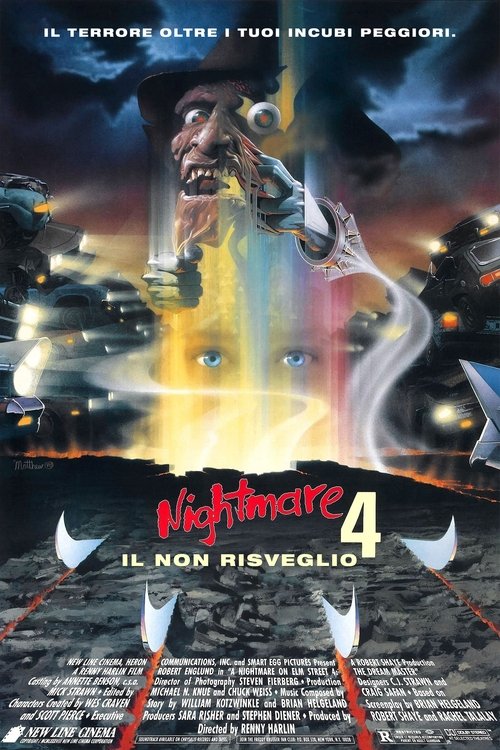
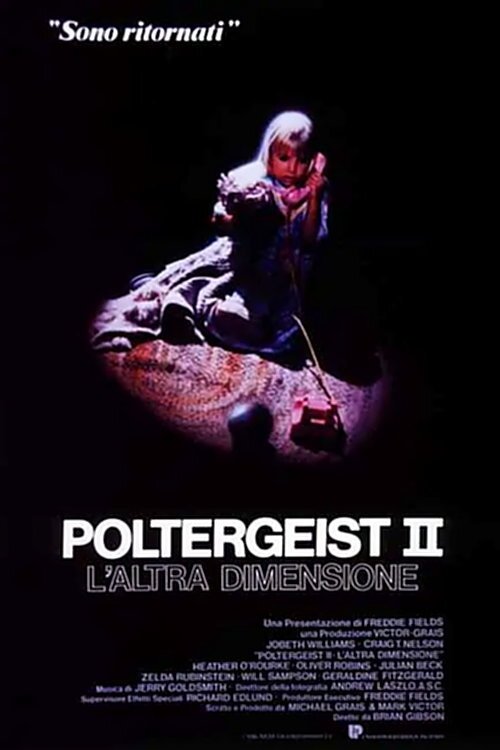
Moreover, at least in the film's first two acts, it doesn't even feel like we're in an *Insidious* movie due to the way the threat is handled. If James Wan looked to *Poltergeist* for the first film and *Amityville Horror* for the second with a very coherent overall vision aimed at reworking existing imagery to create something new, in *Insidious: The Red Door*, it almost feels like we're in the territory of *The Sixth Sense*, with Dalton encountering ghosts during frequent astral dream journeys that closely resemble the nightmares of the *Nightmare on Elm Street* saga, but without Freddy Krueger. And yes, another shortcoming in this fifth film is the lack of a demonic/spectral villain, although the iconic red-faced demon from the first film is brought back for very few scenes, as terrifying as ever and a character that should have been strategically emphasized more.
Instead, *Insidious: The Red Door* seems less interested in the "boogeyman" aspect, focusing the narrative's core on the father-son relationship, whether between Dalton and Josh or between the latter and his rediscovered father. It's certainly an interesting angle that lends the entire operation a nobility far superior to the two preceding chapters, but it also takes the saga off its essential genre trajectory.
In short, despite showing several strengths, *Insidious: The Red Door* comes across as a chapter decidedly out of focus, trapped in a constraining psychological ambition that makes it an underwhelming installment. Patrick Wilson, however, demonstrates a good hand behind the camera and a solid grasp of the language of fear. Could it be that we've found a new, unexpected horror director?
Comments
Comments (0)














Comments