





Le Verdict
Une petite ville de province est bouleversée, depuis quelque temps déjà, par les gestes atroces d'un tueur en série qui enlève de jeunes filles et les soumet à des tortures épuisantes avant de les tuer.
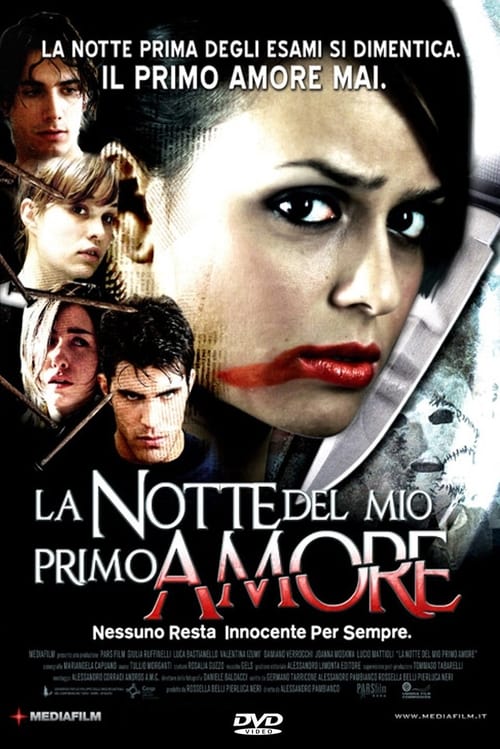
Une petite ville de province est bouleversée, depuis quelque temps déjà, par les gestes atroces d'un tueur en série qui enlève de jeunes filles et les soumet à des tortures épuisantes avant de les tuer. Chiara, une adolescente de dix-sept ans, après l'énième dispute, est quittée par son petit ami Andrea et, un peu par esprit de vengeance, un peu encouragée par les conseils de son amie et complice Marina, la jeune fille accepte la cour de Matteo, un charmant instructeur de la salle de sport où Chiara et Marina passent leurs soirées. Un soir, Chiara décide d'accepter la proposition de Matteo et de passer toute la nuit dans sa villa à la campagne, mais dès le début, Chiara remarque quelque chose de bizarre dans le comportement du garçon, qui passe de doux et gentil à soudainement agressif et violent. Après la découverte de quelques coupures de journaux parlant du tueur en série et de traces de sang dans la maison, Chiara commence à penser qu'elle est sérieusement en danger... Il est étrange de tomber sur un film d'horreur entièrement italien en salle ; la dernière fois, c'était en été 2004 avec l'horreur à épisodes "I tre voti del terrore", un hommage peu réussi que Sergio Stivaletti avait entrepris envers le cinéma de genre des années 60. Nous sommes en 2006, toujours en période estivale (stratégique pour les sorties de films d'horreur) et Mediafilm distribue avec un nombre considérable de copies "La notte del mio primo amore", premier film du jeune réalisateur Alessandro Pambianco. Le titre peut sembler trompeur, car il ne s'agit pas d'une comédie romantique mais d'un thriller horrifique qui cligne de l'œil d'une part aux thrillers italiens des années 80, d'autre part aux teen movies modernes américains. "La notte del mio primo amore" est né comme un projet indépendant, autoproduit par Parsfilm et, selon les intentions des producteurs, certainement pas destiné à la grande distribution, mais, malgré cela, le film de Pambianco se défend très bien, ne laissant absolument pas transparaître aux yeux du spectateur la nature indépendante et l'extrême exiguïté du budget disponible. Tout semble être un produit de divertissement digne qui a le grand mérite de s'éloigner (en fait, de n'avoir absolument rien à voir) avec le monde télévisuel omniprésent qui infecte le cinéma italien actuel (même d'auteur) ; donc pas de photographie patinée de fiction (pour le film, un numérique proche de l'effet pellicule, sale et réaliste, a été utilisé) et aucun référence particulièrement marquée au vide et insupportable stéréotype du teen ager italien qui vit à l'ombre de l'Olympe des faux mythes médiatiques. Ce qui est décrit dans "La notte del mio primo amore" n'est autre que la perte de l'innocence, observable à un âge topique dans la vie d'un être humain ; l'âge où l'on fait les premières vraies expériences de vie et où l'on se confronte réellement au monde et à tous les dangers qui le peuplent. Naturellement, le film en question décrit cette période initiatique à travers les stylismes du cinéma d'horreur, sans tomber dans une sociologie d'accatto caractéristique des comédies, ni atteindre des drames pigli de films autoritaires ; "La notte del mio primo amore" se fixe uniquement pour tâche de divertir le spectateur pendant 80 minutes, de l'amuser et peut-être de le faire peur et il réussit pleinement dans sa tâche. Le résultat est un film rapide et captivant, bien capable de jouer avec la tension, protagoniste absolue des vingt dernières minutes, unie néanmoins à une bonne caractérisation des personnages, caractéristique très rare dans les teen horreurs. Quelques points faibles peuvent être trouvés dans le scénario de Germano Tarricone, qui, d'une part, fait un bon travail sur les personnages, mais, d'autre part, ne prête pas particulière attention aux événements qui caractérisent la figure du tueur (un géant similaire à Faccia di cuoio interprété par Lucio Mattioli) et son passé. Autre défaut est à trouver dans le climax final, un peu trop précipité, et dans la faible dose de gore. La réalisation de Pambianco est décidément bonne pour un ancien technicien du son pour la première fois aux prises avec un long métrage et contient surtout l'expérience de quelqu'un qui connaît bien le cinéma d'horreur en tant que spectateur. Même le casting, bien qu'il soit composé presque exclusivement de jeunes acteurs débutants, est très convaincant, surtout le département féminin, c'est-à-dire la protagoniste débutante Giulia Ruffinelli et Valentina Izumi, qui interprète le rôle de Marina. On craignait le pire de cette petite production, mais on s'est retrouvé face à un film captivant et bien fait, qui, bien que non exempt de plusieurs limites, se montre courageux dans un environnement de production comme celui italien et on espère qu'il ne restera pas un cas isolé.
Commentaires
Commentaires (0)


Commentaires