












The Verdict
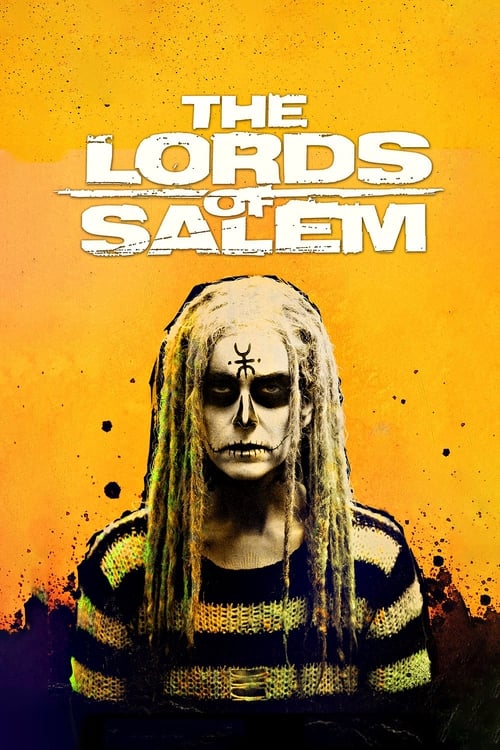
The DJ Heidi Howthorne works at a radio station specializing in rock music in the town of Salem, Massachusetts. One evening, she receives a "gift" from an unknown musical band that calls itself the Lords of Salem and will soon perform a concert in their city.
The DJ Heidi Howthorne works at a radio station specializing in rock music in the town of Salem, Massachusetts. One evening, she receives a "gift" from an unknown musical band that calls itself the Lords of Salem and will soon perform a concert in their city. The gift is a wooden box containing a vinyl record with a demo of the band. Heidi listens to it and is immediately struck, almost hypnotized by the sounds the record emits. The next day, the DJ decides to broadcast the Lords of Salem's piece on the radio, and the same hypnotic sensation of disorientation is perceived by other listeners. Heidi begins to plunge into a state of progressive conditioning, as if that music had marked her soul. When the local folklore expert writer Francis Matthias learns of the incident, he begins to suspect that the Lords of Salem are somehow connected to the witches who were condemned and executed in that city in the past.
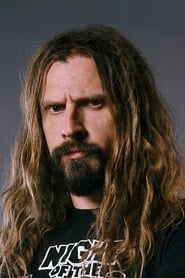
Probably strong in his background in metal music, thus endowed with a fandom already active for years, and thanks also to a loyalty to the horror genre that has sanctioned a very precise style, Rob Zombie is today one of the few new gurus of the horror cinematic landscape recognized as such by the almost unanimous spectators.
Starting his career with two films that quickly became true cult-movies, "House of 1000 Corpses" and "The Devil's House," Zombie was then promoted to productions of a certain weight by taking on the responsibility of giving a new start to the "Halloween" saga. Perhaps it is precisely because of the two films about the exploits of Michael Myers, which have definitely divided fans between enthusiasts and disappointed ones, that Zombie has decided to take a step back with his new film "The Witches of Salem," a much more contained production than the two previous Dimension Films works and certainly less commercial, closer to the crazy world of the rocker/director.
However, while watching "The Witches of Salem" a huge doubt arises in the viewer regarding the author's intentions: who is this film addressed to? Because if on the one hand it is clear that Rob Zombie was seeking in this work a means of redemption from the bad production experience linked to the two "Halloweens" (of which he has never made a secret) with a more personal film, on the other hand it seems almost that the director inexplicably wants to communicate his desire to distance himself also from certain films that have made him the beloved author he is today. It is as if with "The Witches of Salem" Zombie wants to say to the more demanding viewer who has always snubbed his cinema "See? I can also make an auteur film and not just that crap full of violence, sex, and swear words!" But Rob Zombie must understand that if today he has a horde of die-hard fans who defend him to the hilt even outside the musical environment, it is precisely thanks to that adorable "crap full of violence, sex, and swear words"... he does well to make that type of films and every Pindaric flight that winks at Jodorowsky or Kubrick - as "The Witches of Salem" is full of - is not suitable for him. Because that "serious" halo of authorship that envelops "The Witches of Salem" is clumsy and only communicates a great, immense presumption that from a big screen anarchist like Rob Zombie we would not have expected.
Narratively speaking, "The Witches of Salem" is quite disastrous: the subject is very simple and unnecessarily stretched, it completely lacks rhythm, highlight events, a true climax, and a natural division into acts. The film is made up of a single huge and heavy narrative block, occasionally interrupted by some flashbacks related to the witchy past, the story never engages, and the characters are never developed, they have no background, and most of them do not even have a use for the story told. Everything rests on the shoulders of the DJ Heidi, played by the director's wife Sheri Moon (who here flaunts the side b more than in the past even though the actress is visibly aging), but the character does not succeed in creating empathy with the viewer, and the actress herself, although undeniably good, does not have the charisma and abilities to carry an entire feature film on her shoulders.
"The Witches of Salem" tries to communicate more through individual images than through a normal story to follow, and as long as we remain in the territory of the iconographic and the figurative, the film works even, with some scenes of almost photographic composition that are undeniably fascinating. In the long run, however, this ostentatious "artistic" side of the work tires, almost irritates, and a sort of arrogance from the author begins to emerge that leaves the time that finds.
The film, unlike Rob Zombie's previous works, is very sparse in violence and brutality, focusing in a sometimes insistent way on a strongly blasphemous vein that attacks Christianity to celebrate allegorically Faith in an "alternative" way.
There are no lacks of references and citations to past cinema, although in this case the references are less ostentatious and linked to less specific suggestions (there is something from "The Lord of Evil," "Halloween III," "Death at 33 RPM," "The Skin of Satan," "The Great Inquisitor"), often looking at models more "high" than usual, such as the already cited Jodorowsky (freaks, references to Christian iconography, symbolisms), Kubrick (dilated times, division into days of the week), and Polanski (condominium mysteries, paranoia).
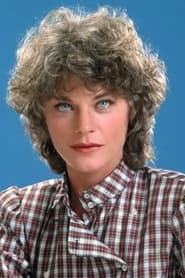
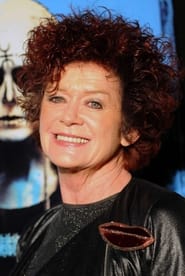
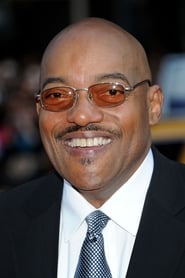
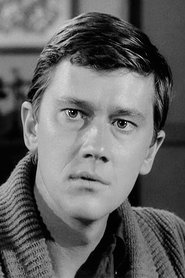
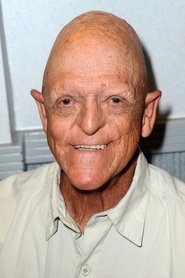
Cast as usual composed of old habitual glories, such as Ken Foree, Sid Haig, Bruce Davidson, Dee Wallace, and Michael Berryman, and new acquisitions such as Judy Geeson (we remember her for "Inseminoid"), Meg Foster ("They Live"), Patricia Quinn ("The Rocky Horror Picture Show"), and Andrew Prine ("Grizzly," "Amityville: Possession").
Surely "The Witches of Salem" will divide the viewers a lot, it is a too imperfect work to leave indifferent, unfortunately what emerges at first glance is the boredom and the excessive presumption of an artist who must unnecessarily demonstrate that he is, leaving us in fact only with a style exercise.
Try again, Rob.
Comments
Comments (0)










Comments