




The Verdict
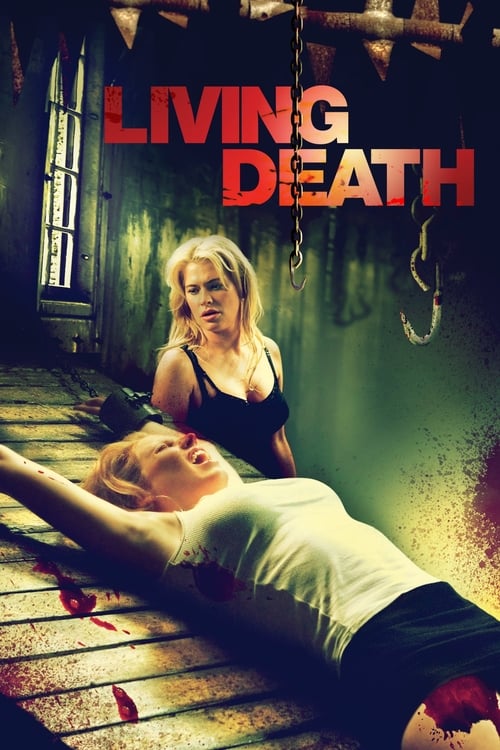
Victor Harris is a rich heir who leads a life of excess and luxury, but he also has a perverse hobby: he lures young and beautiful girls to involve them in sadomasochistic games and tortures. But someone is plotting behind his back: it is his wife Elizabeth who, in agreement with her lover Roman, Victor's lawyer, is thinking of eliminating the man and then enjoying his assets that would be hers in inheritance.
Victor Harris is a rich heir who leads a life of excess and luxury, but he also has a perverse hobby: he lures young and beautiful girls to involve them in sadomasochistic games and tortures. But someone is plotting behind his back: it is his wife Elizabeth who, in agreement with her lover Roman, Victor's lawyer, is thinking of eliminating the man and then enjoying his assets that would be hers in inheritance. To get rid of Victor, Roman administers a powerful poison extracted from the pufferfish, but Victor falls into a state of apparent death. The man suddenly wakes up on the morgue table while they are performing an autopsy on him, and now his only interest is revenge!
The intent behind "Living Death" is probably the revisitation of the Cormanian Gothic genre that included buried alive, torture chambers, and love triangles that lead to murder. Yes, the intent was definitely to revive that genre, but watching the film you certainly can't say that director Erin Berry succeeded! First of all, "Living Death" strips itself of any aesthetic and scenographic reference characteristic of Gothic: the facts take place in our present, there are no castles (but a large villa that is not the focus of the action), the setting is often daytime, and the atmosphere is completely absent. However, there are the typical themes of that genre! Unfortunately, the theme of the protagonist's sadism is exploited very little and is limited to the prologue where we can admire the torture chamber of our "hero" and his infamous table for the "strappata", used to the detriment of an incautious and beautiful blonde. After the rather promising prologue, the theme of betrayal and conspiracy comes into play, which occupies most of the film's duration. The narrative times are poorly managed, and the film ends up being excessively static and heavy in several points. Then the idea of apparent death, typically Poeian, which represents the core of the entire story, is introduced, and the situation begins to get a bit more exciting, at least narratively. The protagonist's return to life and his path to revenge are spiced up with funny "mishaps" that involve medical students dealing with their first autopsy, an attempt at premature burial, and a torture based on muscle and joint tears. Although rich in inconsistencies, banality, and forced elements (above all the inexplicable insistence of the doctor in wanting to perform the autopsy on Victor), the film gains momentum in the last twenty minutes, thanks to a massive dose of violence that culminates in the most explicit splatter.
But the merits are limited to this, and it is really too little to be able to minimally appreciate a feature film.
Director Erin Berry has had a career primarily as a producer of straight-to-video movies (his most famous is "5 Girls") and here is making his debut as the director of a feature film. His direction is flat, at times awkward, very TV-like, and he is certainly not helped by a first-rate cast! The protagonist is played by the inexpressive Greg Bryk ("A History of Violence"; "Shoot'em Up") and beside him, in the role of Elizabeth, there is an always attractive Kristy Swanson ("Dovevi essere morta"; "Buffy l'ammazzavampiri") not very convinced and convincing in the role of the murderous wife.
In short, "Living Death" is a film that is mainly worth watching for some of its excesses of nastiness and for the good (but rare) splatter effects, but overall it leaves much to be desired even to recommend a simple rental.
Comments
Comments (0)




Comments