






The Verdict
The writer Ivano became paralyzed after a terrible car accident in which his son lost his life. Now Ivano lives with the young Olga and has taken the habit of spying with a sophisticated surveillance system on the tenants of the apartment adjacent to his, which he himself rents.
The writer Ivano became paralyzed after a terrible car accident in which his son lost his life. Now Ivano lives with the young Olga and has taken the habit of spying with a sophisticated surveillance system on the tenants of the apartment adjacent to his, which he himself rents. When Arturo, the new tenant, shows himself to be open to eccentric sexual practices, Ivano decides to send Olga into the guest's arms to placate his morbid curiosity as a voyeur. But Arturo hides a terrible secret...
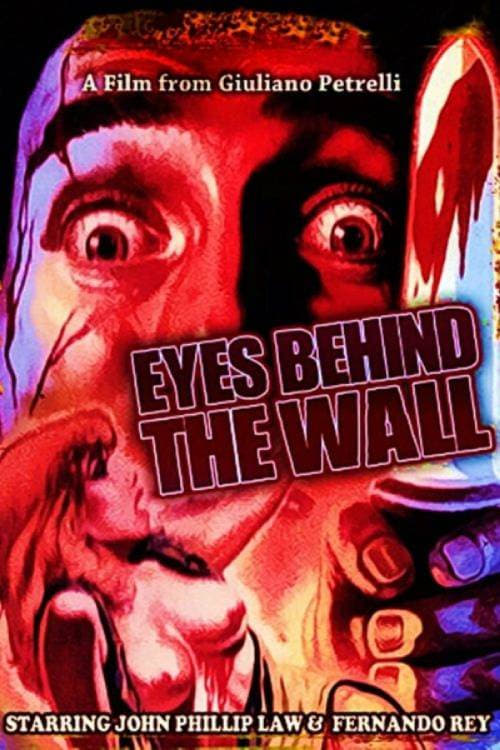
Strange film "The Eye Behind the Wall".
We are in the territories of infra-genre contamination where drama, erotic, and thriller coexist in a completely natural way. And perhaps it is here that the greatest strength of this film lies, that is, managing to build a story that begins as a thriller, evolves as an erotic drama, and ends as a thriller with dramatic overtones. Each genre shift is completely natural, and the choices the director opts for are entirely relevant to the story.
Now it must be said that Giuliano Petrelli, better known as an actor ("The Mala Ordina", "Heart of a Dog") and here as a director and screenwriter, seems a bit indecisive about what his work should be in "substance". Sociological film or original example of exploitation? The result is ultimately neither one nor the other: too "raunchy" and farcical to be a "cultured" film, too serious and conceptually "committed" to be a low-grade film. In the end, we are left with a film perhaps not entirely successful but singular, and we keep it willingly.
Petrelli, who with this film tries diligently for the first and last time with directing, tries to follow the subtle line that demarcates the boundary between social denunciation and voyeuristic exhibition. "The Eye Behind the Wall" is indeed a denunciation document about the type of cinema (and show in general) to which it itself belongs. It is not difficult to superimpose the figure of the spectator who watches "The Eye Behind the Wall" on that of Ivano, the paraplegic writer voyeur; both are "morbidly" interested in a show they cannot take part in and, perhaps also for this reason, hope that no limits are placed on what is presented to their eyes. A sort of "Big Brother" television ante litteram, a premonitory film of a cathode tube fashion destined, in the span of twenty years, to make the common spectator addicted who at the time would have been shocked by such morbidity. Starting from this assumption, Petrelli subjects his voyeur character, and hence the spectator, to an incredible series of taboo subjects and psycho-sexual deviations that go with nonchalance from sex-motivated murder to incest. In the end, the film does not show much, rather it suggests, leaving the spectator with the sensation of having participated in person in the events thanks to an effective participatory pathos that reaches its peak in the scene of interracial sodomy. As I said, Petrelli gives life to a denunciation work, but at the same time creates a film that fits fully in the vast cauldron of sadistic films that he would like to attack. It is not clear if this is a good thing or not, but fans of the "genre" have something to be satisfied about.
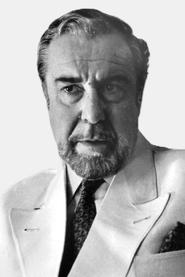
The trio of main actors is made up of good professionals: the Spanish Fernando Rey ("The Police Accuse, the Judge Defends"; "That Obscure Object of Desire") plays the role of Ivano effectively characterizing his twisted psyche; Olga Bisera ("Secret Diary of a Female Prison"; "The Virgin, the Bull, and the Capricorn") brings to life an ambiguous and fascinating Olga; John Philip Law ("Diabolik"; "Stardust") is instead the mysterious Arturo, who at the beginning of the film performs a grotesque scene in which he does gymnastics completely naked.
Curious film, therefore, in part also difficult to judge with objectivity, but that should nevertheless be recovered by all lovers of the mythical (and defunct) Italian genre cinema.
Comments
Comments (0)

Comments