
The Verdict
Dr. Benson drives along an isolated country road, searching for a cottage where he has been called for a visit.
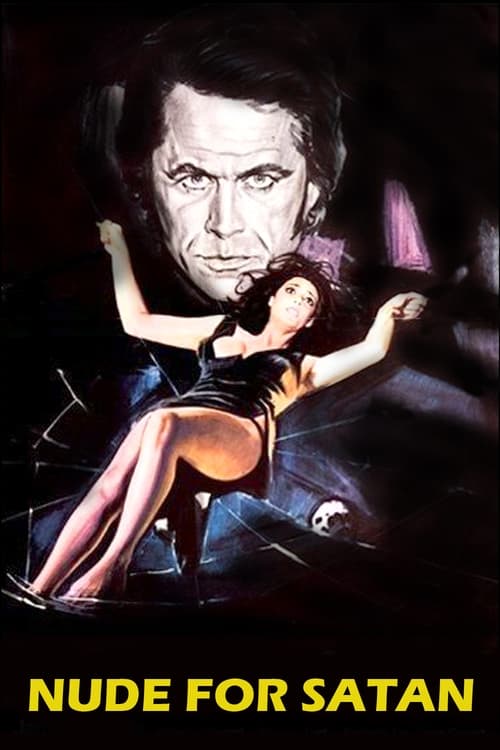
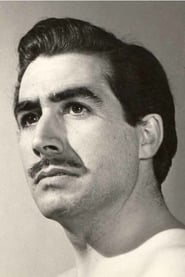
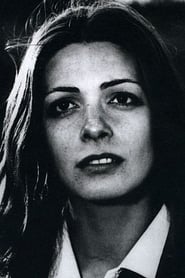
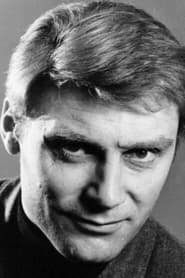
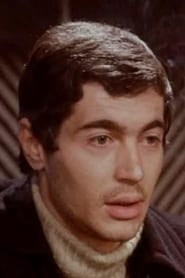
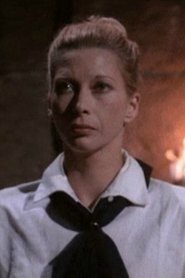
Dr. Benson drives along an isolated country road, searching for a cottage where he has been called for a visit. A half-naked woman suddenly crosses the road, and the doctor's car swerves, causing the driver to lose consciousness. When Benson wakes up, he realizes that another car has also gone off the road, and inside is Susan, an unconscious girl. Dr. Benson then goes to a nearby castle to ask for help, but he is greeted by a mysterious individual and a girl who looks like Susan. After regaining consciousness, Susan also goes to the castle, but she is greeted by Peter, a mad nobleman identical in appearance to Dr. Benson. Italian genre cinema offered us some unparalleled gems of beauty during the 1970s, films that have made cinema history and are still cited and reimagined in all forms today, even by highly rated international directors. Among the armed cities of poliziotteschi, gruesome thrillers, and grandguignolesque cannibal movies, there were also some late representatives of 1960s Gothic, films that often found compromises with splatter or erotica to renew interest in a now decayed genre. "Nuda per Satana" fits precisely into this circle of late Gothic films that primarily rely on erotica to distract the viewer from the total inconsistency of the plot, which is at times delirious, at times arid, and always so serious that it becomes ridiculous. "Nuda per Satana" was directed and written by Luigi Batzella (under the pseudonym Paolo Solvay), a director who became famous for the horror vaguely inspired by the myth of the bloodthirsty Countess Erzsébet Báthory "Il plenilunio delle vergini" and for the Nazi cult film "La bestia in calore". Batzella creates a film that has become a true "scult" in its genre, a film that is in some aspects scholarly and poor, and perhaps for this reason fascinating, but in other aspects extremely serious and in its own way "impegnato", eliciting a deep sense of antipathy. The story of "Nuda per Satana" begins with the classic Gothic plot: a couple who take refuge in a castle and there face their fears in the form of unsettling apparitions. Batzella does not use a standard couple, since Dr. Benson and Susan do not even know each other and, in practice, only interact in the last minutes of the film; moreover, the "creatures" that populate the castle are not simple ghosts or monsters from the crypts, but the dark metamorphoses of the protagonists themselves. The director thus addresses the theme of the doppelganger, the evil double that confronts us with our weaknesses, all of which, however, is conducted with such confusion and false authorship that it becomes even irritating. The dialogues imbued with ridiculous philosophy for beginners make one smile for their naivety, as does the almost theatrical emphasis with which they are pronounced by the uninvolved actors; the extremely stretched times end up boring the viewer, tossed between endless sex scenes, more or less explicit, and long walks in the castle corridors or gardens. Batzella has evidently wanted to imitate the style of some films by Jesus Franco or Jean Rollin, but their class and the elegant erotica of their best films are here totally absent, replaced by a clumsiness and persistent embarrassment. A long sequence of sapphic love and the always visible charms of the beautiful Rita Calderoni do little to help, as the film perpetually oscillates between the unintentionally ugly and the boring. It is therefore not surprising that "Nuda per Satana" was exported abroad with the addition of some hard scenes, probably capable of captivating at least a slice of the public. The cast reduced to the bone is distinguished by the marked acting mediocrity of the actors, among whom it is worth mentioning the wooden Stelio Candelli ("Terrore nello spazio"; "Italia a mano armata"), who plays Dr. Benson/Peter, and the alluring Rita Calderoni in the role of Susan/Evelyn, muse of much Italian erotic cinema and protagonist in "La verità secondo Satana" and "Riti, magie nere e segrete orge nel trecento" by Renato Polselli. In "Nuda per Satana" one can only appreciate the colorful photography of Antonio Maccoppi and the music of Alberto Baldan Bembo, although the latter becomes repetitive in the long run. Batzella's direction is decidedly uneven: it ranges from good camera movements, some quite original, to clumsy zooms used at random. In conclusion, two scenes must absolutely be mentioned that could enter the trash imagination of any viewer: the attack of a fake spider that moves on the half-naked body of Calderoni and the final orgy-ballet. Only to be seen if you are a connoisseur of bad taste.
Comments
Comments (0)

Comments