









The Verdict
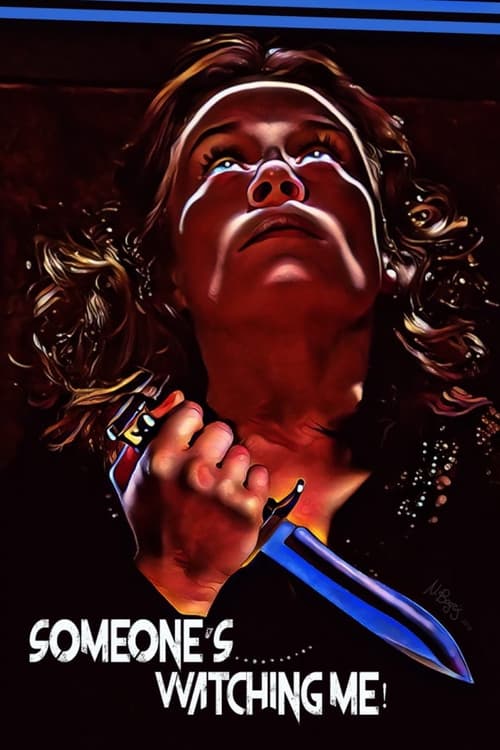
Television director Leigh Michaels moves into an apartment in Arkham Tower, a residential complex where a young tenant had recently committed suicide. Soon, Leigh begins receiving disturbing phone calls, followed by strange gifts ranging from lingerie to a telescope for looking out the window.
Television director Leigh Michaels moves into an apartment in Arkham Tower, a residential complex where a young tenant had recently committed suicide. Soon, Leigh begins receiving disturbing phone calls, followed by strange gifts ranging from lingerie to a telescope for looking out the window. She soon realizes she has become the target not of a mere stalker, but of a true psychopath with homicidal tendencies, though she lacks evidence to prove the danger she is in to the police.
After the success of “Distretto 13 – Le brigate della morte”, Warner Bros. Television entrusted John Carpenter with a television thriller project. It was 1978, and Carpenter was also working on the production of “Halloween – La notte delle streghe”, so upon completion, one can realize how the television “Pericolo in agguato” was not evidently an artistic priority for the director.
Inspired quite obviously by Hitchcock’s cinema, Carpenter writes and directs a thriller from a
camera that pays too high a price for being a product destined for television programming. The suspense is lacking despite a great use of situations requiring tension amplification, elements related to violence and erotic morbidity, on the other hand, not at all. In the end, one has the feeling of watching a TV movie, with both its merits and especially its defects; to be precise, one gets the impression of dealing with an extended episode of the series “Alfred Hitchcock presenta” precisely because of the insistence with which the “Master of Suspense” is cited.
From a post-hoc analysis, one can notice that there is not much of Carpenter’s cinema in “Pericolo in agguato” (which in the original is titled with a much more suggestive and indicative “Someone’s watching me!”) except for a tendency to turn the threat into something undefined, a kind of idealization of evil – or danger, in this case – without a specific face. This
expedient, already used for the criminals of “Distretto 13” and which will be a characteristic of the author from “Halloween” onwards, including “La Cosa” and “Il signore del male”, is a guarantee and also in this case proves to be one of the best ideas of the film. The stalker who pursues the protagonist has no face until the final confrontation; he is a voice on the phone, a shadow that moves quickly in the background without being seen by either the protagonist or the viewer. Another interesting point is the almost total coincidence of the viewer’s point of view with that of Leigh Michaels, which limits the information and clues possessed by the viewer, resulting in an increased sense of mystery and suspense. In this case, however, the degree of identification is meager, perhaps due to a softening of the tones and a not entirely convincing characterization of the protagonist. Given the television nature of the film, Carpenter had to eliminate every trace of violence and morbidity, although a film of this kind would have benefited from it, given the continuous voyeuristic practice carried out by the psychopath. The protagonist’s intimacy is, in the end, never truly violated; the one time she undresses, we see her timidly from behind for a few seconds, and her romantic relationships are skillfully hidden from the voyeur and consequently from the viewer. Understanding how all this dampens the film’s potential, just think of the work done a few years later by Brian De Palma with the beautiful and thematically similar “Blow Out” and “Omicidio a luci rosse” to realize it. Moreover, the character of Leigh Michaels, played by a beautiful Lauren
Hutton (“American gigolò”), is not very credible in her sudden personality shifts that pass too easily from fragile, defenseless victim to steel woman, a stereotype of a sympathetic career woman who talks to herself and snubs every attempt at approach by men, resulting almost like a caricature.
In minor roles, two Carpenterian actors d.o.c. appear: Adrienne Barbeau (here in her first collaboration with the director, whom she will soon marry) and Charles Cyphers, already seen in “Distretto 13” and then recurring in “Halloween”, “Fog” and “Fuga da New York”.
For its part, “Pericolo in agguato” has at least a couple of moments where Carpenter’s good hand is noticeable, I refer to the moment in the laundry room (probably the most suspenseful one) and the one in which Leigh enters the apartment of the hypothetical pursuer, recycling to the point of explicit homage a similar situation in “La finestra sul cortile”. For the rest, one notices impersonality and little conviction for one of the works rightly considered minor of the great John Carpenter.
Comments
Comments (0)







Comments