




The Verdict
Lia meets Viktor and falls in love with him. She is emotionally fragile, while he is a sadistic and narcissistic businessman, and a master-servant relationship with clear boundaries develops between them.
Lia meets Viktor and falls in love with him. She is emotionally fragile, while he is a sadistic and narcissistic businessman, and a master-servant relationship with clear boundaries develops between them. When Lia becomes pregnant, Viktor forces her to have an abortion, but the already fragile psyche of the girl completely shatters, and after a nervous breakdown, she decides to move in with her aunt Agata in the Veneto countryside. The woman is a well-known healer in the area, an expert in psychomagic, who tries to practice it on her niece to heal her, but something goes wrong...
The first question that will likely come to the mind of the viewer who ventures into watching "Ritual – A Psychomagic Story" is probably: What is psychomagic?
Positioned at the boundary that connects magic and science – although not recognized by the medical community – psychomagic is a practice used by some therapists to heal psychological wounds that would normally be treated by psychotherapy. Generally, the focus is on the unconscious of the "disturbed" individual to free them from trauma, often making the patient themselves dialogue with their ego, thus overcoming their conscious side and addressing the cause of the "block." The therapist asks the patient to perform a very specific action, often with strong symbolic value based on the case, without ever imposing themselves as the subject's guide. Psychomagic finds its roots in the popular traditions and rituals of shamans and healers, but it is only in more recent years that it has taken on the artistic connotation to which it is often associated today, thanks to the Chilean director Alejandro Jodorowsky, who has been fascinated by it and made it his own, writing about it (The Dance of Reality, Psychomagic) and practicing it as a therapeutic discipline.
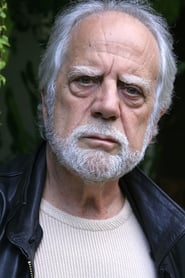
It is precisely from the Jodorowskian conception that "Ritual" is born, which borrows the term "psychomagic" from the theories of the director of "Santa Sangre," applying it to the language of thriller cinema. The chronicles tell us that the two directors of "Ritual," Luca Immesi and Giulia Brazzale, both debutants, received the consent of Jodorowsky himself both for the use of the term "psychomagic" and for the film's screenplay, to the point that the Chilean director also appears in a dreamlike cameo in the film, in the role of the deceased uncle of the protagonist.
But do not make the mistake of unconsciously associating "Ritual" with Jodorowsky's cinema, because they are completely different things. Immesi and Brazzale, rather, anchor themselves to the tradition of psychological thriller, the more classic one, which is contaminated by supernatural elements more attributable to superstition and the folklore of northern Italy. It is no coincidence that the screenplay, written by the directors themselves, was supervised by Jeff Gross, who has collaborations with Roman Polanski for the script of "Frantic" and "Bitter Moon" on his resume. In fact, there is an accentuated Polanskian atmosphere throughout Lia's odyssey, a journey fraught with obstacles represented mostly by her psychological blocks that prevent her from reacting to a tormentor of a partner and, consequently, from openly manifesting her maternal longing. After the first twenty introductory minutes, in fact, the film shifts exclusively to the idea of rendering the concrete images of Lia's abortive trauma, which materializes through hallucinatory psychoses that – banal – take the form of children dressed in white and ghostly mothers singing lullabies.
And here "Ritual" shows the enormous limitations that unfortunately are common to many independent Italian productions, namely the lack of ideas necessary to adequately support a feature film.
Immesi and Brazzale's work quickly becomes tangled in itself, reiterating for 95 minutes a concept that is already clear in the first 20. There is the absolutely interesting and necessary folkloric dimension to keep attention alive, but it is an ornament that lives in the background, completely focusing attention on Lia's psychological torments. What does not convince in this choice is that Lia does not undergo a journey, but is shown to be disturbed from the beginning, confirming with the passing of the minutes only the impression she had already aroused. Therefore, we have a "mad" protagonist who is such from the beginning and a sadistic supporting actor who is so from his first appearance. There is no growth, no evolution or involution in the characters and the plot, with the consequence that the entire film fails to capture, to be interesting, including the overly telegraphed ending.
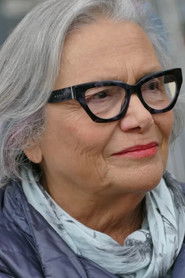
The greatest consolation lies, precisely, in the staging of the typical customs of Veneto superstitious rural life, with the character of the healer aunt who is undoubtedly the best realized, but at this point it would have been worth focusing the entire plot on this, avoiding the oppressive and unoriginal story of denied motherhood.
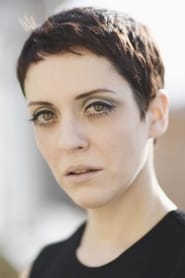
Praiseworthy is the performance of Desirée Giorgetti ("Morituris") in the role of the protagonist, a very physical performance, clearly felt and intense, while Ivan Franek ("The Great Beauty"; "Tulpa") appears decidedly mediocre in the role of the sadistic Viktor, reminding us once again that certain actors should be dubbed.
"Ritual – A Psychomagic Story" arrives in Italian cinemas on May 8, distributed by Mariposa Cinematografica.
Comments
Comments (0)
Comments