
The Verdict
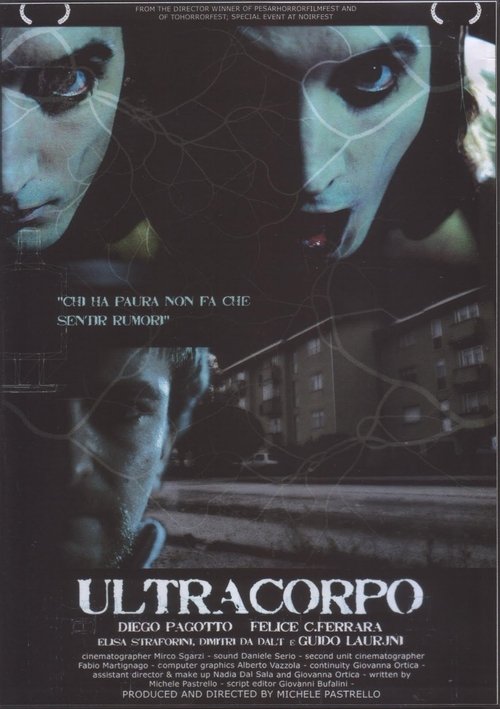
Umberto dedicates himself to small commissioned jobs to make a living. One day, the man is asked to repair the kitchen sink in an apartment on the outskirts.
Umberto dedicates himself to small commissioned jobs to make a living. One day, the man is asked to repair the kitchen sink in an apartment on the outskirts. Umberto is initially hesitant because he fears that people in those areas may not have the means to pay and because he learns that his client is homosexual, but when his employer assures him that the client can pay well, the man accepts. For Umberto, a slow descent into hell begins, marked by paranoia and prejudice.
Director Michele Pastrello seems particularly comfortable with socially relevant themes, as demonstrated by "32", his previous excellent short film that denounced environmental degradation by institutions, and confirmed with "Ultracorpo". The new short film written, produced, and directed by Pastrello addresses a current and particularly delicate topic, homophobia, which today as before spreads a bit everywhere. The director decides to approach the theme from an unprecedented point of view, using the cinematic/literary metaphor of the ultrabody to describe homosexual otherness through the eyes of someone affected by prejudice.
Umberto is a common man, alone and lonely, visibly uncomfortable in a society marked by job and relational precarity. Umberto lives day by day, taking advantage of opportunities for modestly paid small jobs; the man knows who and where can guarantee him a good tip and that's why he is highly selective. But client selection is also based on sexual orientation. The dark world that extends beyond heterosexuality takes the unsettling form of a 1950s science fiction film; Umberto materializes the other into an alien with a tentacular tongue, an ultrabody that, like in Don Siegel's masterpiece just broadcast on TV, captures you in your sleep and puts into action its subtle work of change. Everything is filtered through Umberto's homophobic optics: his client has the lascivious movements of someone who wants to attract and corrupt, and his cold face, almost devoid of emotion, seems to have come out of one of the legendary baccelloni. The protagonist of "Ultracorpo" seems to yield, appearing almost inclined to the idea of change that might improve him; after all, Umberto seems cramped in that daily routine that imposes a maniacal care for his physique and a network of sentimental relationships that is born from the fleeting oral relationship with a prostitute and dies in masturbation in front of a porn movie.
The way Pastrello tells through images and words Umberto's "paranoid mutation" and his realization is praiseworthy and courageous. Usually, we witness stories that denounce homophobia from the victim's point of view, but in this case, the perspective lies in the perpetrator, in the one who is prey to prejudice and applies defensive measures to combat the unknown.
The excellent narrative construction allows a film of less than half an hour to have a sense of completeness that is not always typical of short films. It is a story with a broad scope, capable of telling a situation in a short time that fits well within the available timeframes while giving the impression of having seen a feature film, thanks to the attention to detail and the complex description of the characters. In this regard, it is also worth speaking highly of the actors involved who manage to embody their not-easy characters with professionalism. Diego Pagotto ("L'uomo che verrà"; "Fuga dal call center") adequately reaches the intensity and inner transformation required by his Umberto, just as the debutant Felice C. Ferrara possesses the physique du role and the unsettling ambiguity of the "imagined" alien.
Impeccable the packaging that boasts the photography of Mirco Sgarzi ("32"; "House of Flesh Mannequins"), here skillful with dark and oppressive interiors or rainy exteriors contrasted with the sunny childhood of the protagonist presented in some flashbacks.
In short, "Ultracorpo" works wonderfully, a narratively complete and well-made short film. An interesting theme treated with courage and intelligence, an unsettling atmosphere, and a couple of moments capable of transmitting to the viewer the discomfort of the situation.
Really excellent work.
At the time "Ultracorpo" is reviewed, it has not yet been presented at any festival nor had a public screening.
Comments
Comments (0)

Comments