
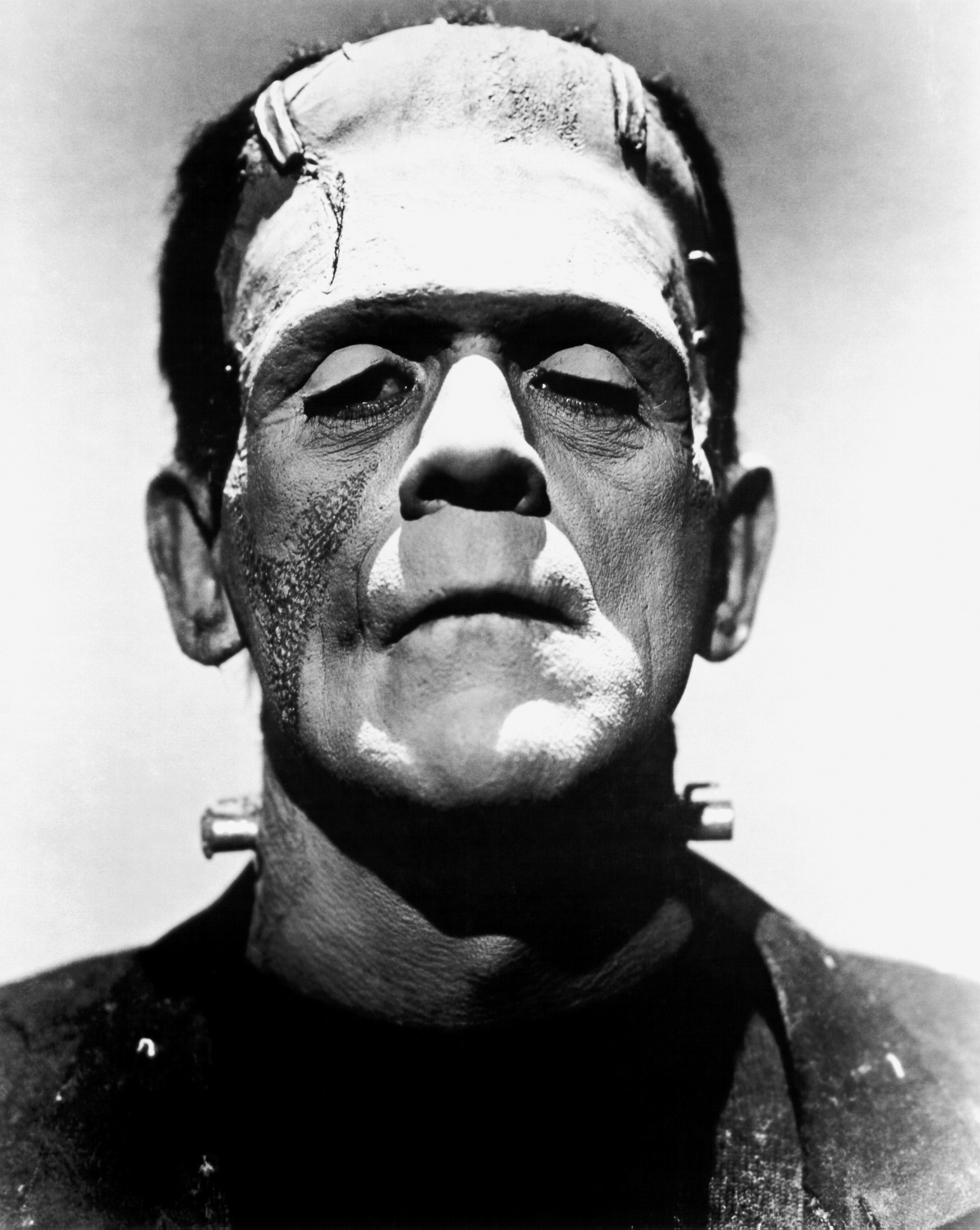
William Henry Pratt was born in Camberwell, London, on November 23, 1887, to a wealthy family. He adopted the stage name Boris Karloff as a tribute to his mother, who was of Russian descent. He initially studied with the intention of pursuing a diplomatic career, but abandoned this secure path to pursue acting, beginning in theater. He first moved to Canada, then to the United States, where he took on various jobs to support himself, including work as a truck driver. By the mid-1910s, Hollywood producers began casting him in minor roles—his first film, "The Dumb Girl of Portici," dates from 1916—almost always as the villain. During the silent film era, he appeared in dozens of films, rarely prestigious ones, often in police dramas and westerns, steadily honing his already considerable talent.
His international breakthrough came in 1931 with James Whale's "Frankenstein." The film, adapted from Mary Shelley's novel—which had already been adapted for the stage multiple times—was originally set to be directed by Robert Florey and star Bela Lugosi, riding high on the success of his stage Dracula. Lugosi abandoned the project, refusing to wear a mask that would render him practically unrecognizable, and Florey likewise dropped out, dissatisfied with the early days of shooting. James Whale, already an important director at Universal, was brought in, and he made the inspired choice to cast the then-obscure Karloff in the role. To wear the mask created by Jack Pierce, Karloff endured up to 6 hours of makeup daily! From that point on, Karloff's rise was unstoppable, and his status as horror cinema's iconic actor grew steadily, reaching peaks of success in the 1930s with Karl Freund's "The Mummy," playing the high priest Im-Ho-Tep, and with the two sequels to Whale's film ("Bride of Frankenstein" and "Son of Frankenstein").
In the 1940s, Karloff, finally freed from masks and heavy makeup and able to fully display his actual face, reached unparalleled heights of craft under continued Universal productions. Among his memorable roles was his unforgettable turn as the necrophile gravedigger in Robert Wise's "The Body Snatcher," and an excellent performance in "Isle of the Dead" directed by Robson. Having achieved the status of horror cinema's premier actor—a position he would forever share with Bela Lugosi, with whom he appeared in 7 films in a rivalry that extended beyond the screen (the two never particularly liked each other)—Karloff surpassed his rival in versatility and sheer acting ability. He continued throughout the 1950s and 1960s to appear in dozens of films, working with masters such as Roger Corman ("The Raven") and Mario Bava ("Black Sabbath"). A tireless professional, he dedicated his life to horror cinema right up until his death, which occurred away from the spotlight due to respiratory illness, on February 2, 1969, in Midhurst, Sussex, Great Britain.
Boris Karloff was simply a legend—one who managed to establish his distinctive presence and manner across four decades of horror cinema, beloved by audiences and respected by critics. Gruff and mysterious on screen, yet affable and possessed of genuine humanitarian spirit in life (he donated portions of his earnings to charity, organized shows and performances for children, and loved gardening), turbulent in his romantic relationships (he was married four times) but an excellent family man. He proved himself a great actor despite being forever associated with horror, never becoming enslaved to the genre. With good nature and simplicity, he willingly became the spokesman for an entire movement and cinematic form, taking on roles even in modest productions not merely for financial gain but out of sincere love for his craft.
FILMOGRAPHY
THE VOICE OF BLOOD (NEVER THE TWAIN SHALL MEET, 1925)
THE PHANTOM BUSTER (1927)
THE DEVIL'S CHAPLAIN (1929)
THE PHANTOM OF THE NORTH (1929)
THE GREEN PHANTOM (1929)
THE VAMPIRE OF THE SEA (1930)
I LIKE YOUR NERVE (1931)
FRANKENSTEIN (1931)
THE OLD DARK HOUSE (1932)
NIGHT WORLD (1932)
THE DOCTOR'S SECRET (ALIAS THE DOCTOR, 1932)
THE GHOUL (1933)
THE MUMMY (1933)
THE HOUSE OF ROTHSCHILD (1934)
BLACK CAT (1934)
THE RAVEN (1935)
THE MYSTERY OF THE BLACK CHAMBER (1935)
BRIDE OF FRANKENSTEIN (1935)
IDOL OF THE EVIL (1936)
THE MAN WHO CHANGED HIS MIND (1936)
THE INVISIBLE RAY (1936)
THE WALKING SHADOW (1936)
THE MYSTERIOUS KEY (1937)
THE INVISIBLE DEATH (1938)
TOWER OF LONDON (1939)
VENDETTA (1939)
SON OF FRANKENSTEIN (1939)
THE PHANTOM OF THE CITY (1940)
THE FATAL HOUR (1940)
CONDEMNED TO DEATH (1940)
DEVIL'S ISLAND (1940)
BLACK FRIDAY (1940)
THE APE (1940)
THE DEVIL COMMANDS (1940)
THE BOOGIE MAN WILL GET YOU (1942)
BEYOND THE MYSTERY (HOUSE OF FRANKENSTEIN, 1944)
ISLE OF THE DEAD (1945)
THE BODY SNATCHER (1945)
BEDLAM (1946)
THE SECRET LIFE OF WALTER MITTY (1947)
ALAN, THE BLACK COUNT (THE STRANGE DOOR, 1951)
THE MYSTERY OF THE BLACK CASTLE (1952)
THE MONSTER OF THE ISLAND (1953)
SABAKA THE FIRE DEMON (1954)
THE CURSED ISLAND OF THE ZOMBIES (VOODOO ISLAND, 1957)
THE HAUNTED STRANGLER (1958)
FRANKENSTEIN 1970 (1958)
CORRIDORS OF BLOOD (1958)
THE MAD STRANGLER (1960)
THE RAVEN (1963)
THE VIRGIN OF WAX (THE TERROR, 1963)
BLACK SABBATH (1963)
THE TERROR CLAN (1964)
DEATH FROM THE CRYSTAL EYE (1965)
THE CORPSE COLLECTOR (1967)
THE SORCERERS (1967)
CAULDRON OF BLOOD (1967)
DANSE MACABRE (1968)
SINISTER INVASION (1968)
TORTURE ZONE (HOUSE OF EVIL, 1968)
THE FEAR CHAMBER (1968)
THE CRIMSON CULT (1968)
THE TORTURE ZONE (1968)
ALIEN TERROR (1968)
THE BALLAD OF DEATH (1968)
THE WORSHIPPERS OF DEATH (LA MUERTE VIVENTE, 1968)
CURSE OF THE CRIMSON ALTAR (1968)
HORROR SHOW (1979)
Comments