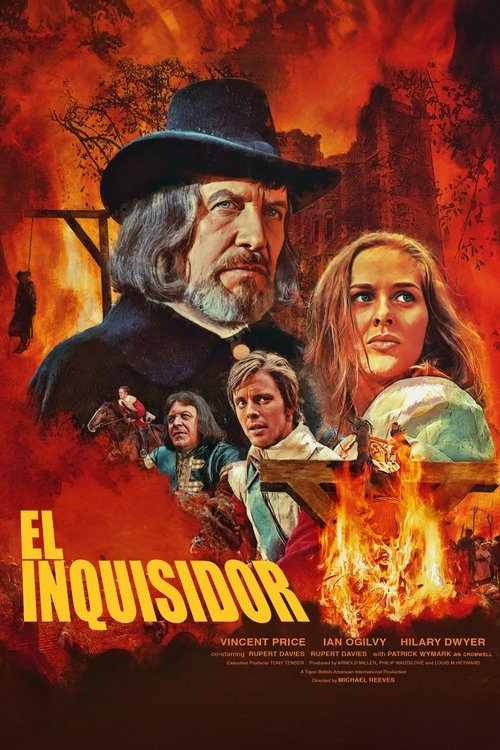

El general Witchfinder backdrop
El general Witchfinder poster

EL GENERAL WITCHFINDER

Witchfinder General

1968 GB HMDB
mayo 17, 1968

Inglaterra, 1645. La cruenta guerra civil entre monárquicos y parlamentarios que asola el país provoca una época de caos y arbitrariedad jurídica que permite a hombres sin escrúpulos sacar provecho explotando las absurdas supersticiones de los campesinos; como Matthew Hopkins, un monstruo disfrazado de hombre que vaga de pueblo en pueblo ofreciendo sus servicios como cazador de brujas.

Directores

Reparto

👍 👎 🔥 🧻 👑

Comentarios

Comentarios (0)

Equipo

Produccion: Louis M. Heyward (Producer)Arnold L. Miller (Producer)Philip Waddilove (Producer)Tony Tenser (Executive Producer)Samuel Z. Arkoff (Executive Producer)James H. Nicholson (Executive Producer)
Guion: Michael Reeves (Screenplay)Tom Baker (Screenplay)
Musica: Paul Ferris (Original Music Composer)
Fotografia: John Coquillon (Director of Photography)

RESEÑAS (1)

Roberto Giacomelli
En 1645, en medio de la guerra civil inglesa, el inquisidor Matteo Hopkins y su ayudante John Sterne se mueven de pueblo en pueblo en busca de brujas y papistas para matar. Los dos llegan a Brandstone, llamados por los habitantes que acusan al reverendo Lowes de brujería, y ahorcan al hombre después de haber abusado sexualmente de su sobrina Sara. Al enterarse del suceso, el soldado Richard, prometido de Sara, jura venganza al inquisidor y hace refugiar a Sara en un pueblo cercano. Mientras tanto, Hopkins, que está al tanto del hombre que lo busca, llega justo al pueblo en el que Sara se ha establecido y la captura con la acusación de brujería. Existen obras cinematográficas que el tiempo nos está ocultando, películas con gran fuerza contenutística e indiscutible carga emocional y visual que hoy en día no se recuerdan (o no lo han sido nunca) suficientemente. Pertenece sin duda a esta categoría “El gran inquisidor”, drama de época disfrazado de horror truculento dirigido en 1968 por el inglés Michael Reeves. Tomando como inspiración un ensayo histórico de Ronald Bassett (“Matthew Hopkins: Witchfinder General” de 1966), la American International Pictures encomendó al joven Reeves la dirección de esta película anómala de género. Ya, porque, debido al contenido y al origen “alto” de la temática tratada, “El gran inquisidor” quiere ser una película de género, como era costumbre para gran parte de los productos de AIP. Pero el límite que esta vez separa el “explotación” de la “seriedad” es sutil y a menudo invisible, tanto que cualquier catalogación resulta estrecha o inapropiada para la película en cuestión. Reeves y su co-guionista Tom Baker quieren fundamentalmente y abiertamente proporcionar una parábola de condena al poder: cualquier hombre mezquino provisto de un mínimo de supremacía, intelectual, política o económica, está inclinado a usarla mezquinamente para satisfacer con mayor facilidad sus instintos más bajos. El inquisidor Hopkins, armado de credibilidad y autoridad ante una masa supersticiosa y asustada, puede dar rienda suelta a su sadismo, saciando su sed de sangre, sexo perverso y dinero, que llegan puntualmente y copiosamente a cada localidad que visita. En su libro, Bennett menciona números muy altos, 230 personas asesinadas por brujería en poco más de un año por el verdadero Matteo Hopkins, demostrando así que el horror de la realidad a veces es increíble incluso para la ficción. Reeves confecciona así una obra de gran fuerza emocional, increíblemente audaz para la época en que fue producida. El 1968 fue un año – pero podemos definirlo también como un verdadero período histórico – de gran e inigualable ruptura con las convenciones anteriores y el cine no fue ajeno, aprovechando estas intemperies culturales y sociales para reescribir completamente lenguajes y modos de producción. “El gran inquisidor” es explicativo en este sentido, capaz de abordar abiertamente temas “espinosos” como la denuncia del poder y de la religión, utilizando imágenes de gran crudeza. Las torturas no se ahorran al espectador y el sadismo y la perversión sexual del personaje del inquisidor logran asumir una fascinación perversa y desagradable para el espectador. Basta pensar en la gran fuerza que adquieren las imágenes finales de la película, anticipadoras de una crudeza y de un pesimismo existencial típico de las películas más representativas de la década siguiente. El reparto está compuesto por buenos actores como Ian Ogilvy (“El asesino de Satán”; “La tienda que vendía la muerte”), Rupert Davies (“Los cinco dragones de oro”, “Las amantes de Drácula”), Hilary Heath (“Satán en el cuerpo”, “La máscara roja del terror”), pero sobre todos destaca Vincent Price, en el papel del gran inquisidor, que para muchos aquí una de sus mejores interpretaciones. En realidad, Price tuvo una pésima relación laboral con el director Reeves, que no quería que el actor se excediera en una actuación exagerada como de costumbre y como finalmente hizo también en este caso. De hecho, se dice que Reeves quería a Donald Pleasence en el papel, a quien había admirado en el papel del malvado Blofeld en “Agente 007 – Solo se vive dos veces”, pero la AIP impuso a Price como actor de seguro atractivo para el público. La interpretación de Price resulta, sin embargo, particularmente convincente y el éxito de la película se debe sin duda también a su aportación. Reeves se estaba abriendo un respetabilísimo camino en el género de terror, firmando algunas buenas películas de género como “El lago de Satán” y “El asesino de Satán”, pero su título de mayor interés sigue siendo “El gran inquisidor”, lamentablemente su última película, ya que murió suicida a los 26 años en 1969. Añadid media calabaza más a la votación final.
👍 👎 🔥 🧻 👑

Comentarios

Comentarios (0)

RESEÑAS DE LA COMUNIDAD (3)

talisencrw

9 /10

An undeniably brilliant swan song for the ill-fated directorial prodigy Reeves, with remarkable vision, and a ghastly sadistic performance by Vincent Price. Hard to like the film because it gets under your skin with its brutality and just stays there, eating you from within. A very fine work that stays with you, hauntingly.

Wuchak

Wuchak

7 /10

Cinema's account of the infamous Matthew Hopkins

The infamous witch-finding exploits of Matthew Hopkins in Eastern England circa 1646 are chronicled based on Ronald Bassett’s 1966 novel. Hopkins (Vincent Price) and his colleague John Stearne travel from village to village brutally torturing "confessions" out of suspected witches and charging the local magistrates for the "work" they carry out.

"Witchfinder General" (1968) is a Tigon production, a minor rival of Hammer Films, retitled "Conqueror Worm" in America with the addition of opening/closing quotes from the Poe poem by Price merely to link the movie to Corman’s Poe-inspired flicks and, theoretically, sell more tickets.

Some call this "the original torture porn" and I suppose the torture scenes were pretty radical in 1968, but the film always struck as a British Western with a simple rape/murder/vengeance plot: A soldier's beautiful fiancé is raped and her uncle tortured & murdered for supposedly being a witch. When the soldier (Ian Ogilvy) finds out, he vows revenge.

In short, it’s like a Western transplanted to 17th century England more so than a torture/horror film, although there is that element. The one death that I found particularly unsettling was where a woman is burned to death by being lowered into a bonfire. It definitely has a lasting impact.

The writer/director was Michael Reeves, a promising young filmmaker. Unfortunately he died of an accidental barbiturate overdose less than nine months after the film was released at the premature age of 25. The dosage was too marginal to suggest suicide; besides, he was already busy working on another film project.

Reeves and star Vincent Price reportedly didn't get along. The director was banking on Donald Pleasence for the title role but, when AIP got involved, they forced Price on him and he had to revise the script accordingly with his cowriter. Reeves mainly objected to Price's somewhat hammy acting style and did everything he could to get Price to play it straight. He would say things like, "Please, Vincent, try to say it without rolling your eyes." At one point Price pointed out to Reeves, "I've made 87 films, what have you done?" The director responded, "Made three good ones.”

After viewing the finished product, Vincent admitted that he saw what Reeves was trying to do and wrote him a 10-page letter praising the movie. After Reeves’ death Price stated: "I (finally) realized what he wanted was a low-key, very laid-back, menacing performance. He did get it, but I was fighting him almost every step of the way. Had I known what he wanted I would have cooperated."

The film is only partially accurate as far as history goes, although the gist is true. The real Matthew Hopkins was in his mid-20s when he committed his atrocities, not almost 60 as was the case with Price. Also, Hopkins & Stearne were reportedly accompanied by female assistants. As far as Hopkins' death goes, tradition tells us that disgruntled villagers caught him and subjected him to his own "swimming test," but there's no actual evidence to support this; most historians believe he died of tuberculosis at home shortly after his torturous escapades in 1647, only 27 years-old.

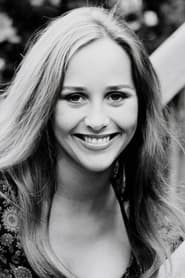
One of the film's highlights for me is Hilary Dwyer, who plays the soldier's fiancé/wife. She's just a uniquely beautiful woman and a pleasure to behold.

Another strong point is the ending which a man mad with rage hacking someone to death while a just-tortured woman screams and screams. The evil inflicted upon them has brought them to this point of maniacal frenzy. They were venting and it smacks of reality. Despite the downbeat climax I've always viewed it as somehow uplifting for obvious reasons. There's no reason we shouldn't assume that they moved on to live a happy life.

While "Witchfinder General" is not a Hammer film, it is a British movie made at the time when Hammer was in its prime; it therefore has that Hammer vibe, which is why some mistake it for a Hammer picture. Needless to say, if you like Hammer you'll appreciate this. Yet "Witchfinder General" stands apart; it has its own uniqueness, no doubt due to Reeves’ burgeoning genius. As such, the flick is special. Some of the photography is hauntingly beautiful; the protagonists — the noble soldier and winsome Sara — are exceptional; the villains dastardly; and the ending innovative.

So why not a higher rating? Because, as special as this movie is, it's not the most compelling saga, despite lots of action. Artistically, it's gets an 'A' as a low-budget cult flick from that era but, story-wise, there’s room for improvement.

The film runs a short-but-sweet 1 hour, 27 minutes, and was shot in Suffolk & Norfolk, England, both a 1-2 hour drive northeast of London.

GRADE: B+

CinemaSerf

CinemaSerf

7 /10

Vincent Price is superb in this depiction of the tyrannical, evil "Matthew Hopkins", tasked amidst the English Civil War to bring fear and terror to the population. Playing to just about every phobia and superstition, he travels the land seeking out and punishing those who worship or serve the devil... There is a magnificent scene in which he divines that a man dropped into the river with stones tied about him will be a witch if he floats, innocent if he sinks (and drowns!)... Sums up the science, really - and the really quite perturbing attitudes that prevailed, even amongst those deemed educated or sophisticated. Ian Ogilvy is "Richard Marshall", a man determined to stop these atrocities and at risk to himself and his family - and we have now watch a battle royal between the two men as worthy as any fought in the war. It's, at times, quite gruesome to watch - and the whole look of the film adds oodles to the sense of menace evoked by this truly malevolent man. Again, based on the vivid imagination of Edgar Allan Poe, this film is a cracker for late on a winter's night with a glass of red wine and a rogue branch tapping on the window.

Reseñas proporcionadas por TMDB