El resplandor backdrop
El resplandor poster

EL RESPLANDOR

The Shining

1980 GB HMDB
mayo 23, 1980

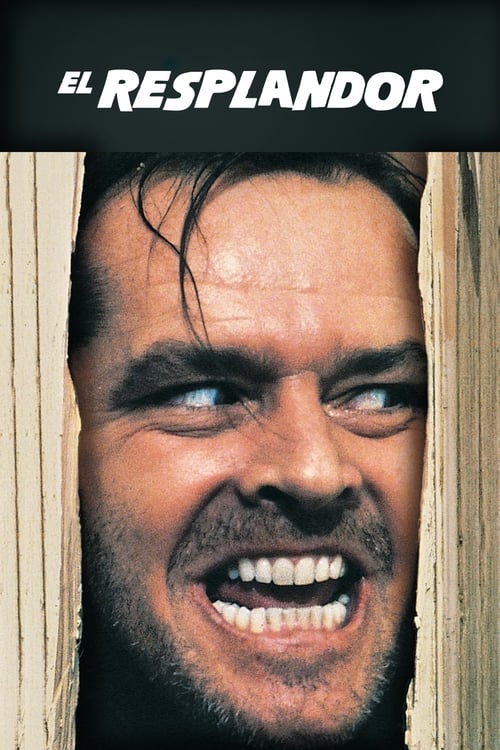
Jack Torrance se traslada, junto a su mujer y a su hijo, al impresionante hotel Overlook, en Colorado, para encargarse del mantenimiento del mismo durante la temporada invernal, en la que permanece cerrado y aislado por la nieve. Su idea es escribir su novela al tiempo que cuida de las instalaciones durante esos largos y solitarios meses de invierno, pero desde su llegada al hotel, Jack comienza a padecer inquietantes transtornos de personalidad, al mismo tiempo que en el lugar comienzan a suceder diversos fenómenos paranormales.

Reparto

👍 1 👎 🔥 🧻 👑 (1)

Comentarios

Comentarios (0)

Equipo

Produccion: Stanley Kubrick (Producer)Jan Harlan (Executive Producer)
Guion: Diane Johnson (Screenplay)
Musica: Wendy Carlos (Original Music Composer)Rachel Elkind (Original Music Composer)Béla Bartók (Music)Krzysztof Penderecki (Music)György Ligeti (Music)
Fotografia: John Alcott (Director of Photography)

RESEÑAS (1)

Marco Castellini
Jack Torrance, aspirante escritor, para encontrar la inspiración adecuada para su primer libro acepta trabajar como guardián en el Overlook Hotel, un lujoso y aislado hotel en las Montañas Rocosas, convencido de que el aislamiento y la tranquilidad del lugar favorecerán su vena creativa. El hotel, sin embargo, esconde un pasado misterioso: el guardián anterior había masacrado a su familia, sin motivo aparente, en un arrebato de locura homicida. Sin embargo, Jack no se deja intimidar por los pasados sucesos y se lleva a su familia (esposa e hijo de siete años), pero pronto se da cuenta de que las cosas no van como esperaba: no logra reanudar su trabajo y el aislamiento forzado lo pone nervioso. El hombre comienza a perder la razón, identificándose con el antiguo guardián y buscando así repetir sus hazañas... Kubrick se sumerge en el horror y, como era inevitable, deja una huella indeleble de su paso dirigiendo una obra emocionante, envolvente y aterradora al mismo tiempo. Una película oscura y claustrofóbica, donde todo gira en torno a la figura simbólica del laberinto (los pasillos del hotel, los dibujos de la tapicería, los senderos del jardín); una película hecha de señales ambiguas, donde el horror es tanto más profundo cuanto menos interpretable (locura, alucinación, posesión?). La obsesión del director por los mínimos detalles, motivada por la necesidad y la convicción de querer dirigir solo y siempre películas "formalmente perfectas", se denota desde las primeras secuencias (con la cámara que sigue, paso a paso, el automóvil entre las curvas de las montañas) y añade aún más encanto e interés a la película. Muchas secuencias han entrado de pleno derecho en la historia del género y han condicionado decenas y decenas de películas de terror posteriores; solo para citar un par: el rostro de un Jack Nicholson poseído que aterroriza a Shelley Duvall saliendo de la puerta recién destruida a golpes de hacha, o la ola de sangre que invade los pasillos del Overlook Hotel. No menos importantes para el éxito de la película son las magistrales interpretaciones de los protagonistas: como se ha dicho, Nicholson sobre todo, con sus sonrisas y expresiones, logra por sí solo crear un estado de ansiedad y terror en el espectador, pero perfectos, en sus respectivos papeles, también Shelley Duvall (la esposa) y el pequeño Danny Lloyd. Una última curiosidad: la historia está basada en la espléndida novela homónima de Stephen King, pero este último se ha quejado del hecho de que Kubrick se haya "tomado demasiadas libertades" en la adaptación de su novela y haya así en parte traicionado el espíritu de su obra. Difícil, en este caso, estar de acuerdo con el gran novelista americano.
👍 👎 🔥 🧻 👑

Comentarios

Comentarios (0)

Dónde Ver

Streaming

Sky Go Sky Go
Now TV Now TV

Alquilar

Apple TV Apple TV
Amazon Video Amazon Video
Rakuten TV Rakuten TV
Google Play Movies Google Play Movies
Timvision Timvision
Chili Chili

Comprar

Apple TV Apple TV
Amazon Video Amazon Video
Rakuten TV Rakuten TV
Google Play Movies Google Play Movies
Timvision Timvision
Chili Chili

RESEÑAS DE LA COMUNIDAD (7)

Andres Gomez

10 /10

A masterpiece. Kubrick chose a perfect cast and uses the timing and music to create a greatly opressing atmosphere.

Nicholson is superb, but Duval and the kid are not less good.

John Chard

John Chard

8 /10

This rum is red, man!

In spite of author Stephen King not being happy with Stanley Kubrick's adaptation of his novel, The Shining (1980) has proved to be a critical and commercial darling.

It may not be in the spirit that King wanted, but it's undeniably a skillful piece of film making, a mixture of beauty and terror, of bravura techniques and simple but effective scares. With quality acting performances to match as well. The story unfolds at a deliberately slow pace, claustrophobia oozes from practically every frame, while the narrative smarts brings to bear the ghosts of the human and supernatural kind, all bone chillingly rendered for great effect by the vast spaces - the cold winter grounds outside - of the Overlook Hotel.

It's not all perfect, the screenplay is very average, which makes Kubrick's work even more impressive, but with that comes the wave of feeling about style over substance. A churlish gripe? Maybe? But with Jack Nicholson on scenery chewing overdrive and Kubrick pulling the strings, The Shining still represents a highlight in horror. A horror movie that all horror fans should see at least once - and in the best format available as well! 8/10

JPV852

JPV852

8 /10

Probably my favorite of the Stephen King adaptations (though not much for many of the others save for a one or two) but not amongst Stanley Kubrick's, watched this one for the first time in many years (maybe a decade) and while I did immensely enjoyed it, and really liked Nicholson towards the end, I never really bought into him early on. Still, atmospherically it was amazing and at times creepy. But can't place this as some sort of classic in my book, anyway. 4.0/5

Manuel São Bento

10 /10

If you enjoy reading my Spoiler-Free reviews, please follow my blog :)

With Doctor Sleep, an almost 40-year sequel to The Shining, being released this week, now it’s the perfect time to revisit one of the greatest horror movies of all-time, as well as one of the most influential directors ever, Stanley Kubrick. I know, I know… Spoiler-free? For a movie released in 1980? Well, first of all, there’s always someone who still didn’t watch it. Secondly, as deeper we get into the 21st century, the more the 60s/70s/80s/90s movies are forgotten. And finally, if there’s a movie which I don’t need spoilers to explain how outstanding it is, it’s The Shining. With that said …

It has always been one of my favorite horror films ever. It’s not perfect (no film is) and some aspects don’t work as well now as they did 5/10/20 years ago. When it came out, Kubrick’s adaptation of Stephen King’s novel was received with mixed reactions. King himself criticized the movie. However, less than 10 years later, Kubrick’s film was already being reevaluated. Nowadays, it’s considered a cult classic, and it’s easy to understand why. From the countless homages to the hundreds of comedic parodies, The Shining has some of the most memorable lines ever. Just this year, we had It: Chapter Two mimicking Jack Nicholson’s “Here’s Johnny!” scene, for example. And then there’s the mysterious “redrum”…

However, the movie’s biggest influence is its technical achievements. I apologize in advance if this review becomes too technical, but it’s impossible not to address the arguably best component of the film. This movie was one of the first to use Steadicam (a camera stabilizer mount which allows for smooth shots, even on irregular surfaces, isolating the operator’s movement), something that became so common that people don’t even praise anymore. Honestly, there are still a bunch of recent movies that have terrible camera work, so I’m one of those who defend that the Steadicam use shouldn’t be taken for granted. Especially how Kubrick did, barely above the floor, which originated the extension “low-mode” that now exists and allows for the operator to easily shoot lower than its waist.

With the innovative use of the technical equipment, Kubrick’s delivers a masterclass in framing (composing the visual content of a series of frames as seen from a point of view). So much that it became worthy of studying. Almost every shot in this movie has a visual clue or an underlying theme. If you ever feel bored during your viewing, then you’re (probably) not “watching it right”. You’re not truly thinking about it or looking around the characters. This isn’t a generic horror flick with monsters or demons jump scaring you. It’s heavy on visual storytelling, so if you don’t pay attention, you’re going to reach the film’s climactic and enigmatic ending and feel that you missed something.

From the mise-en-scene (arrangement of everything that appears in the framing, hence this French term that means “placing on stage“) having several blood-red colors to the wide shots clearly showing “exit” signs and giving the maze-vibe of the enormous hotel, the imminent danger is visually spread out across the movie. The symmetry/mirroring is absolutely crucial to not only deliver key plot points but to create this sense of reality vs fantasy. From the hotel’s structure and decoration (everything is incredibly symmetric) to the growing use of mirrors (these are heavily used to either literally translate words or to show the descent into madness), Kubrick’s framing is what leaves viewers scratching their heads, still to this date.

You’ll always find something new on another viewing. It might be from 1980, but it’s a movie that requires your full attention. Don’t underestimate films from the 20th century like you can’t be surprised by a film “that old” (you’ll be dumbfounded by dozens). If John Alcott’s cinematography is impressive, then what can I write about Wendy Carlos and Rachel Elkind’s haunting score? Nowadays, scores are more based on creating an emotional impact on specific moments. However, throughout the film and during dialogues, even epic films still have a subtlest approach to these scenes, and the music is either very quiet or completely inexistent.

In The Shining, the score is part of the conversation. If a character feels fear or danger is imminent, a simple heartbeat can elevate such a moment. If two characters gradually turn their dialogue into something more violent and aggressive, the music makes sure to accompany that descent into craziness. It’s a perfect horror film’s score. Technically, I’ll stop there because no words will be able to express how mind-blowing Kubrick’s visionary methods are. He’s one of the greatest directors ever, maybe even the most influential. Hopefully, his work will always be remembered and never stop being relevant.

Story-wise, The Shining also inspired a whole new generation. Everyone knows and loves the key moments of the film, but it’s the clever exposition that satisfies me. Every piece of information is given through either an incredibly captivating dialogue or visual clues/actions. I watched the 144min version of the film (the European version has 25min less than the American version, and the latter has a final scene at a hospital edited out by Kubrick himself), and pretty much every single scene is intended to mean something. It can be important new information or an update on a previous plot point, but every single sequence has a particular purpose.

Jack Nicholson commands the screen with a phenomenal performance, one of his career’s best. His script might be very well-written, but his delivery and commitment to the role are astonishing. He carries one-take, extense dialogues seamlessly. Credit to Kubrick for making a movie with at least 2/3-minute takes, sure, but Nicholson is able to transform a good scene into a fantastic one. Danny Lloyd delivers one of my favorite young performances ever. His voice as Tony is a great accomplishment, and he seems to understand his surroundings, in a way that I never felt like I needed to “go easy” on him because he’s just impeccable.

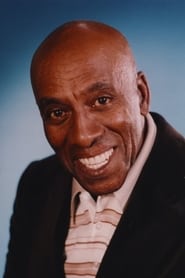
Shelley Duvall, however, is a mixed bag for me. Over-the-top displays were better received at the time, but almost 40 years later, her performance does reach an unbearable level a few times. She’s an amazing counterpart for Nicholson and she stands her own within their dialogues, but when she’s alone or in an emotionally troubled moment, she’s too much to handle. Scatman Crothers doesn’t have that much screentime as Dick Halloran, but he shines every time he has to deliver a line. Some people complain about the slow pacing, but I love how it helps elevate the suspense and building up moments of immense tension. While the ending might be just a tad abrupt, the final image of the film stays with us forever, and after all this time, I still didn’t settle on my own theory.

All in all, The Shining might be one of the most accessible classics to new viewers of today to understand why it is, in fact, one of the greatest and most influential horror films of all-time. Stanley Kubrick’s masterclass in framing with his play on symmetry and mirrors is evident, so even if you don’t study the art of filmmaking, it’s clear that these two themes are vital to telling the story. In addition to his framing, his use of the innovative Steadicam and his notable mise-en-scene shaped an entire new generation that never misses a chance of paying homage to his work. Besides the impressive technical achievements, Jack Nicholson delivers a memorably haunting performance. The ending is still mind-blowing after all these years, and new theories keep coming up. While I’ll keep trying to settle on my own interpretation, don’t you dare spend the rest of your life without (re)watching this cult classic.

Rating: A+

Repo Jack

Repo Jack

9 /10

"Darling, I'm not gonna hurt you. I'm just gonna bash your brains in."

<i>The Shining</i> is a great example of how musical score and cinematography can elevate a movie to the best-of-the-best.

I tend to agree with Stephen King that Jack Nicholson looked like a crazy loon from the beginning, making his decent into madness less dramatic.

But that can be forgiven by all the iconic scenes masterfully weaved into a horror classic.

Repo Jack

Repo Jack

9 /10

"Darling, I'm not gonna hurt you. I'm just gonna bash your brains in."

The Shining is a great example of how musical score and cinematography can elevate a movie to the best-of-the-best.

I tend to agree with Stephen King that Jack Nicholson looked like a crazy loon from the beginning, making his decent into madness less dramatic.

But that can be forgiven by all the iconic scenes masterfully weaved into a horror classic.

CinemaSerf

CinemaSerf

7 /10

"Jack Torrance" is a writer who suffers from a chronic lack of inspiration. To help overcome his block, he takes a job as a winter caretaker and relocates his family to the remote, huge, "Overlook Hotel" where he hopes he can focus! Gradually, the bleak Arctic conditions outside and the never ending, brightly lit, corridors and rooms long since abandoned start to affect his mind. When he ventures towards the expressly off-limits room 237 it all begins to get truly out of hand. Shelley Duvall is fabulous as his put-upon wife "Wendy" as is Danny Lloyd as their gifted, but largely terrified son "Danny". Kubrick is on top form as he cleverly capitalises on Stephen King's terrifying story helping the star create a wonderful sense of madness and menace tinged with quite a bit of comedy that leaves us with an horror film that is truly scary for a change! Credit also to the make up folks - they manage to help Nicholson transfer from obnoxious writer to axe-wielding psychopath; especially around the eyes, with real impact. 40 yeas on, it still packs a punch.

Reseñas proporcionadas por TMDB