




Twixt backdrop
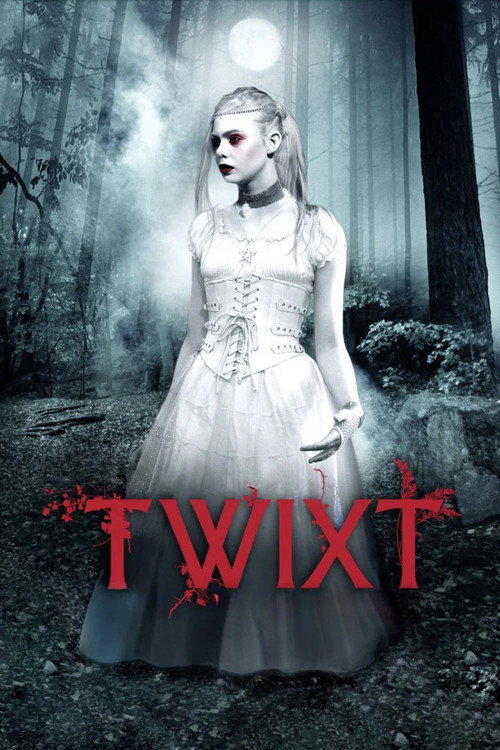
Twixt poster

TWIXT

2011 US HMDB
septiembre 10, 2011

Un escritor de novelas de terror (Kilmer) llega a un pueblo, que vive amedrentado por la presencia de un asesino en serie. Adaptación de un cuento escrito por el propio Coppola. (FILMAFFINITY)

Reparto

👍 👎 🔥 🧻 👑

Comentarios

Comentarios (0)
Equipo

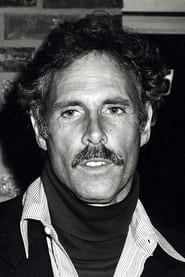
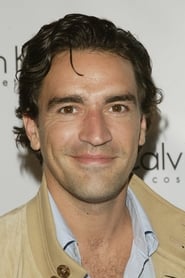
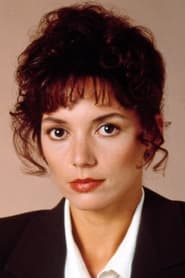
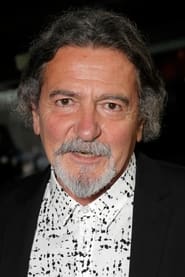
Produccion: Fred Roos (Executive Producer)Francis Ford Coppola (Producer)Anahid Nazarian (Executive Producer)
Musica: Dan Deacon (Original Music Composer)Osvaldo Golijov (Original Music Composer)
Fotografia: Mihai Malaimare Jr. (Director of Photography)

RESEÑAS (1)

Andrea Costantini
Hall Baltimore es un escritor de novelas de terror, cuya especialidad es la brujería. En crisis creativa y financiera, Baltimore comienza un tour promocional de su nueva novela, terminando en un pequeño pueblo llamado Swan Valley. Aquí conocerá al sheriff del lugar, un hombre medio loco que lo involucra en las investigaciones de una chica asesinada con un palo de madera en el corazón. Mientras del otro lado del lago un grupo de jóvenes pasan el tiempo haciendo orgías y adorando el mal, Hall Baltimore se verá emocionalmente involucrado por los fantasmas de ese país y por aquellos que viven dentro de él. Universalmente conocido como uno de los mayores directores vivos, Francis Ford Coppola es un verdadero mito del séptimo arte. Tiene en su haber más de veinte películas, entre ellas obras maestras absolutas como la saga de "El padrino", "Apocalypse Now" y "La conversación". En su larga carrera también ha explorado, a su manera, el cine de terror con "Terror a la hora trece" y la fiel revisitación de la novela "Drácula" de Bram Stoker. En 2011, después de un par de películas introspectivas y personales, Coppola regresa al género que tanto amamos con una película que dividió al público: "Twix". Se trata de la historia de un escritor de novelas de terror en crisis creativa que durante el tour promocional de su libro, terminará en un pueblo en el que parece anidar el mal. Hall Baltimore, con la ayuda del sheriff loco del país, toma a corazón un extraño asesinato y gracias a las extrañas historias que circulan sobre esos lugares, vislumbra un rayo de luz para su nueva novela. Antes, sin embargo, deberá lidiar con su doloroso pasado. Al ver "Twix" inmediatamente saltan a la vista algunas cosas, típicas del director. Una de ellas es la magistral gestión de los colores. Como ya ocurría en otros de sus trabajos anteriores, a menudo hay imágenes en blanco y negro caracterizadas por un solo elemento cromático: en "Rusty el salvaje" había peces, en "Secretos de familia" recuerdos, aquí tenemos la linterna de Edgar Allan Poe, el maquillaje de V y la sangre, elementos que toman color en los sueños en blanco y negro de Hall. No se trata de un verdadero terror, es una película sobre vampiros pero que en realidad no habla de vampiros. Habla del dolor de un hombre que no puede exorcizar la pérdida de su hija ahogando sus dolores en el alcohol y en la búsqueda de una solución al sentido de culpa. Hasta que encuentra una salida gracias a Edgar Allan Poe, que como un Virgilio dantesco lo guía a través del bosque oscuro de su infierno personal, mostrándole los horrores de ese país y los horrores que se esconden dentro de su mente. "Twix" es una película muy personal para Coppola, abordando el tema de la pérdida de un hijo, al igual que le sucedió al director durante el rodaje de la película "Los jardines de piedra" de manera similar a la mostrada en la película. Visualmente espléndida, la película lamentablemente falla en comprensión. Si al principio la trama parece lineal y atractiva, apenas Baltimore encuentra a V en el bosque, todo cambia. Al principio se juega el juego, uno se apasiona y parece asistir a la versión lynchiana de "El seme de la locura" (muchos son los elementos que lo recuerdan como el motel, los niños y el campanario, tan extraño como la iglesia bizantina) con personajes locos y discursos sin cabeza ni cola. Luego, sin embargo, ya no hay más giros y la película continúa de esta manera alternando continuamente los sueños del protagonista con la realidad, creando mucha confusión y la consiguiente pérdida de atención. Sin embargo, a pesar de los defectos de la trama, la película sigue siendo un producto interesante, naturalmente no al nivel de muchas de sus películas anteriores. Es hermoso ver a un artista como Coppola, que podría pasarse la mañana a la tarde viviendo de la gloria de los trabajos pasados, intentar renovar su estilo manteniendo siempre sobriedad y clase. Y si se pasa por alto la trama un poco desordenada, uno sigue fascinado por la puesta en escena. El elenco de estrellas en declive y en ascenso, está compuesto por Val Kilmer, hinchado como nunca, Bruce Dern caracterizado de payaso, un Ben Chaplin monocorde y la joven Elle Fanning, hermana de la más famosa Dakota, que arriesgará superar a su hermana en habilidad, la única que realmente destaca en la película. Algunas escenas de la película fueron filmadas en 3D. Añadir media calabaza al voto final.
👍 👎 🔥 🧻 👑

Comentarios

Comentarios (0)

Dónde Ver

Alquilar

Amazon Video Amazon Video
Google Play Movies Google Play Movies

Comprar

Amazon Video Amazon Video
Google Play Movies Google Play Movies

RESEÑAS DE LA COMUNIDAD (3)

John Chard

John Chard

6 /10

The bit in between the dream and waking worlds.

Twixt is written and directed by Francis Ford Coppola. It stars Val Kilmer, Bruce Dern, Elle Fanning, Ben Chaplin, Joanne Whalley and Don Novello. Music is by Dan Deacon and Osvaldo Golijov and cinematography by Mihai Malaimare.

Hall Baltimore (Kilmer) is a struggling writer of witchcraft based novels, during a book signing stop over in a sleepy backwater American town, he finds himself involved with evil, murder and Edgar Allan Poe’s Ghost. But just what is real here?...

Twixt finds Coppola in relaxed mode, in the later stages of his film making career, he’s clearly made an adventurous movie based on a dream and personal instances. Very much operating in the realm of dreamscaping, both on visual and narrative terms, it’s an often silly picture yet one that still beguiles with its weirdness and daring visual touches. There’s also a good quotient of humour, both self aware and absurd, but if searching for a horror movie here you will be very disappointed. The Lynchian feel to it ensures it’s an interesting misfire, while the cast are all very enjoyable, but it’s not a film for a concrete recommendation. 6/10

Wuchak

Wuchak

6 /10

"The horror, the horror" of the creative process

Val Kilmer stars as Hall Baltimore, a third string mystery/horror writer on his latest book tour staying in a small town where he gets involved in a murder mystery upon meeting the eccentric sheriff, Bobby LaGrange (Bruce Dern). He meets a quasi-goth girl named V (Elle Fanning) who reminds him of his pubescent daughter. There's also a camp of weirdo goth-kids across the lake and Edgar Allen Poe shows up now and then as a kind of spirit-guide (Ben Chaplin), but what's dream and what's reality? And who murdered the female in the morgue with a stake?

"Twixt" (2011) was reedited and renamed as “B'Twixt Now and Sunrise” by creator Francis Ford Coppola’s in 2022. It’s a mystery/dramedy with elements of horror, combining the look of Coppola's "Bram Stoker's Dracula" with the inscrutableness of his "Youth Without Youth," plus a welcome side of humor. It's a quirky mystery that leaves you scratching your head, but you find yourself enjoying the ride, a Gothic tale with beautifully haunting cinematography & atmosphere, highlighted by Poe, bell towers, ghosts and bats in the belfry. The enhanced moonlighting and otherworldly blueish gray tones are awesome.

It tackles the creative process as we observe the desperation of a writer scraping the bottom of the barrel, often under the influence of sundry intoxicants. Will he come up with a best seller? Will he solve the murder mystery? Will he come to terms with his specters and demons that arise from his guilt over what happened to his daughter? That element, by the way, brings to mind Francis' 23 years-old son, Gian-Carlo Coppola, who was tragically killed in a similar boating accident in May, 1986. The reckless driver was Griffin O'Neal (Ryan's son).

A lot of the movie is an internal dialogue with the author's own ghosts and literary influences. Charles Baudelaire (a notorious substance abuser) is referenced, with the aforementioned Poe intermittently appearing, but only when Baltimore is under the influence, or dreaming. Did the abuse and murder of the children happen as shown? Or did Poe and the vampire incarnation of Hall’s own daughter serve as muses as he works his way through creating a story that might turn his career around? Coppola leaves it up to you to decide what is real and what is imagination, but the answers are there if you want 'em.

Francis got the story from a dream he had while staying in Istanbul. This sets-up the criticism that Coppola's dream is the audience's nightmare. While "Twixt" and this reedit are too ambiguous for their own good, it’s obviously intentional and he wanted the viewer to leave with questions to ponder. Besides, does everything need to be spelled out?

As for comparing the two versions, this one’s 8 minutes shorter and I think I liked it better (it’s hard to say because I saw the former version 8 years earlier).

It was shot at Kelseyville and the Clear Lake area of Northern California.

GRADE: B+

MISC. INSIGHTS SPOILER ALERT (Don't read further unless you've watched the movie)

A lot of what happens in the town was the author working out his story, but most of it isn't real. The sheriff and deputy are real, as are their deaths at the end, not to mention Baltimore's wife. The sheriff really wanted to write with him. The movie shows what Baltimore experienced as he journeys through his creative process. His book is completed by the end, selling 30,000 copies.

The bell tower strangely features seven different times, perhaps figurative of when Baltimore couldn't join his daughter for a trip due to setting his alarm clock with the wrong time. If he was there, she wouldn't have died, he reasons. So "time" is useless and naturally the antagonist. Even V says keeping track of time "here" is meaningless, which explains her missing the book signing.

An important part of the movie is Hall's loss of his daughter. Time is the 'villain.' By not dealing with the tragic accident Baltimore is figuratively keeping his daughter undead. He's fighting time somehow.

The age of his daughter when she died is also pertinent. She was betwixt a child and a teenager. And Hall was perhaps between deadlines and going on tours, thus missing out on some of her late childhood/early adolescence ("I thought they would be small boats... children's boats...").

The vampire kids represent the sometimes-startling changes children go through as they enter their teens, e.g. their music and the clothes they wear, as they start developing a disposition of their own. It seems weird to their parents who unexpectedly discover themselves "on the outside looking in." The Sheriff symbolizes the older generation; basically saying, "Bah, these kids today!"

The psycho pastor slays the kids to prevent them from "becoming vampires," that is, becoming teenagers who will lose their innocence as they make many mistakes learning to decide for themselves.

Flamingo (Alden Ehrenreich) is akin to the Pied Piper; he "gets away" at the climax because he'll always be around. In short, there will always be a teenage spirit of rebellion, regardless of the clothes it wears.

If these comments sound like dubiously-linking threads, it’s because the movie leaves you with this impression.

Rela Blue Jones

Rela Blue Jones

Now re-released as "B'Twixt Now & Sunrise" the director's cut is actually a little shorter than the 2011 initial release.

This film is a dreamscape with lots of nightmarish, surreal visuals which, unfortunately, are not helped by a flat, cheap, shot-on-digital look (the technology has gotten a lot better since then).

However, there is a lot to like here -- the horror and literary references, plus the cast. And, of course, Francis Ford Coppola movies are worth watching, especially some of the lesser known ones... for example, I liked his 'ageing backward' movie, Youth Without Youth, better than the far more popular Benjamin Button.

Reseñas proporcionadas por TMDB