









Crimson Peak backdrop
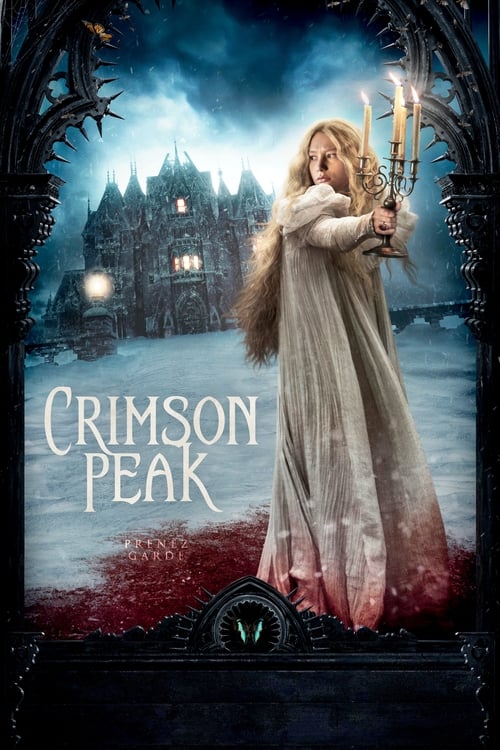
Crimson Peak poster

CRIMSON PEAK

2015 US HMDB
octobre 13, 2015

Au début du siècle dernier, Edith Cushing, une jeune romancière en herbe, vit avec son père Carter Cushing à Buffalo, dans l’État de New York. La jeune femme est hantée, au sens propre, par la mort de sa mère. Elle possède le don de communiquer avec les âmes des défunts et reçoit un étrange message de l’au-delà : "Prends garde à Crimson Peak". Une marginale dans la bonne société de la ville de par sa fâcheuse "imagination", Edith est tiraillée entre deux prétendants: son ami d’enfance et le docteur Alan McMichael.

Réalisateurs

Distribution

👍 1 👎 🔥 🧻 👑 (1)

Commentaires

Commentaires (0)
Equipe

Production: Callum Greene (Producer)Thomas Tull (Producer)Jillian Share (Executive Producer)Jon Jashni (Producer)
Scenario: Matthew Robbins (Writer)Guillermo del Toro (Writer)
Musique: Fernando Velázquez (Original Music Composer)
Photographie: Dan Laustsen (Director of Photography)

CRITIQUES (1)

Fausto Vernazzani
"Méfiez-vous de Crimson Peak", quelques mots, un avertissement inexplicable venu d'un lieu sombre sont l'instant qui change à jamais la vie d'Edith Cushing. Si ce n'est le sens, ce fut le messager qui façonna son caractère : le fantôme squelettique de sa mère, accouru à son aide dans sa tendre enfance, la laissant avec une inconvenante passion, pour l'époque, pour les histoires de fantômes. Nous sommes à la fin du siècle, dans une Boston tournée vers l'aube du XXe siècle, où Edith, fille d'un magnat de l'immobilier, tente sans succès de faire carrière comme écrivaine, jusqu'à ce que Sir Thomas Sharpe et sa sœur Lucille n'arrivent d'Angleterre. Attirée par le charme fragile de ce dernier, Edith abandonne les attentions de son ami Alan McMichael, et malgré ses convictions sur les aristocrates, cède aux avances de Sir Thomas, ruiné. Un sentiment qui déclenchera la étincelle d'une série d'événements désastreux et violents qui la mèneront en Angleterre, à Allerdale Hall, la demeure de ce dernier, au sommet d'un promontoire gorgé d'argile rouge tendre dans laquelle la maison s'enfonce lentement. Aujourd'hui, nous vivons sous les innombrables affiches produites par la Blumhouse à un rythme incroyable, une époque où tout ce qui craque, saigne et hurle est considéré de manière générique comme de l'horreur. Oubliez les nuances, nombreuses, sinon plus, que les degrés de gris d'un autre genre malmené – surtout en Italie – la science-fiction, mais ceux qui les ont toujours gardées avec soin et ont décidé de vivre à leurs côtés sans aucun doute est le réalisateur mexicain Guillermo Del Toro. Un retour dans les salles de cinéma et à son genre de prédilection après le gigantesque blockbuster "Pacific Rim", Del Toro réembrasse les histoires de fantômes pour s'immerger autant que possible dans la tradition anglo-américaine, s'inspirant avec avidité des pages d'Emily et Charlotte Brontë, des inquiétudes de Joseph Le Fanu, des spectres de Montague Rhodes James et du passé humide de la Nouvelle-Angleterre d'Edgar Allan Poe et Howard Phillips Lovecraft. Crimson Peak est un film plus que tout autre dans sa carrière à puiser parmi les meilleurs auteurs du frisson en circulation. Attention cependant à ne pas tomber dans l'erreur, le Pic Criminel de Del Toro ne régurgite pas à l'extérieur les ancêtres de référence sous forme de citation explicite. Tout comme Quentin Tarantino l'a toujours fait, le réalisateur de Guadalajara joue avec ses passions en les rejetant seulement sous forme d'images. C'est ainsi que nous reconnaissons "La chute de la maison Usher" dans la décrépite, solitaire et glaciale Allerdale Hall, dans les innombrables murs et parois ruinés par la terre vivante (une référence à l'œuvre de Lovecraft) observons les nuits spectrales passées à Wuthering Heights ("Les Hauts de Hurlevent"). Les citations explicites sont autres, l'appel au célèbre chimiste du XVIIIe siècle Henry Cavendish, à Mary Shelley, l'idole de Guillermo Del Toro et de son personnage Edith Cushing et ici, comme il est bien clair, nous arrivons enfin à ce qui est cinéma. Parce que du Septième Art, Crimson Peak est un véritable joyau, brut dans sa phase américaine, lisse et brillant à l'atterrissage en Angleterre. Le cinéma de référence appartient aux années 1960, aux productions de Mario Bava en particulier, mais plus que tout, nous nous trouvons dans le territoire de Terence Fisher, la star réalisatrice de la Hammer Films Production, dont l'un des plus grands protagonistes historiques n'était autre que l'acteur Peter Cushing. L'hommage (car en totalité, l'œuvre de Del Toro co-écrite par Matthew Robbins en est un, d'un pur et simple hommage sans prétention d'innover quoi que ce soit, bien au contraire) reprend les décors articulés des divers Dracula et Le Masque de Frankenstein et l'utilisation forte de la couleur, une caractéristique distinctive qui a aidé la Hammer à rester en vie (et à ressusciter) pendant des décennies entières. Crimson Peak est couleur à partir du titre, il adopte le blanc et le noir et ajoute le rouge pour un retour aux théories de l'utilisation de la couleur de Vladimir Propp, étudiant des contes de fées (un en particulier, de Charles Perrault, viendra à l'esprit de beaucoup pendant la vision), aidant le spectateur à comprendre l'intrigue à travers ses propres yeux et les sensations immuables qu'ils transportent avec une grande rapidité. Nous parlons d'un chef-d'œuvre visuel et beaucoup des compliments vont à Thomas E. Sanders, le scénographe fou au point de satisfaire les manies perfectionnistes de Del Toro, constructeur des superbes environnements de Boston et de la décrépite Allerdale Hall, mais d'un film dont il faut discuter aussi de l'aspect narratif. Ne vous attendez pas à de l'originalité, l'intrigue a de nombreux éléments largement prévisibles, mais en bon amoureux d'Alfred Hitchcock, Del Toro nous pousse à nous demander comment les personnages réagiront et c'est ici que nous arrivons aux interprétations fantastiques des trois protagonistes : Mia Wasikowska incarne corps et âme son Edith, aussi douée que dans Stoker nous l'avions vue ; Tom Hiddleston unit le charme britannique à la fragilité d'une caste aussi ancienne que sanglante ; Jessica Chastain est une véritable force de la nature, anguleuse dans les traits et les gestes, un couteau affûté au manche dur contre lequel on se heurte à chaque pas. Charlie Hunnam, dans un rôle secondaire, le Dr. Alan, ne déçoit pas, ni ne parvient à se mettre à la hauteur de ses gigantesques collègues.
👍 👎 🔥 🧻 👑

Commentaires

Commentaires (0)
Où Regarder

Louer

Apple TV Apple TV
Amazon Video Amazon Video
Rakuten TV Rakuten TV
Google Play Movies Google Play Movies
Chili Chili

Acheter

Apple TV Apple TV
Amazon Video Amazon Video
Rakuten TV Rakuten TV
Google Play Movies Google Play Movies
Chili Chili

AVIS DE LA COMMUNAUTÉ (3)

Frank Ochieng

The feasting of the eyes comes to mind when realizing the polished opulence of writer-director Guillermo del Toro’s Gothic supernatural production Crimson Peak. Undeniably luscious and wonderfully bizarre, Crimson Peak is a psycho-sexual thriller that resonates with the enticing visual senses and registers with the proper amount of off-kilter seduction and twisted charm. For filmmaker del Toro his unconventional narratives have always been peppered in exquisite bounciness regardless of their hit-or-miss effectiveness. In joining past del Toro genre-ridden offerings that range from the revered cult-like stimulation of Pan’s Labyrinth to the misplaced but eye-popping stiffs such as Blade II and Pacific Rim it is safe to declare Crimson Peak as another elegant and gaudy candy-coated canvas of del Toro’s imaginative cinematic vision.

Aesthetically stunning and armed with a sophisticated lining of suspense, Crimson Peak does not necessarily exude any real momentum of toxic scares or memorable chills. Still, it manages to rely on its Gothic-induced romanticism that is enough to accept this splashy and offbeat vehicle on the merits of its unique brand of animated style. Sure, there are displayed predictable paths to tap into Crimson Peak’s erratic pulse and maybe del Toro and fellow co-screenwriter Matthew Robbins could have injected some more convincing bits of subversive edginess to spice up its modest creepiness. Nevertheless, one can appreciate the borrowed Hitchcockian overtones combined with the arresting set designs and peculiar ensemble. This alone invites Crimson Peak as a colorful costume drama layered in concentrated showiness.

Thankfully, the October release of Crimson Peak should echo the spooky spirit of Halloween appropriately and offer some seasonal sizzle for the macabre-embracing moviegoers. The story may not be startling to the point of an innovative revelation but the winning element–at least one of them anyway–is the exceptional art direction and production design that suitably defines del Toro’s mystifying universe of nostalgic ghostly aberrations. Crimson Peak will not be confused with high-minded horror anytime soon but it does effectively promote its lush, Gothic-induced romantic vibes.

Budding American novelist Edith Cushing (Mia Wasikowska, “Alice in Wonderland”) has one specific belief system to hang her literary hat on and the sentiment is self-explanatory: “Ghosts are real!”. This haunting message has plagued Edith since she was a young girl growing up in Buffalo, New York in the early 1900’s. Edith was an only child of privilege and an apple in the eye of her widowed wealthy father in businessman Carter Cushing (Jim Beaver). Naturally the protective parental instincts kick in as Cushing is weary of an opportunist that might wanting to court his eligible daughter Edith.

Enter the seemingly shifty and broke British aristocrat Sir Thomas Sharpe (Tom Hiddleston). Sharpe has an agenda and it is quite clear. Apparently Sharpe wants to shop around a potential profit-making mining device and needs financial support and promotion from an influential American contact. Coincidentally, Sharpe starts a relationship with promising writer Edith whose Daddy Dearest happens to be a prominent industrialist. How convenient, huh? The skepticism about Sir Thomas Sharpe starts to mount for the concerned Carter Cushing as he stands by and regrettably witnesses his precious offspring Edith’s affection for the cunning character.

Of course Sharpe is not the only target that moneybags Cushing needs to worry about as the loving companion to his treasured Edith. Sharpe’s older sister Lady Lucille Sharpe (Jessica Chastain, “The Martian”) accompanies her sibling on his mission to do whatever he has planned for his personal gain. So now Cushing has double trouble with the mysterious brother-sister Sharpe tandem as they are embedded in the indelible psyche of the artistic Edith. However, the Sharpes have spun their web as they now have turned Edith into a member of their family as both wife and sister-in-law. Thus, a fresh existence begins for Edith Cushing Sharpe on the other side of the pond in Northern England where the Sharpes’ Cumberland-based estate Allerdale Hall is located.

Realistically, the less-than-stellar Allerdale Hall is not exactly the ideal venue that caters to the so-called prominence of the aristocratic Sharpes. The vast Victorian house is relentlessly drab and does not reflect the impressive homestead that it should be in status and structure. In making matters worse at Allerdale Hall Edith is restricted from stepping into certain parts of the dilapidated dwelling. Plus, Edith is overwhelmed by the recurring appearances of pesky apparitions that roam in and out of the expansive hallways of the isolated, blood-colored domicile. Lastly, the creaky goings-on is not helped a bit by the drastic change in hubby Sir Thomas’s demeanor as Edith feels duped by his on-going indifference. Edith has to feel uneasy and uncertain about what she has gotten involved with concerning the grasp of the mischievous Sharpes and the life-long warnings of afterlife spirits in the decaying manse that she has been taught to take seriously since childhood.

The sinister symbolism is adequately atmospheric and the erratic pacing makes for some rather genuine, tense moments. However, Crimson Peak does show some flashes of being a slight boofest melodrama that undermines its titillating convictions. As an eerie romancer Crimson Peak feels a tad uneven. The three-way love triangle pitting Wasikowska’s Edith against both Hiddleston’s Sir Thomas Sharpe and Charlie Hunnan’s Alan McMichael (Edith’s first suitor before Sharpe’s arrival) could have been explored but felt rushed and pushed aside. The whispering presence of shadowy ghostly figures floating about within the decrepit walls of Allerdale Hall makes for some convincing hair-raising hedonism that is compatible with del Toro’s topsy-turvy color-toned exposition.

Overall, the real scene-stealers behind Crimson Peak’s brightly spry makeup belongs to the film’s handlers responsible for the glossy sheen of this eye-fetching film project. Credit the sumptuous contributions in the aforementioned art design and sets (not to mention the crisp cinematography and fashionable costumes) to propel Crimson Peak’s entertainment value beyond the tepid lapses in manufactured jitters.

Crimson Peak (2015)

Universal Pictures

1 hr. 59 mins.

Starring: Mia Wasikowska, Tom Hiddleston, Jessica Chastain, Jim Beaver, Charlie Hunnan

Directed and Co-Written by: Guillermo del Toro

MPAA Rating: R

Genre: Horror and Romance/Supernatural Thriller

Critic’s rating ** 1/2 stars (out of 4 stars)

Reno

Reno

6 /10

Ghosts are real, that much she knows.

Seen all the Del Toro films, but this one was not any good compared to his recent year's class. The film has his signature mark, the gothic style atmosphere, visually spectacular, but the story did not strike as expected. Definitely my blame is on the writing department. Though the actors were so much better in their character exhibition, especially the lead trio.

The opening convinced it will going to be a terrifying horror. Seriously? The writer brought ghosts for a concept, but ended penning a fantasy-thriller. In the middle of the narration there was too much drama that dragged the story. And in the third act it turned totally into a killer-thriller. It should have been more frightening, they wanted it to be a faulty human nature kind of twist than supernatural things. Well, they gave what they wanted, not what we the audience looking for.

I did not completely disliked the movie, I enjoyed it other than its plot. The costumes were very nice, the music well blended with the screenplay, but I was disappointed with the reason given as the motivation for all the trouble faced by character Edith. After all the hype, what it revealed was too little and too sudden with guessable stuffs. You can try it for the visuals alone than anticipating another Del Toro's masterpiece.

6/10

Wuchak

Wuchak

7 /10

Jane Eyre meets House of Usher with ghosts of the past

RELEASED IN 2015 and written & directed by Guillermo del Toro, "Crimson Peak” is a Gothic drama/mystery/horror about a young woman (Mia Wasikowska) in the opening years of the 1900s who falls in love with a mysterious English man (Tom Hiddleston) and moves from Buffalo, NY, to a creepy English manor, where his weird older sister also lives (Jessica Chastain). Ghosts of the past make themselves known, ultimately leading to the truth.

Aside from Jane Eyre and House of Usher, both of which have been filmed several times, “Crimson Peak” has similarities to haunting Gothic flicks like “Bram Stoker’s Dracula” (1992), “The Others” (2001) and “Mary Shelley’s Frankenstein” (1994), but it’s thankfully nowhere near as ridiculously melodramatic as the latter. The spectral horror is more low-key than “Dracula” and “Frankenstein,” which is why I cite “The Others.” Psychological Gothic horror like “Demons of the Mind” (1972) and “The Eternal” (1998) are other comparisons. If you’re in the mood for a movie like these, you’ll probably appreciate “Crimson Peak.”

Honestly, this is one of the most sumptuously LOOKING movies I’ve ever seen. Take, for instance, the numerous scenes of Edith (Mia) walking down the lavish halls in an alluring white nightgown and flowing blond hair. The Gothic lushness is to die for.

Some people think the story is meh, but it’s no better or worse than the plots of the seven movies listed above. Whilst the first act in Buffalo is somewhat tedious, the movie picks up interest once Edith (Mia) moves to the unsettling English chateau, which has seen better days. I read a critic’s list of a dozen questions in an attempt to tear the film to pieces, but I easily answered all of them, which showed that this critic was intentionally LOOKING FOR something to dislike. Every potential quibble is effortlessly explained by clues in the picture or simply reading in-between the lines.

THE MOVIE RUNS 1 hour 59 minutes and was shot in Hamilton, Kingston and Toronto, Canada. ADDITIONAL WRITER: Matthew Robbins.

GRADE: B

Avis fournis par TMDB