
Le Grand Inquisiteur backdrop
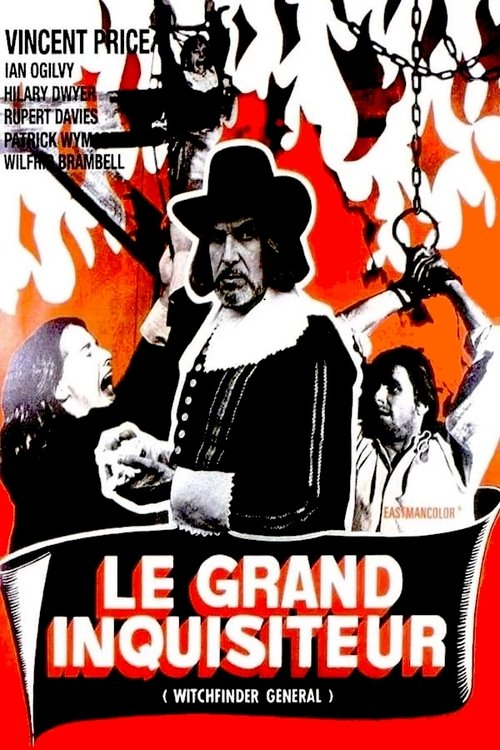
Le Grand Inquisiteur poster

LE GRAND INQUISITEUR

Witchfinder General

1968 GB HMDB
mai 17, 1968

Angleterre, 1645. La cruelle guerre civile entre royalistes et parlementaires qui ravage le pays provoque une ère de chaos et d'arbitraire juridique qui permet à des hommes sans scrupules de tirer profit de l'exploitation des superstitions absurdes des paysans ; comme Matthew Hopkins, un monstre déguisé en homme qui erre de ville en ville en proposant ses services de chasseur de sorcières.

Réalisateurs

Distribution

👍 👎 🔥 🧻 👑

Commentaires

Commentaires (0)

Equipe

Production: Louis M. Heyward (Producer)Arnold L. Miller (Producer)Philip Waddilove (Producer)Tony Tenser (Executive Producer)Samuel Z. Arkoff (Executive Producer)James H. Nicholson (Executive Producer)
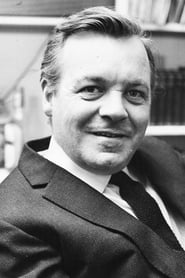
Scenario: Michael Reeves (Screenplay)Tom Baker (Screenplay)
Musique: Paul Ferris (Original Music Composer)
Photographie: John Coquillon (Director of Photography)

CRITIQUES (1)

Roberto Giacomelli
En 1645, au milieu de la guerre civile anglaise, l'inquisiteur Matthew Hopkins et son assistant John Sterne se déplacent de village en village à la recherche de sorcières et de papistes à tuer. Les deux hommes arrivent à Brandstone, appelés par les habitants qui accusent le révérend Lowes de sorcellerie, et pendent l'homme après avoir abusé sexuellement de sa nièce Sara. Apprenant l'incident, le soldat Richard, promis à Sara, jure de se venger de l'inquisiteur et fait refuge à Sara dans un village voisin. Pendant ce temps, Hopkins, qui connaît l'homme qui le cherche, arrive justement dans le village où Sara s'est installée et la capture sous l'accusation de sorcellerie. Il existe des œuvres cinématographiques que le temps nous cache, des films d'une grande force contenutiste et d'une charge émotionnelle et visuelle indéniable qui, aujourd'hui, ne sont plus (ou ne l'ont jamais été) suffisamment rappelés et célébrés. Appartient sans aucun doute à cette catégorie "Le Grand Inquisiteur", un drame en costume déguisé en horreur truculente réalisé en 1968 par l'Anglais Michael Reeves. S'inspirant d'un roman/essai historique de Ronald Bassett ("Matthew Hopkins: Witchfinder General" de 1966), la American International Pictures a confié au jeune Reeves la réalisation de ce film de genre anormal, déjà, car en amont des contenus et de l'origine "haute" du thème traité, "Le Grand Inquisiteur" veut être un film de genre, comme c'était la coutume pour la plupart des productions de l'AIP. Mais la limite qui cette fois sépare l'exploitation de la "sérieux" est subtile et souvent invisible, de sorte que toute classification se révèle étroite ou inappropriée pour le film en question. Reeves et son co-scénariste Tom Baker veulent fondamentalement et ouvertement fournir un apologue de condamnation du pouvoir : tout homme mesquin pourvu d'une certaine supériorité, intellectuelle, politique ou économique, est porté à l'utiliser de manière mesquine pour satisfaire plus facilement ses instincts les plus bas. L'inquisiteur Hopkins, armé de crédibilité et d'autorité aux yeux d'une masse superstitieuse et effrayée, peut donner libre cours à son sadisme en apaisant sa soif de sang, de sexe pervers et d'argent, qui arrivent ponctuellement et abondamment à chaque localité qu'il visite. Dans son livre, Bennett évoque des chiffres très élevés, 230 personnes tuées pour sorcellerie en un peu plus d'un an par le vrai Matthew Hopkins, démontrant ainsi que l'horreur de la réalité est parfois incroyable même pour la fiction. Reeves conçoit ainsi une œuvre d'une très grande force émotionnelle, incroyablement audacieuse pour l'époque de sa production. 1968 a été une année - mais nous pouvons la définir comme une véritable période historique - de grande et inégalée rupture avec les conventions précédentes et le cinéma n'a pas été en reste, saisissant ces intempéries culturelles et sociales en réécrivant complètement les langages et les modes de production. "Le Grand Inquisiteur" est explicite à cet égard, capable d'aborder ouvertement des thèmes "brûlants" comme la dénonciation du pouvoir et de la religion, en utilisant des images d'une grande cruauté. Les tortures ne sont jamais épargnées au spectateur et le sadisme et la perversité sexuelle du personnage de l'inquisiteur parviennent à exercer une fascination perverse et désagréable sur le spectateur. Il suffit de penser à la grande force que prennent les images finales du film, anticipatrices d'une cruauté et d'un pessimisme existentiel typiques des films les plus représentatifs de la décennie suivante. Le casting est composé de bons acteurs comme Ian Ogilvy ("Le Tueur de Satan"; "La Boutique qui vendait la mort"), Rupert Davies ("Les Cinq Dragons d'Or", "Les Amantes de Dracula"), Hilary Heath ("Satan dans le corps", "Le Masque rouge de la terreur"), mais surtout Vincent Price, dans le rôle du grand inquisiteur, qui pour beaucoup ici l'une de ses meilleures performances. En réalité, Price a eu une très mauvaise relation de travail avec le réalisateur Reeves, qui ne voulait pas que l'acteur se livre à une performance outrée comme d'habitude et comme il l'a fait aussi dans ce cas. En effet, on dit que Reeves voulait Donald Pleasence dans le rôle, qu'il avait apprécié dans le rôle du méchant Blofeld dans "James Bond 007 - On ne vit que deux fois", mais l'AIP a imposé Price en tant qu'acteur de sûr appel pour le public. La performance de Price reste néanmoins particulièrement convaincante et le succès du film est sûrement attribuable aussi à sa contribution. Reeves s'ouvrait une voie très respectable dans le genre horreur, signant quelques bons films de genre comme "Le Lac de Satan" et "Le Tueur de Satan", mais son titre d'intérêt majeur reste "Le Grand Inquisiteur", malheureusement son dernier film, puisque il mourut suicidé à seulement 25 ans en 1969. Ajoutez une demi-citrouille de plus au vote final.
👍 👎 🔥 🧻 👑

Commentaires

Commentaires (0)

AVIS DE LA COMMUNAUTÉ (3)

talisencrw

9 /10

An undeniably brilliant swan song for the ill-fated directorial prodigy Reeves, with remarkable vision, and a ghastly sadistic performance by Vincent Price. Hard to like the film because it gets under your skin with its brutality and just stays there, eating you from within. A very fine work that stays with you, hauntingly.

Wuchak

Wuchak

7 /10

Cinema's account of the infamous Matthew Hopkins

The infamous witch-finding exploits of Matthew Hopkins in Eastern England circa 1646 are chronicled based on Ronald Bassett’s 1966 novel. Hopkins (Vincent Price) and his colleague John Stearne travel from village to village brutally torturing "confessions" out of suspected witches and charging the local magistrates for the "work" they carry out.

"Witchfinder General" (1968) is a Tigon production, a minor rival of Hammer Films, retitled "Conqueror Worm" in America with the addition of opening/closing quotes from the Poe poem by Price merely to link the movie to Corman’s Poe-inspired flicks and, theoretically, sell more tickets.

Some call this "the original torture porn" and I suppose the torture scenes were pretty radical in 1968, but the film always struck as a British Western with a simple rape/murder/vengeance plot: A soldier's beautiful fiancé is raped and her uncle tortured & murdered for supposedly being a witch. When the soldier (Ian Ogilvy) finds out, he vows revenge.

In short, it’s like a Western transplanted to 17th century England more so than a torture/horror film, although there is that element. The one death that I found particularly unsettling was where a woman is burned to death by being lowered into a bonfire. It definitely has a lasting impact.

The writer/director was Michael Reeves, a promising young filmmaker. Unfortunately he died of an accidental barbiturate overdose less than nine months after the film was released at the premature age of 25. The dosage was too marginal to suggest suicide; besides, he was already busy working on another film project.

Reeves and star Vincent Price reportedly didn't get along. The director was banking on Donald Pleasence for the title role but, when AIP got involved, they forced Price on him and he had to revise the script accordingly with his cowriter. Reeves mainly objected to Price's somewhat hammy acting style and did everything he could to get Price to play it straight. He would say things like, "Please, Vincent, try to say it without rolling your eyes." At one point Price pointed out to Reeves, "I've made 87 films, what have you done?" The director responded, "Made three good ones.”

After viewing the finished product, Vincent admitted that he saw what Reeves was trying to do and wrote him a 10-page letter praising the movie. After Reeves’ death Price stated: "I (finally) realized what he wanted was a low-key, very laid-back, menacing performance. He did get it, but I was fighting him almost every step of the way. Had I known what he wanted I would have cooperated."

The film is only partially accurate as far as history goes, although the gist is true. The real Matthew Hopkins was in his mid-20s when he committed his atrocities, not almost 60 as was the case with Price. Also, Hopkins & Stearne were reportedly accompanied by female assistants. As far as Hopkins' death goes, tradition tells us that disgruntled villagers caught him and subjected him to his own "swimming test," but there's no actual evidence to support this; most historians believe he died of tuberculosis at home shortly after his torturous escapades in 1647, only 27 years-old.

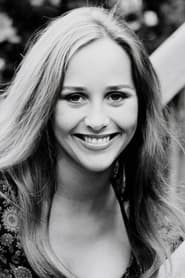
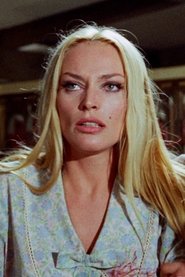
One of the film's highlights for me is Hilary Dwyer, who plays the soldier's fiancé/wife. She's just a uniquely beautiful woman and a pleasure to behold.

Another strong point is the ending which a man mad with rage hacking someone to death while a just-tortured woman screams and screams. The evil inflicted upon them has brought them to this point of maniacal frenzy. They were venting and it smacks of reality. Despite the downbeat climax I've always viewed it as somehow uplifting for obvious reasons. There's no reason we shouldn't assume that they moved on to live a happy life.

While "Witchfinder General" is not a Hammer film, it is a British movie made at the time when Hammer was in its prime; it therefore has that Hammer vibe, which is why some mistake it for a Hammer picture. Needless to say, if you like Hammer you'll appreciate this. Yet "Witchfinder General" stands apart; it has its own uniqueness, no doubt due to Reeves’ burgeoning genius. As such, the flick is special. Some of the photography is hauntingly beautiful; the protagonists — the noble soldier and winsome Sara — are exceptional; the villains dastardly; and the ending innovative.

So why not a higher rating? Because, as special as this movie is, it's not the most compelling saga, despite lots of action. Artistically, it's gets an 'A' as a low-budget cult flick from that era but, story-wise, there’s room for improvement.

The film runs a short-but-sweet 1 hour, 27 minutes, and was shot in Suffolk & Norfolk, England, both a 1-2 hour drive northeast of London.

GRADE: B+

CinemaSerf

CinemaSerf

7 /10

Vincent Price is superb in this depiction of the tyrannical, evil "Matthew Hopkins", tasked amidst the English Civil War to bring fear and terror to the population. Playing to just about every phobia and superstition, he travels the land seeking out and punishing those who worship or serve the devil... There is a magnificent scene in which he divines that a man dropped into the river with stones tied about him will be a witch if he floats, innocent if he sinks (and drowns!)... Sums up the science, really - and the really quite perturbing attitudes that prevailed, even amongst those deemed educated or sophisticated. Ian Ogilvy is "Richard Marshall", a man determined to stop these atrocities and at risk to himself and his family - and we have now watch a battle royal between the two men as worthy as any fought in the war. It's, at times, quite gruesome to watch - and the whole look of the film adds oodles to the sense of menace evoked by this truly malevolent man. Again, based on the vivid imagination of Edgar Allan Poe, this film is a cracker for late on a winter's night with a glass of red wine and a rogue branch tapping on the window.

Avis fournis par TMDB