







Cape Fear - Il Promontorio della Paura backdrop
Cape Fear - Il Promontorio della Paura poster

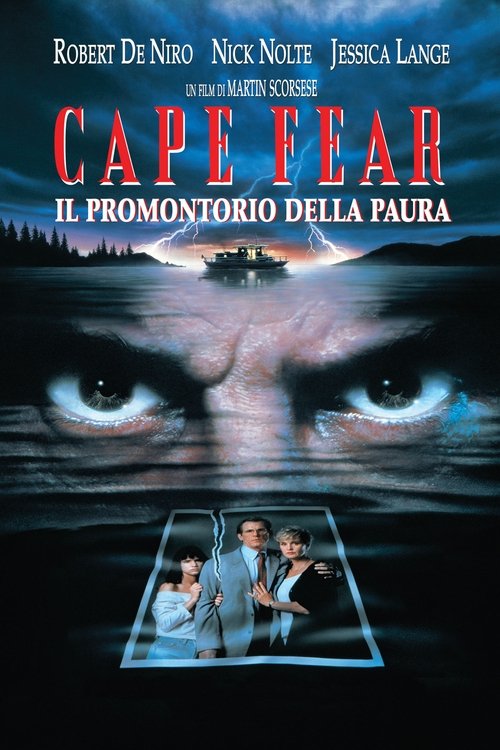
CAPE FEAR - IL PROMONTORIO DELLA PAURA

Cape Fear

1991 US HMDB
novembre 13, 1991

Max Cady, psicopatico e maniaco sessuale, vuole vendicarsi dell' avvocato Sam Bowden, responsabile della sua incarcerazione. Comincia così a perseguitare Bowden e la sua famiglia.

Cast

👍 👎 🔥 🧻 👑

Commenti

Commenti (0)

Troupe

Produzione: Barbara De Fina (Producer)Kathleen Kennedy (Executive Producer)Frank Marshall (Executive Producer)
Sceneggiatura: Wesley Strick (Screenplay)
Musica: Bernard Herrmann (Original Music Composer)Elmer Bernstein (Original Music Composer)
Fotografia: Freddie Francis (Director of Photography)

RECENSIONI (1)

Andrea Costantini
Max Cady, un uomo violento e molto pericoloso, è appena uscito di prigione dopo aver scontato sedici anni per stupro e si trasferisce nella città in cui vive il suo vecchio avvocato Sam Bowden e tutta la sua famiglia. Inizialmente cerca di attaccare bottone con l’avvocato ma in realtà i suoi scopi vanno ben oltre l’amicizia. Egli è convinto che il legale non l’abbia difeso a dovere durante il processo, anzi, che abbia volontariamente omesso dei dettagli sul suo caso per farlo finire dietro le sbarre. Con l’odio nel sangue, Cady mette in piedi un diabolico piano per tormentare Sam e la sua famiglia. Partiamo dal principio. Correva l’anno 1962 quando Lee Thompson, regista del film “I cannoni di Navarone”, basandosi sul libro “The Executioners” di John McDonalds, diresse due mostri sacri della cinematografia mondiale come Robert Mitchum e Gregory Peck, interpreti talmente potenti che non possono non materializzarsi davanti agli occhi quando si pronuncia la parola Attore. Il film era Il promontorio della paura, ancora oggi un grande esempio di cinema di tensione. Trent’anni più tardi ecco che un pilastro portante del cinema moderno, forse il più grande regista attualmente in vita, autore di capolavori assoluti quali “Taxi Driver” e “Quei bravi ragazzi”, riprende la storia del criminale Max Cady e del perseguitato avvocato Sam Bowden. Ebbene si, Martin Scorsese alle prese con il suo primo remake, riadatta le vicende originariamente raccontate da Thompson e le rende sue, grazie all’inconfondibile stile che lo ha reso celebre. Primissimi piani, montaggio veloce alternato a piani sequenza, celeri carrellate e un cast che fa il possibile per obnubilare il film predecessore. Tutto questo è “Cape Fear”, “Il promontorio della paura” versione anni Novanta. Si parlava di cast quindi sembra doveroso cominciare con le presentazioni: i coniugi Bowden sono interpretati da Nick Nolte e Jessica Lange (allora già premio Oscar per “Tootsie”), due attori perfettamente nella parte della famiglia tormentata da un errore del passato. Comparsate illustri anche per gli interpreti originali Peck e Mitchum che non potevano mancare al carosello di star del film. Ci siamo dimenticati di qualcuno? Ovvio che si. Il motivo principale per cui “Cape Fear” entra di diritto nella lista dei film che non possono mancare nella videoteca di un vero amante del thriller è appunto la parte restante del cast che non è ancora stata citata: Robert De Niro, che non ha bisogno di presentazioni e la (allora) semi sconosciuta Juliette Lewis. Sulle loro spalle, come su quelle del mitologico Atlante, poggia l’universo del film. La coppia di attori interpreta rispettivamente un maniaco ai limiti del demoniaco, una creatura del male che non ha scrupoli nel distruggere tutto ciò che è caro all’avvocato che lo ha sbattuto in galera anni prima e una sedicenne imbarazzata, una spaesata bambina appena entrata nel mondo reale carica di voglia di trasgredire ma che ancora stenta a capire quanto esso possa essere malvagio. L’accostamento di questi due personaggi, uno l’antitesi dell’altro, è il carburante per far funzionare il film. “Cape Fear”, seppur un titolo di tutto rispetto, non avrebbe lasciato un segno così profondo se Scorsese avesse scelto altri protagonisti. Il culmine del film lo si raggiunge in una scena ormai entrata nell’antologia scorsesiana, nel lungo dialogo tra Cady e Danielle in teatro, una scena statica che ha un forza tale da incollare allo schermo lo spettatore e raggiunge la punta del climax recitativo della coppia di attori, entrambi meritatamente nominati all’Oscar. Ma non è solo il cast a farsi notare nel film di Scorsese. A fare da contorno al girotondo di stelle non poteva mancare il montaggio di Thelma Schoonmaker, fedele collaboratrice del regista fin dai tempi di “Chi sta bussando alla mia porta?”, che diventa immediatamente un elemento necessario alla riuscita del film. Infatti esso dona al film un ritmo intenso che accompagna lo spettatore dall’inizio alla fine senza farlo annoiare. Tutto questo è farcito da una colonna sonora agghiacciante, ormai diventata celebre, altro pilastro portante del film. Il resto è un bell’esercizio di stile, che ha il difetto di esagerare un po’ troppo in alcune parti, soprattutto nel finale in cui De Niro sfiora l’onnipotenza. Ma forse il tutto è volutamente un’esagerazione, a partire dal corpo (esageratamente) tatuato di Max Cady che inneggia giustizia e la sua (esagerata) voglia di vendetta per aver trascorso anni in carcere. E come giustamente Cady dice in un’altra importante scena, “ Io sono simile a Dio e Dio è simile a me! Io sono grande quanto Dio, Egli è piccolo quanto me! Egli non può essere al di sopra di me, né io al di sotto di Lui!” Forse questo è sufficiente a giustificare l’amplificazione del finale.
👍 👎 🔥 🧻 👑

Commenti

Commenti (0)

Dove Guardare

Noleggio

Apple TV Apple TV
Amazon Video Amazon Video
Rakuten TV Rakuten TV
Google Play Movies Google Play Movies
Chili Chili

Acquista

Apple TV Apple TV
Amazon Video Amazon Video
Rakuten TV Rakuten TV
Google Play Movies Google Play Movies
Chili Chili

RECENSIONI DALLA COMMUNITY (3)

Eky

Meet Max Cady, the most terrific villain role De Niro ever played simply because he successfully portrayed a crook who possesses a very complex personality of being stone-cold, violent, absolutely merciless, also on the other hand quite witty and charismatic to ever lure Danielle Bowden (Juliette Lewis) into his trap when he pretended to be her drama teacher so convincingly. Martin Scorsese’s Cape Fear tells the story of a brutal rapist who waited for so long just to be able to avenge his wrath towards Attorney Sam Bowden (Nick Nolte) for he believed that Bowden could have done much better in defending for his case. This film is well-told with so many suspense elements through some shocking events throughout the film.

Cape Fear is one of the examples of film whose remake, in some ways, considered outwits the original one produced in 1962 starred Robert Mitchum and Gregory Peck. This is quite understandable remembering the remake was filmed many years later, with sufficient advancements in technology and financial supports. In Cape Fear, De Niro managed to portray the chilling Max Cady successfully. He had a best-laid plan to avenge his disappointments/hatred towards Bowden by studying laws in prison just to be able to find the flaws that in the end shall leave him untouchable by the law.

Sometimes it’s amazing to understand how an actor/actress willing to go through for the sake of a role. Robert De Niro paid a dentist $5,000 to make his teeth look suitably bad for the role of Max Cady whereas right after filming, he paid $20,000 to have them fixed. De Niro migh have been spectacular in portraying Cady but we also have to consider how remarkable and superb were Peck and Mitchum.

Filipe Manuel Neto

Filipe Manuel Neto

8 /10

A really very good movie, and proof that there are remakes that are really worth it for their quality and good execution.

I've just seen this movie (which I've actually seen on television, but without paying enough attention to a movie I want to write something about) and once again I was very impressed. The truth is that, without wanting to legitimize the practice, which is often taken to exaggeration, there are remakes that manage to justify themselves, not only for the quality they demonstrate, but also for the gift, not to mention, of drawing the public's attention to the older movies. I can give my personal example: it was the contact with some remakes that made me know that there were older films and go looking for them to be able to see them.

This film maintains, without significant changes, the story told in the older film, which dates from 1962 and was starred by Gregory Peck and Robert Mitchum: very briefly, it is the story of a lawyer who finds himself persecuted and threatened, with his wife and daughter, by a spiteful ex-con who blames him for many years of incarceration. Of course, there are things that change between the two films, and this film has the advantage of not giving us a simple story where a terribly bad man wants to harm a very nice man. Bowden, the lawyer, is a man with a past full of mistakes (much like many of us) who hasn't always been good at his job and his role as a husband and father, and we see that, and the way character is called upon to face the consequences. The sexual theme, which the original film attenuates a lot (due to the restrictions imposed on cinema at the time), is also more pronounced here, transforming Max Cady into an almost perfect pervert.

In addition to the nuances that make the film denser and with a more complex story, we can count on an excellent cast where Robert De Niro steals all the attention, thanks to a powerful, convincing and genuinely menacing interpretation. This film is worth seeing just to savor the actor's performance. Nick Nolte played attorney Sam Bowden, a man who desperately seeks to protect his family. The actor is good and does a good job. Much less interesting, Jessica Lange and Juliette Lewis play the lawyer's wife and daughter in an ambiguous and sometimes very unpleasant way: Lange can still reasonably extricate herself from the challenge she has, but Lewis has turned her character into a kind of teenage nymphet who sees Cady as a terrifying sexual temptation rather than having the discernment and intelligence necessary to at least realize the risk her entire family is running. Also a reminder of the cameos of honor by Gregory Peck, Robert Mitchum and Martin Balsam, three actors who were pivotal in the original film. Incidentally, this film would end up being the last in the life of Peck, who died shortly after.

Martin Scorsese made this film as a means to an end, that is, a way to get the studio to invest in another film he wanted to make. Anyway, and for whatever reason, it was a good bet by the director. The film deserves our attention and is full of merits. The filming work and cinematography are excellent, the sets and costumes too, with an emphasis, of course, on the scenes on the Bowden houseboat. The effects were also well done, although not particularly extraordinary. The central score of this film is the same as its older counterpart, composed by Bernard Herrmann, one of the best and best conceived by the composer, and which is already part of the collective memory.

CinemaSerf

CinemaSerf

7 /10

"Cady" (Robert De Niro) is released from jail after serving eighteen years for rape. He alights on the doorstep of his erstwhile defending counsel "Bowden" (Nick Nolte) with his cigar and his red sports car and generally starts intimidating the man and his family. Why? Well it turns out that the lawyer had buried some evidence during the trial that may have cast doubt on the voracity of the evidence given by the victim - and so now, "Cady" has revenge in mind. Now I loved the 1962 version of this film - Robert Mitchum is superb - and so I was always a bit sceptical about this remake. No, this honestly isn't a patch on that version, but that's as much to do with it being in colour and with it featuring the really poorly cast Nick Nolte and Jessica Lange. De Niro thrives in his element as the manipulative and genuinely odious character whilst Martin Scorsese allows the tension to increase, the sense of desperation and control to blossom and for a genuine sense of peril to develop. Hats can also go off for a strong effort from Juliette Lewis as the daughter "Danni" - a naive young girl whom "Cady" soon has in his sights. The setting for the denouement is as good as cinema can offer - an houseboat and a rainstorm - and as remakes go, this is not bad at all.

Recensioni fornite da TMDB