





Cape Fear backdrop
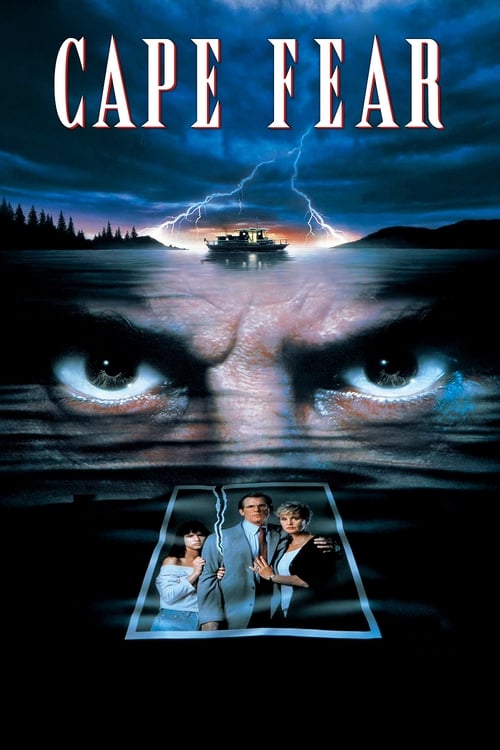
Cape Fear poster

CAPE FEAR

1991 US HMDB
November 13, 1991

Sam Bowden is a small-town corporate attorney. Max Cady is a tattooed, cigar-smoking, Bible-quoting, psychotic rapist. What do they have in common? 14 years ago, Sam was a public defender assigned to Max Cady's rape trial, and he made a serious error: he hid a document from his illiterate client that could have gotten him acquitted. Now, the cagey Cady has been released, and he intends to teach Sam Bowden and his family a thing or two about loss.

Cast

👍 👎 🔥 🧻 👑

Comments

Comments (0)

Crew

Production: Barbara De Fina (Producer)Kathleen Kennedy (Executive Producer)Frank Marshall (Executive Producer)
Screenplay: Wesley Strick (Screenplay)
Music: Bernard Herrmann (Original Music Composer)Elmer Bernstein (Original Music Composer)
Cinematography: Freddie Francis (Director of Photography)

REVIEWS (1)

Andrea Costantini
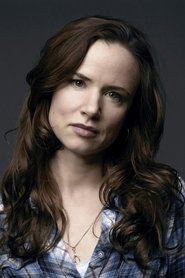
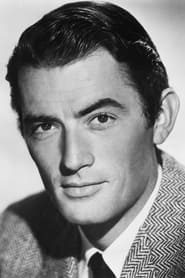
Max Cady, a violent and very dangerous man, has just been released from prison after serving sixteen years for rape and has moved to the city where his old lawyer Sam Bowden and his entire family live. Initially, he tries to make friends with the lawyer, but in reality, his intentions go far beyond friendship. He is convinced that the lawyer did not defend him properly during the trial, that he deliberately omitted details about his case to get him behind bars. With hatred in his blood, Cady sets up a diabolical plan to torment Sam and his family. Let's start from the beginning. It was 1962 when Lee Thompson, director of the film "The Guns of Navarone," based on the book "The Executioners" by John McDonalds, directed two cinema legends like Robert Mitchum and Gregory Peck, such powerful actors that they cannot fail to materialize in front of one's eyes when the word Actor is mentioned. The film was Cape Fear, still today a great example of suspense cinema. Thirty years later, here comes a cornerstone of modern cinema, perhaps the greatest director currently alive, author of absolute masterpieces such as "Taxi Driver" and "Goodfellas," who takes up the story of the criminal Max Cady and the persecuted lawyer Sam Bowden. Well yes, Martin Scorsese tackling his first remake, re-adapts the events originally told by Thompson and makes them his own, thanks to the unmistakable style that has made him famous. Extreme close-ups, fast editing alternated with long takes, swift tracking shots, and a cast that does its best to overshadow the predecessor film. All this is "Cape Fear," the 1990s version of "Il promontorio della paura." We were talking about the cast, so it seems right to start with the introductions: the Bowden couple is played by Nick Nolte and Jessica Lange (already an Oscar winner for "Tootsie"), two actors perfectly in the role of the family tormented by a past mistake. Illustrious cameos also for the original interpreters Peck and Mitchum, who could not miss the carousel of stars of the film. Did we forget someone? Of course. The main reason why "Cape Fear" rightfully enters the list of films that cannot be missing from the video library of a true thriller lover is precisely the remaining part of the cast that has not yet been mentioned: Robert De Niro, who needs no introduction, and the (then) semi-unknown Juliette Lewis. On their shoulders, as on those of the mythological Atlas, rests the universe of the film. The couple of actors plays respectively a maniac bordering on the demonic, a creature of evil who has no scruples in destroying everything that is dear to the lawyer who put him in jail years before, and an embarrassed sixteen-year-old, a lost child who has just entered the real world full of the desire to transgress but who still struggles to understand how evil it can be. The juxtaposition of these two characters, one the antithesis of the other, is the fuel that makes the film work. "Cape Fear," although a title of great respect, would not have left such a deep mark if Scorsese had chosen other protagonists. The climax of the film is reached in a scene now entered in the Scorsese anthology, in the long dialogue between Cady and Danielle in the theater, a static scene that has such a force as to glue the viewer to the screen and reaches the peak of the acting climax of the couple of actors, both deservedly nominated for the Oscar. But it is not only the cast that stands out in Scorsese's film. To frame the carousel of stars, the editing of Thelma Schoonmaker, a faithful collaborator of the director since the times of "Who's That Knocking at My Door?", could not be missing, which immediately becomes an essential element for the success of the film. Indeed, it gives the film an intense rhythm that accompanies the viewer from beginning to end without boring them. All this is garnished with a chilling soundtrack, now famous, another cornerstone of the film. The rest is a beautiful exercise in style, which has the flaw of exaggerating a bit too much in some parts, especially in the finale where De Niro brushes against omnipotence. But perhaps the whole thing is deliberately an exaggeration, starting from the (exaggeratedly) tattooed body of Max Cady that praises justice and his (exaggerated) desire for revenge for having spent years in prison. And as Cady rightly says in another important scene, "I am similar to God and God is similar to me! I am as great as God, He is as small as me! He cannot be above me, nor I below Him!" Perhaps this is enough to justify the amplification of the finale.
👍 👎 🔥 🧻 👑

Comments

Comments (0)

Where to Watch

Rent

Apple TV Apple TV
Amazon Video Amazon Video
Rakuten TV Rakuten TV
Google Play Movies Google Play Movies
Chili Chili

Buy

Apple TV Apple TV
Amazon Video Amazon Video
Rakuten TV Rakuten TV
Google Play Movies Google Play Movies
Chili Chili

COMMUNITY REVIEWS (3)

Eky

Meet Max Cady, the most terrific villain role De Niro ever played simply because he successfully portrayed a crook who possesses a very complex personality of being stone-cold, violent, absolutely merciless, also on the other hand quite witty and charismatic to ever lure Danielle Bowden (Juliette Lewis) into his trap when he pretended to be her drama teacher so convincingly. Martin Scorsese’s Cape Fear tells the story of a brutal rapist who waited for so long just to be able to avenge his wrath towards Attorney Sam Bowden (Nick Nolte) for he believed that Bowden could have done much better in defending for his case. This film is well-told with so many suspense elements through some shocking events throughout the film.

Cape Fear is one of the examples of film whose remake, in some ways, considered outwits the original one produced in 1962 starred Robert Mitchum and Gregory Peck. This is quite understandable remembering the remake was filmed many years later, with sufficient advancements in technology and financial supports. In Cape Fear, De Niro managed to portray the chilling Max Cady successfully. He had a best-laid plan to avenge his disappointments/hatred towards Bowden by studying laws in prison just to be able to find the flaws that in the end shall leave him untouchable by the law.

Sometimes it’s amazing to understand how an actor/actress willing to go through for the sake of a role. Robert De Niro paid a dentist $5,000 to make his teeth look suitably bad for the role of Max Cady whereas right after filming, he paid $20,000 to have them fixed. De Niro migh have been spectacular in portraying Cady but we also have to consider how remarkable and superb were Peck and Mitchum.

Filipe Manuel Neto

Filipe Manuel Neto

8 /10

A really very good movie, and proof that there are remakes that are really worth it for their quality and good execution.

I've just seen this movie (which I've actually seen on television, but without paying enough attention to a movie I want to write something about) and once again I was very impressed. The truth is that, without wanting to legitimize the practice, which is often taken to exaggeration, there are remakes that manage to justify themselves, not only for the quality they demonstrate, but also for the gift, not to mention, of drawing the public's attention to the older movies. I can give my personal example: it was the contact with some remakes that made me know that there were older films and go looking for them to be able to see them.

This film maintains, without significant changes, the story told in the older film, which dates from 1962 and was starred by Gregory Peck and Robert Mitchum: very briefly, it is the story of a lawyer who finds himself persecuted and threatened, with his wife and daughter, by a spiteful ex-con who blames him for many years of incarceration. Of course, there are things that change between the two films, and this film has the advantage of not giving us a simple story where a terribly bad man wants to harm a very nice man. Bowden, the lawyer, is a man with a past full of mistakes (much like many of us) who hasn't always been good at his job and his role as a husband and father, and we see that, and the way character is called upon to face the consequences. The sexual theme, which the original film attenuates a lot (due to the restrictions imposed on cinema at the time), is also more pronounced here, transforming Max Cady into an almost perfect pervert.

In addition to the nuances that make the film denser and with a more complex story, we can count on an excellent cast where Robert De Niro steals all the attention, thanks to a powerful, convincing and genuinely menacing interpretation. This film is worth seeing just to savor the actor's performance. Nick Nolte played attorney Sam Bowden, a man who desperately seeks to protect his family. The actor is good and does a good job. Much less interesting, Jessica Lange and Juliette Lewis play the lawyer's wife and daughter in an ambiguous and sometimes very unpleasant way: Lange can still reasonably extricate herself from the challenge she has, but Lewis has turned her character into a kind of teenage nymphet who sees Cady as a terrifying sexual temptation rather than having the discernment and intelligence necessary to at least realize the risk her entire family is running. Also a reminder of the cameos of honor by Gregory Peck, Robert Mitchum and Martin Balsam, three actors who were pivotal in the original film. Incidentally, this film would end up being the last in the life of Peck, who died shortly after.

Martin Scorsese made this film as a means to an end, that is, a way to get the studio to invest in another film he wanted to make. Anyway, and for whatever reason, it was a good bet by the director. The film deserves our attention and is full of merits. The filming work and cinematography are excellent, the sets and costumes too, with an emphasis, of course, on the scenes on the Bowden houseboat. The effects were also well done, although not particularly extraordinary. The central score of this film is the same as its older counterpart, composed by Bernard Herrmann, one of the best and best conceived by the composer, and which is already part of the collective memory.

CinemaSerf

CinemaSerf

7 /10

"Cady" (Robert De Niro) is released from jail after serving eighteen years for rape. He alights on the doorstep of his erstwhile defending counsel "Bowden" (Nick Nolte) with his cigar and his red sports car and generally starts intimidating the man and his family. Why? Well it turns out that the lawyer had buried some evidence during the trial that may have cast doubt on the voracity of the evidence given by the victim - and so now, "Cady" has revenge in mind. Now I loved the 1962 version of this film - Robert Mitchum is superb - and so I was always a bit sceptical about this remake. No, this honestly isn't a patch on that version, but that's as much to do with it being in colour and with it featuring the really poorly cast Nick Nolte and Jessica Lange. De Niro thrives in his element as the manipulative and genuinely odious character whilst Martin Scorsese allows the tension to increase, the sense of desperation and control to blossom and for a genuine sense of peril to develop. Hats can also go off for a strong effort from Juliette Lewis as the daughter "Danni" - a naive young girl whom "Cady" soon has in his sights. The setting for the denouement is as good as cinema can offer - an houseboat and a rainstorm - and as remakes go, this is not bad at all.

Reviews provided by TMDB