Nosferatu - Il Principe della Notte backdrop
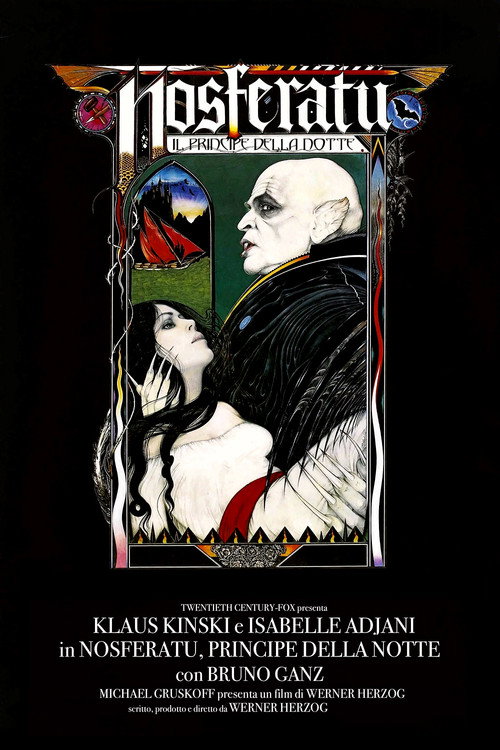
Nosferatu - Il Principe della Notte poster

NOSFERATU - IL PRINCIPE DELLA NOTTE

Nosferatu - Phantom der Nacht

1979 • DE HMDB
gennaio 17, 1979

Jonathan Harker, incaricato di trattare l'acquisto di una vecchia casa di Wismar, lascia l'Olanda e raggiunge la Transilvania. Solo la moglie Lucy, che di notte ha sinistri incubi, si dimostra contraria alla sua partenza. Arrivato sul posto, Jonathan viene sconsigliato dal proseguire dagli zingari accampati nelle vicinanze del castello, ma nulla riesce a vincere la sua testardaggine. Capirà presto cosa minaccia la regione.

Cast

👍 👎 🔥 🧻 👑

Commenti

Commenti (0)

Troupe

Produzione: Daniel Toscan du Plantier (Producer)Michael Gruskoff (Producer)Werner Herzog (Producer)Walter Saxer (Executive Producer)
Musica: Richard Wagner (Music)Florian Fricke (Music)Charles Gounod (Music)Popol Vuh (Original Music Composer)
Fotografia: Jörg Schmidt-Reitwein (Director of Photography)

RECENSIONI (1)

Marco Castellini •
Il giovane Jonathan Harker si reca al castello del conte Dracula per trattare l’acquisto di una casa, incurante delle dicerie che raffigurano il conte come un terribile vampiro. Giunto nella dimora, l'uomo viene assalito e morso dal vampiro che, in seguito, decide anche di sedurgli la moglie. La donna se ne avvede e riesce, con uno stratagemma, a trattenere Dracula fino al sorgere del sole così da eliminarlo. Ma in giro c’è ancora un vampiro, Harker. Herzog rilegge il “Nosferatu” di Murnau in chiave drammatica dirigendo un film sicuramente affascinante e ricco di atmosfera, quasi ipnotico, un perfetto esempio di stile che però difetta di ritmo. Ottime le interpretazioni di Klaus Kinski (sicuramente la migliore della sua carriera) ed Isabelle Adjani; magnifica la fotografia. Consigliato. Curiosità: la versione italiana del film è “accorciata” di circa quindici minuti.
👍 👎 🔥 🧻 👑

Commenti

Commenti (0)

RECENSIONI DALLA COMMUNITY (2)

CinemaSerf

CinemaSerf

7 /10

"Harker" (Bruno Ganz) travels to remote Transylvania where he is to help "Count Dracula" (Klaus Kinski) buy a new home in his hometown of Wismar. Why? Well that's because he has fallen in love with a photograph of his beautiful wife "Lucy" (Isabelle Adjani) and has determined to make her his immortal bride. "Harker" had been warned by the locals of the dangers of visiting the "Count" but he pressed on regardless, so ought not to have been surprised when his host absconds from his castle on a schooner laden with coffins, soil and a deadly plague of rats so he can ensnare his innocent young wife. Can he race back home in time to thwart this evil? There's nothing especially new about the chronology of the story here, it's the characterisation of the vampire that helps this stand out. It's obvious from the start that "Dracula" is not of human kind. Contrasting with most interpretations of the title role, Kinski and Warner Herzog attempt to imbue "Dracula" with a degree of humanity. He doles out his lusts left, right and centre upon the innocent, spreading plague and disaster wherever he goes, but he too is cursed. By his own immortality, by his search for some kind of fulfilment or contentedness. This isn't a depiction riddled with sharp teeth and ketchup, it's much more subtle, refined even, telling of a character that it's almost impossible not to feel sorry for. The production itself has dated rather badly, and at times it did remind me of one of these "Sherlock Holmes" remakes, but the thrust of the story is still interestingly different to the normal depiction of this epitome of evil and worth sticking with.

badelf

9 /10

The visuals in Werner Herzog's "Nosferatu the Vampyre" are luscious, hauntingly beautiful in ways that make you wonder: where did Herzog find these set pieces? The plague-ridden streets, the Gothic architecture, the rats flooding through medieval towns—it all feels discovered rather than constructed. This is Herzog's trademark style at its finest. You never feel like you're watching a movie. Instead, you're observing a documentary about a particular vampire, as though this is simply everyday experience captured on film.

Klaus Kinski's interpretation is 180 degrees from Bram Stoker's Dracula. He plays the count not as aristocratic predator but as a pathetic, misunderstood child: lonely, cursed, suffering his immortality. It's a brilliant tack for any actor to find this in the vampire character, transforming the monster into something tragic and almost pitiable. Herzog famously said the 11,000 rats used in filming were better behaved than Kinski, which tells you everything about their volatile collaboration.

What makes this version particularly resonant is how clearly it functions as metaphor for The Plague, or any pandemic. Dracula isn't evil; he's a vector, a non-judgmental, non-intentional cause of death. This interpretation fits perfectly with Kinski's pathetic creature. He doesn't choose to destroy, he simply is destruction. The horror isn't in malice, but in inevitability.

Herzog understood that the most terrifying monsters are the ones who cannot help what they are.

Recensioni fornite da TMDB