




The Verdict
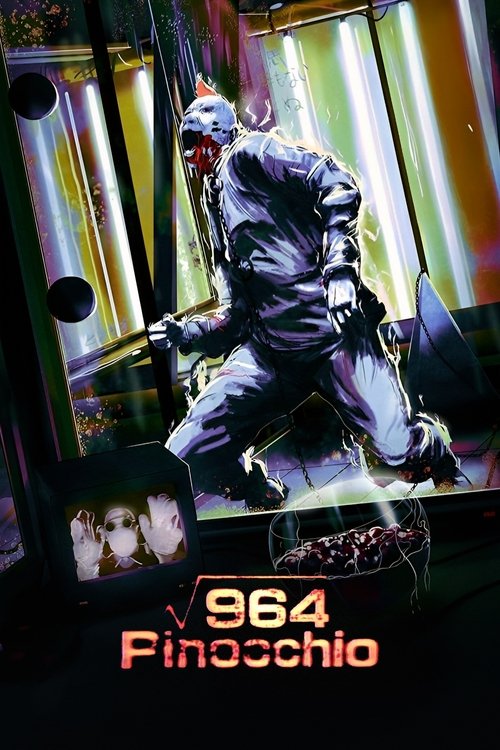
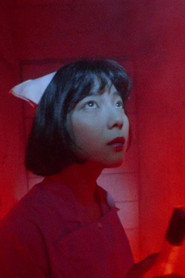
Pinocchio 964 is an android programmed to satisfy the sexual desires of a wealthy woman, but when it shows signs of erectile dysfunction, she throws it away, discarding it as waste in the real world. Once outside, disoriented and confused, Pinocchio will meet Himiko, a street girl who will decide to take care of him.
Pinocchio 964 is an android programmed to satisfy the sexual desires of a wealthy woman, but when it shows signs of erectile dysfunction, she throws it away, discarding it as waste in the real world. Once outside, disoriented and confused, Pinocchio will meet Himiko, a street girl who will decide to take care of him. But things will not go well and it will be the beginning of an endless delirious nightmare.
Controversial and difficult-to-digest work by Shozin Fukui, often and wrongly compared to "Tetsuo" by Tsukamoto. "Pinocchio 964" is a film that happily wallows in the weird, descending into the most extreme and disturbing cyberpunk. The director crafts a certainly peculiar and unique product of its kind, using a non-canonical and arduous cinematic language that transforms viewing into a torment. The setting is that of the great Japanese metropolis, where, amid the indifference of the crowd, Pinocchio becomes aware of his condition as a machine and, helped by the young Himiko, will begin to humanize himself, craving revenge against his cunning creators. Fukui portrays a social and generational status enslaved by pleasure, consumerism, where the uniqueness of the individual loses meaning to give way to an ostentatious and inhuman artificiality. The metaphor, a real mirror of society, as suggestive and truthful as it may be, is staged through an excessively impactful style that takes over both the narrative construction - if we can call it that - and the very meaning of the film.
Clearly post-modern in origin, the film is nothing more than a hodgepodge of images, often placed without any logic with the sole purpose of disorienting the viewer. The Japanese director exploits the typical themes of 80s cyberpunk to give free rein to certain stylistic mannerisms that are really annoying: the photography is a seesaw of colors, from acid green, to black and white, to total darkness; the sound is bad; the editing is schizophrenic. Everything is taken to the extreme and the countless delirious episodes are so diluted in time as to cause more than one yawn. The screenplay completely lacks glue and one gets the impression of watching a series of skits independent of each other, sometimes even comic. There are no lacking shocking moments, such as the part where Himiko vomits for about 10 minutes in the subway underpasses (!!!).
The two protagonists flail around like madmen for the entire duration of the film, as if they had just come out of a high-alcohol rave party, in a psychedelic and science fiction atmosphere dotted with grotesque characters.
Although the political and social connotation typical of the genre is fascinating and of great interest, the film simply does not work. Contextualizing the film, accepting the nonsense, stylistic choices, and obsessive rhythm, serves little: the result is anyway disastrous. What would be a masterpiece of intellectualized metaphysical art is, in reality, a highly pretentious, exaggerated, heavy, and irritating work. 1 hour and 40 interminable minutes, spent between the dismay of not having understood anything and the hope of a quick and painless end.
Comments
Comments (0)



Comments