

The Verdict
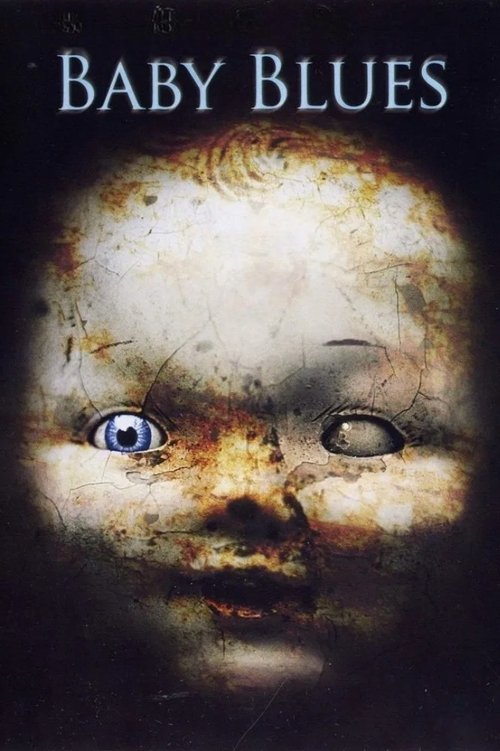
On a farm in the deep south of the United States, a young mother begins to show dangerous symptoms of postpartum depression a few days after the birth of her fourth child. The first to notice the woman's problems is James, her eldest son.
On a farm in the deep south of the United States, a young mother begins to show dangerous symptoms of postpartum depression a few days after the birth of her fourth child. The first to notice the woman's problems is James, her eldest son. During one night, while her husband is away for work, the woman completely loses her mind and, after killing the newborn, begins to hunt down the other children.
In psychoanalysis, the term "baby blues" is used to indicate the first stage of a depressive form that manifests in new mothers in the days following childbirth. Baby blues are very common (speaking of 50-80% of mothers), have a transient duration of a few days, and manifest with simple symptoms that include sadness, anxiety, and generally unstable mood. A normal routine, in short, which in some cases can develop into postpartum depression or even postpartum psychosis, which is a real pathology.
Ironically, directors Lars Jacobson and Amardeep Kaleka use the title of their film precisely the mildest, most common, if you will, almost normal form of postpartum disturbances to stage instead a terrible story in which a mother sadistically exterminates her own offspring.
Psychiatrically speaking, we are more in the realm of Medea Syndrome than in baby blues, with the variant that Medea Syndrome—which takes its name from Euripides' tragedy—provides that the true target of the murderous mother is the father of the children, punished with the death of his children. Which, if you want, could also fit in Jacobson and Kaleka's film, given that the father of the family is described as an absent man, forced to stay away from home for long periods for work, even behind the requests for closeness from his wife and children.
Perhaps, however, references to psychoanalysis are misleading for a film like "Baby Blues," clearly aimed at the most visceral entertainment. Basically, Jacobson and Kaleka have built a slasher, complete with a boogeyman (or rather, boogeywoman!) who acts with a white weapon and sacrificial victims who play cat and mouse, except that the "monster" is a young mother and the victims are her children. Morally speaking, the two directors have made a terrible film capable of breaking one of the last remaining taboos in Hollywood, but addressing the issue from a purely cinematic point of view, "Baby Blues" is not only a punch in the stomach but also a gripping and very fast-paced film. The greatest merit of this film, in fact, does not so much lie in the bold and courageous theme, as in the perfect management of the narrative rhythms that show an incredible familiarity with the languages of horror. Lars Jacobson (also a screenwriter) is an absolute newcomer, while Amardeep Kaleka had directed some shorts; the fact is that despite the inexperience, the two directors prove to be quite capable of managing a film that focuses both on atrocities and on the construction of suspense.
From time to time, some uncertainty can be noticed, especially at the level of writing, where the difficulty of matching the camp spirit of the work with the delicate theme can be perceived, with the result that often and willingly it is the first element that prevails, as with the use of some phrases put in the mouth of the "killer mom" typically from low-grade genre films. The overall aspect of the work tends, however, to camouflage its American nationality, appearing very influenced by the European new wave, in particular French, to which it is assimilable both for the hard theme addressed and for the degree of raw violence with which the film is filled.
Very few minutes of preparation for the presentation of the characters and then we plunge immediately into the nightmare. Four obstacles represented by the four children (one of whom is just born) to overcome to reconnect with an utopian serenity: this is the objective of the young mother who suddenly sees herself deprived of her dreams and ambitions (she is a weather presenter). When we meet the woman, she is already sunk in madness, a female Jack Torrance (and in at least one scene "Shining" is explicitly cited) who has mystical delusions and whose madness is amplified by the summer heat and the incessant crying of her child. And the two directors do not make many scruples, showing the massacre with rare cruelty in which the children are drowned, stabbed with the handle of a mirror, impaled with pitchforks, shot with rifles, stabbed with knives, spears, and even chased with the combine harvester. Well, perhaps in some cases Jacobson and Kaleka are also excessive, managing at least once (the aforementioned combine harvester) to make the film involuntarily ridiculous, but by that point the viewer is surely inured to the story, so much so that they will probably be able to overlook even the most absurd scenes.
Almost surprising is the irresponsibility of the genre film with which the duo manages a story as serious and tragic as this, one feels almost guilty, complicit with the mother, while watching the film, as if one were ashamed to admit to oneself that one is having fun. All this, however, contributes to demonstrating the success of the work.
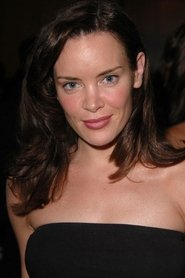
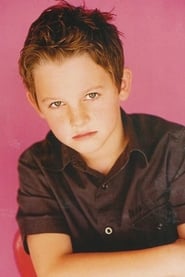
Good work on casting with an adequate killer mom played by Colleen Porch of "Starship Troopers 2" and "Transformers" and the very young Ridge Canipe from the TV series "Supernatural" giving her a hard time.
In the United States, "Baby Blues" was released quietly and unexpectedly without causing a scandal, in fact with rather cold critical reviews. In the rest of the world, it was distributed directly on home video, remaining still unreleased in Italy.
Comments
Comments (0)

Comments