
















Le Verdict
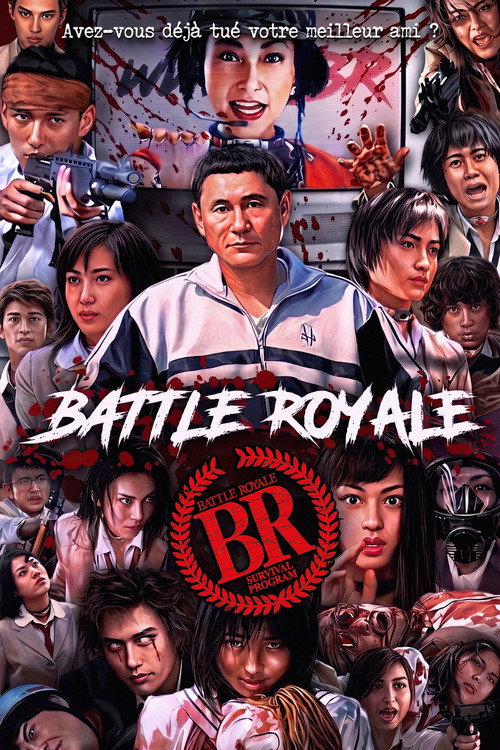
Au Japon du futur, en raison de la détérioration des relations entre adultes et adolescents, un décret est émis par le nouveau département de l'éducation, appelé "Battle Royale". Cette nouvelle loi prévoit qu'une classe d'élèves soit sélectionnée chaque année pour être déportée sur une île déserte.
Au Japon du futur, en raison de la détérioration des relations entre adultes et adolescents, un décret est émis par le nouveau département de l'éducation, appelé "Battle Royale". Cette nouvelle loi prévoit qu'une classe d'élèves soit sélectionnée chaque année pour être déportée sur une île déserte. Là, pendant trois jours, une compétition de tous contre tous a lieu, dont le but est de rester en vie jusqu'à la fin, quand une seule personne restera en vie.
Film culte dans son pays (où une suite est en préparation), il a été précédé par une campagne publicitaire singulière, puisque le Premier ministre japonais avait même tenté d'en empêcher la sortie en salles, ce qui n'a fait qu'attirer plus de monde à le voir.
La première chose que l'on ressent en regardant ce film est un sens notable de tension, efficacement transmis par les jeunes acteurs. L'histoire (basée sur le roman de Takami Koshun et récemment transposée en bande dessinée) n'est pas mauvaise en soi et tient jusqu'à la fin sans ennuyer, même si, malgré tout, certains rebondissements peuvent sembler prévisibles. On pourrait néanmoins la définir comme une version mise à jour pour le nouveau millénaire de "Le Seigneur des mouches", avec laquelle elle partage de nombreux thèmes, notamment la perte (traumatique) de l'innocence et le passage à la vie adulte.
Une autre caractéristique particulière sont les diverses métaphores que le film traite, l'une d'entre elles étant celle de la délinquance juvénile (problème très ressenti au Japon) ou de l'arrivisme.
De plus, on ne peut ignorer le niveau de cruauté typique des productions nippones, ce qui va de pair avec le mélodrame constant sous-jacent et certaines scènes de grande violence. Les séquences splatter ne sont pas très nombreuses mais sont disposées de manière stratégique afin de ne jamais faire baisser la suspense chez le spectateur.
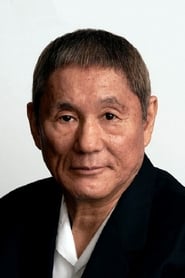
Parmi les acteurs, on note le réalisateur Takeshi Kitano dans le rôle du professeur fou à la tête de la compétition qui, peut-être ironiquement, lui est homonyme.
Bien sûr, cette pellicule n'est pas non plus exemptée de défauts, l'un d'eux étant le romantisme excessif de certaines scènes où des personnages proches de la mort se lancent dans des déclarations d'amour ou des discours moralisateurs.
Cyniques et, sous-jacents, divertissants, sont le body count (qui apparaît en surimpression à chaque meurtre) et la vidéo "instructive" qui est montrée aux jeunes avant de les laisser à eux-mêmes.
Commentaires
Commentaires (0)














Commentaires