
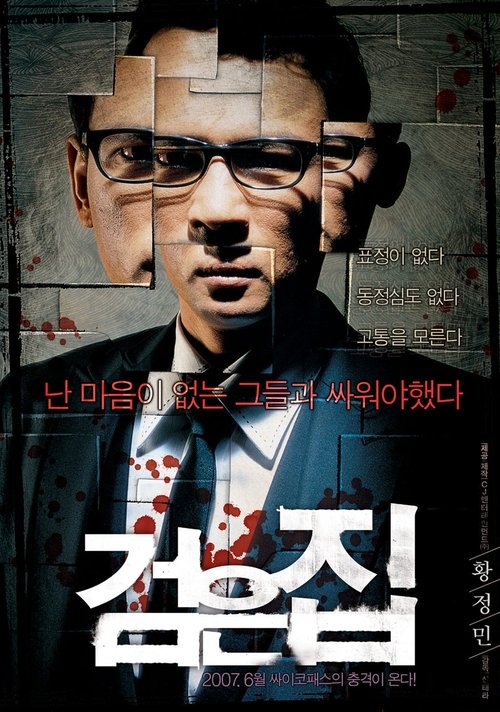





El Veredicto
El perito de seguros Jun-oh recibe como su primer encargo ir a una casa en ruinas en las afueras y allí encuentra el cadáver de un niño ahorcado. A pesar de la tragedia, Chung-bae, el padrastro del niño, parece interesado exclusivamente en cobrar el seguro de vida de su hijo.
El perito de seguros Jun-oh recibe como su primer encargo ir a una casa en ruinas en las afueras y allí encuentra el cadáver de un niño ahorcado. A pesar de la tragedia, Chung-bae, el padrastro del niño, parece interesado exclusivamente en cobrar el seguro de vida de su hijo. El caso se archiva como suicidio, pero Jun-oh cree que en realidad se trata de un asesinato orquestado por Chung-bae y por eso bloquea el pago del seguro y comienza a investigarlo. El asegurador descubre que Yi-hwa, la esposa de Chung-bae y madre del niño fallecido, está cubierta por un seguro muy alto y por eso intenta de todas las maneras advertir a la mujer del peligro potencial que representa su marido. Entre las numerosas salidas estivales, aquí aparece también "Black House", un thriller coreano que, por una vez, no cuenta historias de fantasmas vengativos, sino la singular odisea de un perito de seguros que se topa con un asesino avaricioso que mata a sus seres queridos para cobrar los seguros de vida sobre ellos. Aunque la historia puede sonar original para algunos, "Black House" es el remake del modesto (en cuanto a presupuesto) "Kuroi ie" ("The Black House" para el mercado internacional), un thriller japonés dirigido en 1999 por Yoshimitsu Morita y inédito en nuestro país; además, la película japonesa era la adaptación de la novela homónima de éxito de Kishi Yusuke, por lo que no hay nada demasiado innovador. Pero en definitiva, no hay mucho de innovador y realmente original en este "Black House" incluso para el espectador italiano, porque si se va más allá de la inusual (para el cine de thriller/terror) profesión del protagonista y el motivo del asesino, nos encontramos ante una película que resulta demasiado derivativa del thriller americano moderno de tonos fuertes. A partir del protagonista Jun-oh, interpretado con gran habilidad por Jeong-min Hwang ("A Bittersweet Life"), el clásico individuo anónimo y con una vida social poco activa, frustrado y con una vida familiar no muy feliz debido al matrimonio terminado; el señor nadie víctima de los eventos que se encontrará con los trajes del "héroe" a su pesar. Un personaje casi estereotipado que, sin embargo, funciona bastante bien en el contexto en el que actúa... un poco menos la estructura narrativa que alterna de manera demasiado brusca ritmos y géneros. De hecho, "Black House" está dividido en dos partes perfectamente separables: una primera con corte de drama social y un ritmo realmente demasiado lento, una segunda de thriller investigativo que desemboca en el terror de ritmo acelerado. La primera parte, la del drama, intenta pintar, de manera no demasiado efectiva, la sordidez de la vida en las afueras de la metrópolis coreana, comparable a una misma sordidez observable en la soledad de la vida del protagonista burgués. Dos formas de describir la "falta" que, por un lado, es dada por la ausencia de vínculos humanos, por el otro, por la pobreza económica que empuja a gestos horribles. Desafortunadamente, estos significados deben ser extraídos y la descripción de la situación personal de Jon-oh y de su cliente Chung-bae no es demasiado interesante para el espectador, llevándolo al fácil bostezo. La situación cambia radicalmente cuando se comienza a entrar en el thriller que incluso se tiñe de gore en algunas ideas muy gratuitas insertadas al final. En este punto, la película despega, adquiere mucho ritmo, pero también se vuelve incoherente a nivel lógico y se cae en algunos excesos sensacionalistas típicos del thriller más descarado y conocido de "cassette". Nada malo, por caridad, pero las dos almas de "Black House" no logran convivir y parece casi que la segunda parte de la película se realizó para complacer al público occidental. El director debutante Terra Shin se las arregla bien y muestra tener un buen gusto visual, ayudado por la bella fotografía opaca de Ju-young Choi. En conclusión, "Black House" no convence del todo, especialmente por la desigualdad y la excesiva impersonalidad, se deja ver una vez, pero ya en una segunda visión se está demasiado tentado a mantener presionado el botón de avance rápido.
Comentarios
Comentarios (0)



Comentarios