




















The Verdict
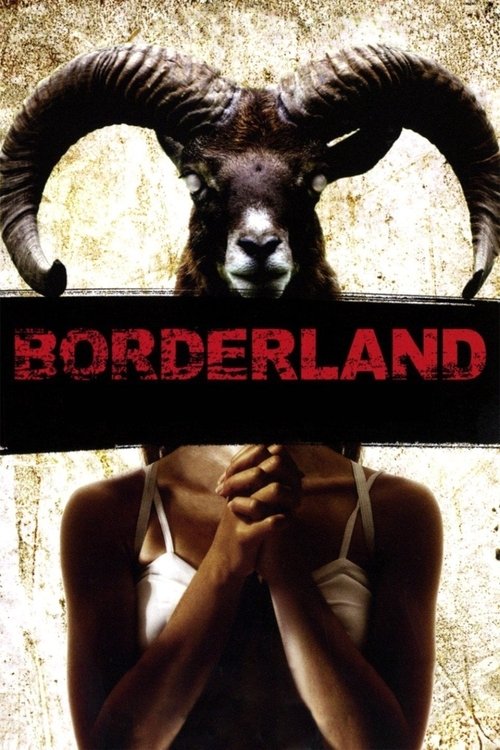
Three friends decide to treat themselves to a late summer weekend together before separating for college and head to Mexico, a place where sex and drugs seem particularly accessible to everyone.
Three friends decide to treat themselves to a late summer weekend together before separating for college and head to Mexico, a place where sex and drugs seem particularly accessible to everyone. Indeed, judging by the quick conquests and the high from mushrooms, the choice seems to have been spot on, except that Phil, the most naive of the trio, is lured and kidnapped by a gang of drug traffickers devoted to an extreme form of Santeria, a particular cult that involves the use of black magic and human sacrifices for propitiatory rituals. The two friends, with the help of Valeria, a girl they met in a strip bar, and Ulises, a police officer who has already clashed with the cult members, will try to save Phil from his tragic fate.
That mini-genre of horror films depicting the misadventures of young American tourists in seemingly dreamy but actually teeming with mortal hostilities places enriches itself with a new title, "Borderland – Line of Confine". This genre seems to have the most stable roots in the 1970s with examples of great quality like the beautiful but little-known "The Road Killer" which told the nightmare journey of two American students in the French countryside, up to today and a renewed desire to tell stories that bring together youth tourism with horror. Several titles, of varying quality, can be easily cited, such as the two "Hostel", "Turistas", "Wolf Creek", "Rovine", "Pasto umano" and the upcoming "And Soon the Darkness" which would close a hypothetical circle, since it was born as a remake of "The Road Killer". "Borderland" rightfully belongs to this category, immersing three American students in a Mexican location utopianized as paradisiacal, eager for the classic two desires that cinema places among the priorities of every young Yankee: sex and drugs. Obviously, the initial enjoyment is immediately followed by indescribable horrors, effectively anticipated in the long and impressive prologue, which this time shift to the side of black magic.
There is much to theorize about this renewed (but in the end never truly extinct) trend of American horror cinema in catalyzing horror beyond national borders, showing how the country par excellence of multiculturalism manages to represent with almost xenophobic zeal the unknown that lurks beyond the border. These are the years of American hostages in the Middle East and the fear of international terrorism, of the chronicle of sex tourism and the horror that hides under the guise of other everyday life and surprises without warning. Naturally, genre cinema loves to victimize, torment, tear apart, and kill young people eager for excess, always for that now characteristic moralistic streak that has become an indispensable characteristic of the genre, regardless of the subgenre with which one is dealing. From these ingredients, which certainly have a socio-cultural basis adapted to the times, this interesting micro-genre develops that often draws directly from real black chronicles to scare viewers.
In fact, this "Borderland" was born from a true story, a film from the 2007 edition of the After Dark Horrorfest, which takes its cue from an event that in 1989 saw a sect led by Adolfo De Jesús Constanzo, a criminal at the head of a large drug ring in Matamoros and who had created a small empire by brainwashing the minds of his followers, driven to perform periodic rituals based on human sacrifices to guarantee their success. It was only following the disappearance of a young American tourist that the police dismantled and led Constanzo to suicide. Moreover, during one of the checks that the police were carrying out on that occasion at the border with the United States, Zev Berman, precisely the director of "Borderland", was also involved, who was therefore an indirect witness of the event that he now wanted to tell the public.
"Borderland" presents itself very well: formally impeccable, good pace and above all has the ability to never fall into the banal and easy copying despite the subject would have easily allowed it. The characters that populate this film, in fact, are as clichéd as can be imagined, from the young womanizer and troublemaker to the shy, sensitive one with Christian values, but surprisingly the script by Berman himself, in collaboration with Eric Poppen, manages to make all the stereotypes that populate the film more human and credible, perhaps with the only exceptions of the vengeful policeman, too little developed, and the leader of the sect Santillan, not charismatic enough for the important role he has. Therefore, we will not have the usual stupid characters that often populate these films and whose fate does not interest the viewer, but rather well-developed characters that manage to make the audience care about them.
The initial evident acquiescence to the "Hostel" prototype is fortunately soon tempered and "Borderland" thus assumes its own identity that manages to be original, especially with regard to the threat that looms over the plot, already because drug traffickers with the habit of ritual human sacrifices are not something seen every day in a film and Berman also manages to make the most of the idea directly focusing the entire story on it without subplots that can divert attention.
Excellent the photography by Scott Kevan, who prefers warm and denatured colors thus enhancing the already suggestive Mexican landscapes. Satisfying also the "gore" department, not too exaggerated in blood and guts but rather oriented towards an effective realism that manages to be impressive.
The cast is mostly composed of television faces plus a few familiar faces like Sean Astin (the "fat" hobbit of the "Lord of the Rings" trilogy as well as the protagonist of the cult "The Goonies") engaged in an unprecedented role as a villain.
"Borderland" is therefore a film to recover, capable of treating with a touch of originality a theme widely abused in recent years like that of "horror tourism", here mixed with satanism and a pinch of torture porn (which always sells well).
Superior to what one might expect reading the plot.
Comments
Comments (0)




Comments