












The Verdict
England, 1941. The Second World War is in full swing and London is victim of a fierce bombing by the Germans, forcing the population to hide in underground shelters.
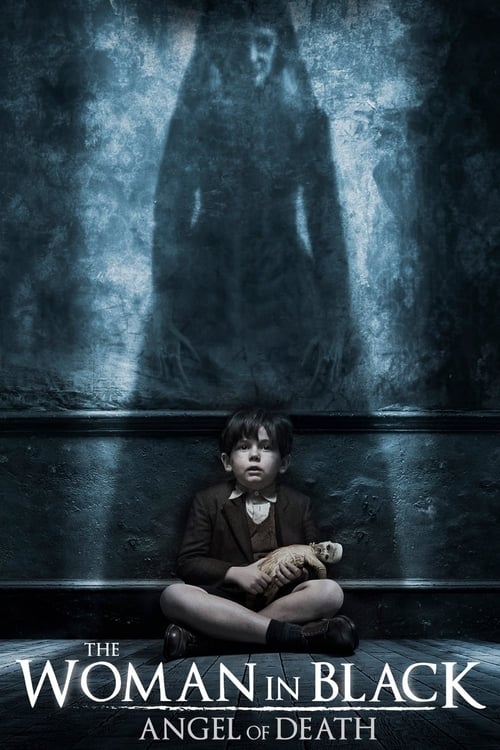
England, 1941. The Second World War is in full swing and London is victim of a fierce bombing by the Germans, forcing the population to hide in underground shelters. Eve Parkins and Jean Hogg, two teachers and guardians of a group of orphans, decide to escape and find refuge with their children outside the city, more precisely in the deserted Eel Marsh House. It will not be long, however, before unsettling paranormal phenomena and mysterious disappearances make the stay anything but reassuring and begin to sow a trail of terror and death. When the house, once safe, turns into a house of horrors, Eve asks for help from Harry, a young pilot, to investigate what is happening and the reasons for such terrifying events. The investigation will uncover a terrible story regarding the past of the old tenants, not without really surprising twists.
To describe the current status of the reborn Hammer, it is appropriate to resort to a comparison with the world of football, whose history is studded with teams that, in now distant decades, knew how to collect successes and titles repeatedly only to eclipse themselves until disappearing into the anonymity in which they currently sail. Here, this is Hammer: a production house with a great reputation and proud of a history that represents a source of pride, but at the same time an obstacle in that the English house finds itself in an uncomfortable middle way between the desire to maintain the traditional identity and that of adapting to the new languages of contemporary horror cinema.
Uncertainties and indecision that have turned into products that, with the exception of the good "Blood Story" (remake of the Norwegian "Let Me In"), have widely disappointed expectations and made fans of the genre turn up their noses, starting from the impalpable condominium thriller "The Resident" to the useless "The Origin of Evil". To raise the average a bit, however, "The Woman in Black 2: Angel of Death", sequel of the not very brilliant supernatural-themed thriller of 2012 with Daniel Radcliffe, which undoubtedly represents one of the highest peaks reached by Hammer since its rebirth. This time, we do not find James Watkins at the helm, but Tom Harper, an author so far mainly dedicated to TV series and at his first attempt with the horror genre. Inexperience paid at a price far from high since the work presents itself as a gothic ghost story far from being devoid of defects, but nevertheless well directed and cared for both in the screenplay and in the representation of fear.
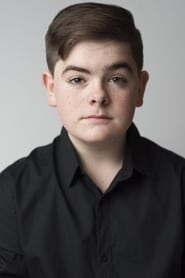
The great merit of this second chapter is that of focusing its attention in a more decisive way on the childish universe, and to do so it uses the figure of Edward, a child with a shadowy and dark personality whose fragilities, due to the loss of his parents, become fertile ground for the specter that looms in the house. To make the sense of fear emanating from this character even more effective and strong, the interpretation of the young Oaklee Pendergast is very good at getting into the role and giving Edward an aspect always in balance between the reassuring and the malevolent. He is therefore one of the great protagonists of a story characterized by a great attention to dialogues and, more generally, to the characterization of the characters. An further demonstration is the way in which Eve is outlined, also a controversial figure and with a mysterious past that allows the director to bring to life several scenes with a stimulating dreamlike component, always of strong impact in a ghost story.
More than convincing also the ability with which Harper manages to best render a tension that relies on the unsettling atmospheres of the Eel Marsh House and on the classic clichés of the genre: on the scene, therefore, alternate sinister voices, floor creaks and sound jumps, used at the right moments and without exaggerating. The scene in which Edward is locked in the room for a few seconds is a small gem, because the play of shadows and close-ups of unsettling dolls provides a sensation of see-don't see that leaves the viewer the possibility to imagine what is happening. Also noteworthy is the photography of George Steel, functional to create a dreamlike and spectral atmosphere, and a rather sinister musical commentary suitable for the climate of the story.
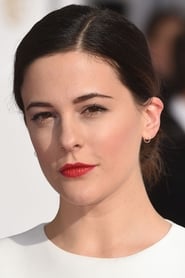
The flaws, unfortunately, are not lacking and manifest themselves in the insertion of the character of Harry, who turns out to be the classic and insipid pretty boy of the moment little incisive who weaves a relationship of sympathy with the protagonist. It is precisely to the young pilot (played by a not very convincing Jeremy Irvine) that the moments of greatest weariness of the story are linked, slowed down at some of the key moments by saccharine dialogues and imbued with misplaced sentimentality. To complete the cast of protagonists there is also Phoebe Fox, valiant in the roles of a courageous and determined teacher.
In short, we can say it: Hammer is coming back!! even if the road is still long...
Comments
Comments (0)







Comments