












The Verdict
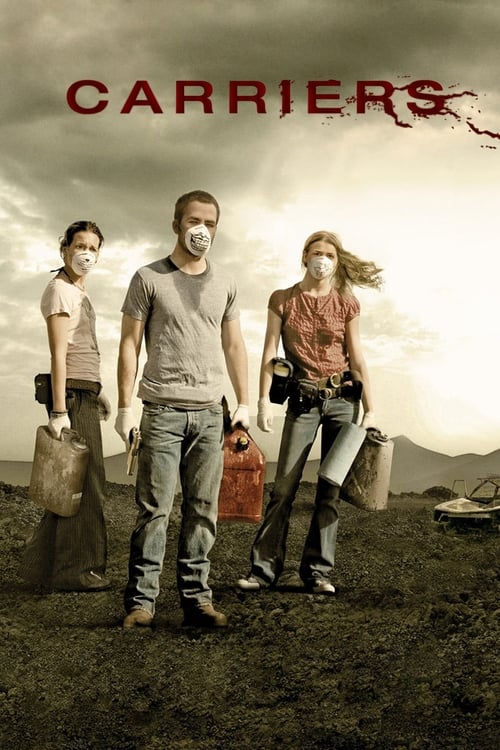
Brian, his brother Danny, Bobby, and Kate are traveling to Turtle Beach while a virus is ravaging the world, decimating humanity. The two brothers want to reach the beach hotel where they used to go as kids, convinced they can live there away from the contagion.
Brian, his brother Danny, Bobby, and Kate are traveling to Turtle Beach while a virus is ravaging the world, decimating humanity. The two brothers want to reach the beach hotel where they used to go as kids, convinced they can live there away from the contagion. But the journey to their destination is fraught with obstacles.
Disease has definitely become fashionable in cinema again. Numerous horror films and derivatives in recent years, even months, have been telling us about epidemics, pandemics, deadly viruses that decimate the population and transport us to a post-apocalyptic climate. But we are not talking about zombies and the undead often associated with this theme, but about "living" infected people who roam the city streets and clash with the few still immune who do everything to remain so.
It all seems to have started in 2002 with "28 Days Later," an imperfect and derivative film but important and foundational for a true revival effect that flooded international markets on the subject of contagions and epidemics. In "28 Days Later," it was a virus developed from the rabies strain that claimed victims and transformed the infected into monsters, thus staging a threat that is not the virus itself, but the contaminated. These are aggressive and bloodthirsty people who greatly resemble Romero's creations, halfway between the zombie and the madmen of "The City Will Be Destroyed at Dawn," and the entire genre that followed Boyle's film will have this "human" constant as a danger to be avoided.
"Carriers - Deadly Contagion," on the other hand, begins with a more realistic approach: no rabid infected with murderous instincts, no cannibalistic undead, but a virus that infects and slowly leads to death, exactly as it would happen in reality. The journey undertaken by the Pastor brothers is therefore a trip through America destroyed by a virus whose origins are unknown, essentially a dramatic film with the hallmarks of genre cinema, a work that prefers to stage the everyday life of a group of friends in search of a way of salvation rather than catastrophes and horrors. But in its desire to find a different path from the usual, "Carriers" fails and ultimately turns out to be the same old reheated soup.
The Spanish-origin Pastor brothers write and direct a dignified, well-crafted, and certainly enjoyable film to watch; but "Carriers" also has a huge flaw, it is anonymous and leaves no mark. A well-executed assignment by the top of the class but which has no soul, does not capture sufficiently and leaves only much emptiness in the spectator.
The fundamental problem is that "Carriers" lacks bite, it tells a story already told a thousand times and does so without a touch of personality or a strong idea that could distinguish it from the crowd. The main intuition was to tell an apocalyptic contagion with a dramatic and realistic language, pity that recently "Right at Your Door" and "The Road" have also done it but with far superior results, with the only difference that "Carriers" decides to frame it all under a more teen perspective.
In the end, the Pastor's film is forgotten at the speed of light, partly due to a handful of unremarkable characters who replicate the classic group dynamics depicted in most films of this type: a small group of people initially very united who gradually show signs of hostility that will lead to the group's internal tragedy. In this specific case, we have two main personalities represented by the two brothers Danny (Lou Taylor Pucci) and Brian (Chris Pine), shy and insecure the first, strong, decisive, and with leadership tendencies the second. The confrontation and the consequences that will follow are predictable, the characters unremarkable because already seen, like the whole film.
What positively stands out in "Carriers" is the construction of some scenes with a sure emotional impact. Above all, the long part with the father and the sick girl (played by Christopher Meloni and Kiernan Shipka) that culminates with the scene at the hospital, but notable is also the scene with Bobby's (Piper Perabo) exit.
In short, "Carriers" is a film that works better if taken for individual sequences rather than as a whole. But one cannot blame the authors for making a bad film, but rather for straining their brains the minimum, staging yet another story of contagion without imagination and without a real reason to be remembered.
Cute, okay, but easily forgotten.
Comments
Comments (0)
















Comments