















The Verdict
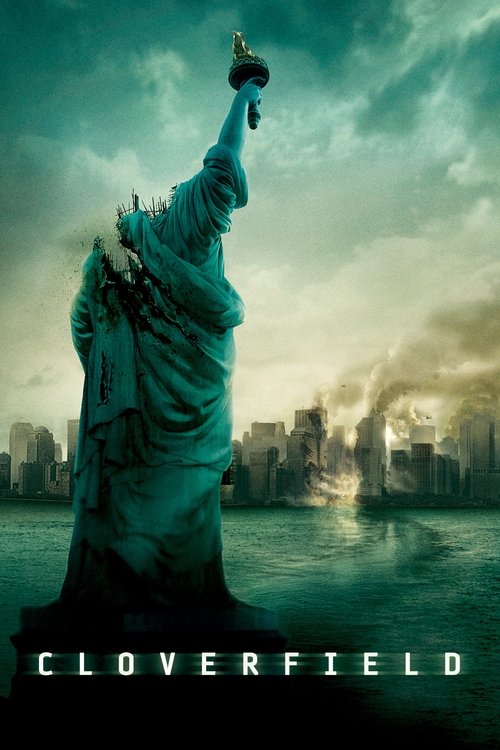
Between May 22 and 23, New York is attacked by a giant creature from the water, which first beheads the Statue of Liberty and then sows death and panic through the streets of the Big Apple. The event is documented live by the handheld camera of a young man who was celebrating a friend's departure to Japan.
Between May 22 and 23, New York is attacked by a giant creature from the water, which first beheads the Statue of Liberty and then sows death and panic through the streets of the Big Apple. The event is documented live by the handheld camera of a young man who was celebrating a friend's departure to Japan.
CREATION OF AN EVENT.
In 1999, the two young debutant directors Daniel Myrick and Eduardo Sanchez created an event thanks to a simple but effective promotional campaign all centered on mystery: "The Blair Witch Project." Despite a ridiculous budget and an amateurish look, the film grossed nearly $250 million worldwide, breaking every box office record for an independent film. Nine years later, history repeats itself, and the duo Matt Reeves (director) / J.J. Abrams (producer) create "Cloverfield," one of the event films of early 2008.
The power and success of "Cloverfield" primarily reside in the acute viral marketing strategy created to support the film. The public's curiosity was piqued and fueled by a series of "tastes" that insistently pointed to the mystery of the product and the anticipation that this mystery inevitably generated. The film's production launched a series of false leads created ad hoc, and then the imagination of potential viewers did the rest, heaping such a mass of fanciful interpretations and conjectures on the film as to make "Cloverfield" a cult even before its release, as well as an announced economic success.
With a budget of $30 million (almost all used for the creation of elaborate special effects), "Cloverfield" grossed $41 million in its first weekend of programming in the United States, becoming the highest-grossing film ever in its first weekend of programming in the month of January, and sparks are also expected in other countries. Already just for the publicity buzz created, Reeves and Abrams deserve great esteem, as the two authors seriously created an event out of nothing: a mysterious plot, unknown actors (also in the dark about the plot details before starting filming, to prevent information from leaking), clues scattered everywhere, and false leads that connected to the imaginary belonging to the universe of the famous "Monster movies" of the past and to the universe already created by the cult TV series by J.J. Abrams ("Alias" and "Lost").
EXTREME VIRAL MARKETING.
It all started with a mysterious video that ended up on YouTube, probably spread by the film's production and made to disappear within a few days, in which an hypothetical film about a city under assault by a mysterious enemy was announced. The video, of very poor quality, was an amateur recording of a party among friends, suddenly interrupted by a blackout and a boom echoing through the city's streets, followed by a fireball streaking across the sky. The same video, after a few weeks, was released as a teaser trailer for a film, still without a title, produced by Abrams, with the sole addition of some images showing the head of the Statue of Liberty hurled with great force through the city's streets (you can view the teaser trailer below).
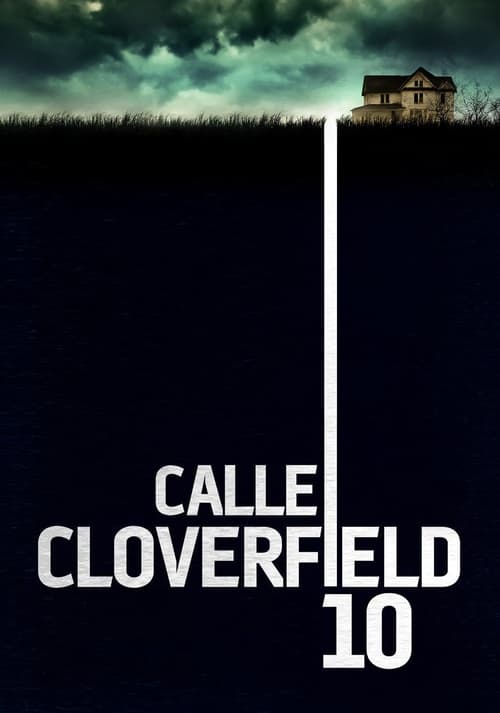
Simultaneously, a mysterious website appeared online with the URL of the date already spread in the teaser trailer: www.1-18-08.com, in which there were only some photos (which would grow in number with the passing of days) showing images of a party, but also disturbing stranded and mutilated cetaceans and bloodstains in the ocean. At this point, the imagination of internet users went wild, and the mysterious date 1-18-08, in addition to being an hypothetical theatrical release of the film, seemed to also credit itself as the film's title (continuously redefined by some taglines that appeared from time to time on the poster released shortly afterward and cited the words "Monstrous" or "Furious"). There were no lack of fake amateur videos of those who claimed to have "secretly" filmed the film set, in reality videos spread by the same production and made to disappear within a few days to fuel the mystery. There were no lack of sites apparently affiliated with the famous 1-18-08 or of complete misdirection, the most famous of which is www.slusho.jp, the promotional site of a non-existent Japanese-produced non-alcoholic drink that then also appears on the t-shirt worn by one of the film's protagonists and refers to a drink created by Abrams himself for his series "Alias." Even the film's title remained uncertain (or if we want to say obscure) until the end. From "1-18-08" to "Monstrous" and "Furious," it was even hypothesized that it could be titled "Slusho," like the imaginary drink or "Parasite," based on some indiscretions about a parasitic creature attacking New York. "Cloverfield" (which literally means 'clover field') was simply the working title of the film that Abrams chose because it is simply the name of the boulevard in Santa Monica where the offices of "Bad Robot," the production company founded by the producer, are located. Then a very precise meaning was attributed to this name, because that is how the U.S. Army calls in code the area of Central Park where the video made by the party boys is found in the film; so "Cloverfield" became the official title of the film.
Even more mystery hovered until the last moment about the identity of the monster, to which the fans' frantic search contributed, conjecturing a series of incredible hypotheses according to which the monster would have been, in turn, Godzilla (hence "Cloverfield" would have been the announced and never realized sequel of "Godzilla" by Emmerich), Gamera (the giant fire-breathing turtle of the Japanese monster movie of the same name), Voltron (the robot of a famous Japanese animated series), or even Cthulhu, the malevolent deity created by the writer Lovecraft. There were even those who wanted to see in the monstrous creature of "Cloverfield" a reference (or revelation) to the presence that lurks in the TV series "Lost," recalled by the film's release date that, through the fanciful equation of Valenzetti (invented precisely in "Lost"), would coincide with the fateful number of the flight on which the protagonists of the TV series were before crashing on the island and the minutes before which they had to dial the code of the bunker (108). Further stratagems of viral marketing combined with the imagination of users were born with rough sketches spread online that depicted (falsely) the appearance of the monster (which you can see below) and the theory according to which the monster's face is hidden in the film's poster (images above).
THE IMPORTANCE OF CLOVERFIELD
"Cloverfield" is not only a brilliant advertising strategy; "Cloverfield" is also a great horror film, a unique and truly unsettling experience. Therefore, not just a "short film" that justifies months and months of viral marketing, but one of the most original and engaging monster movies of all time, which draws strength from a metaphorical power of incredible sociological value.
In the end, what is "Cloverfield" if not a realistic parable about the fears of Americans following the tragedy of September 11? It is not a matter of easy political-social reading of the catastrophic images visible in the film, but of an explicit vision of a city under attack. The attack of an unexpected and mysterious enemy that catches off guard and causes incredible damage to the lives of innocent people, the city, and the pride of those who govern and are forced to resort to the most drastic solutions to "contain" the plague. "Cloverfield" is precisely the most explicit manifesto of a common malaise among the citizens of New York (and not only), which under the guise of a genre film hides the most effective and frightening mirror of past tragedy and always ready to repeat itself, a film much more effective in replicating grief and fear than "World Trade Center" or "United 93" were, much more "serious" and of civic commitment. The reason lies mainly in the magnificent choice to show the catastrophe through the "cine-eye" of any witness to the tragedy, a boy like many others who goes from a party with friends to documenting the fall of New York in disbelief. All of this is shown through the video made by a handheld camera from the involuntary documentarian, with the consequence of shaky, confused footage, sudden cuts, blurs, and visual, not to mention auditory, noise of those who run, stumble, scream, fall but continue to film relentlessly. A sort of temerity of a (audio)visual witness that in the era of YouTube and video phones is injected into the most unimaginable individual, driven by the desire to document, to be able to say to friends and strangers "I was there," and make as many people as possible participants in any experience.
Within the film-documentary, there is still a beautiful story to follow, which sees four boys involved who fled the party and find themselves crossing Manhattan to rescue a dear friend trapped among the rubble of her home, between attacks by "indescribable" monsters and friendly fire from the military who have arrived to contain the threat. Numerous are the heart-pounding sequences that the viewer will not be able to erase from their mind: from the first attack of the monster with the beheaded head of the Statue of Liberty to the sequence on the Brooklyn Bridge, from the passage through the subway tunnel to the adrenaline-filled finale on the tilting building.
The team of unknown actors hired to portray the film's protagonists is excellent, a series of incredulous and frightened faces truly capable of appearing credible. Rather well-conceived is also the screenplay by Drew Goddard, Abrams' faithful collaborator, who manages to involve in a "live" adventure not lacking in plot twists. Excellent are also the special effects created by the Tippett Studio and Double Negative, which, thanks to the see and not see and the often not optimal quality of the video footage, manage to appear extremely realistic, even where a giant monster parading through the streets of Manhattan is shown.
"Cloverfield" will surely be remembered in the annals of cinema not only for everything it entailed in terms of promotion and the reality technique with which it is rendered, but above all for the great social importance not dissimilar from the apocalyptic monster movies that documented human fear of the nuclear and Cold War during the golden age of science fiction in the mid-'900s.
To be seen with the awareness that you will be watching an anomalous film and with amateur video quality.
Comments
Comments (0)













Comments