
















The Verdict
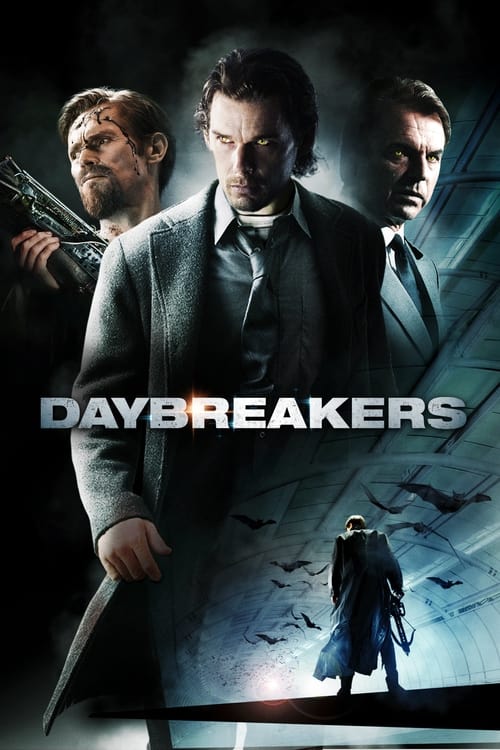
2019. The Earth is populated and dominated by vampires, who have gained the upper hand over humanity following a mysterious virus that transformed much of humankind into creatures of the night.
2019. The Earth is populated and dominated by vampires, who have gained the upper hand over humanity following a mysterious virus that transformed much of humankind into creatures of the night. The few surviving humans are hunted by vampires and then locked in reserves where they are used as true blood-factory machines for the sustenance of their race. But now humans are becoming extinct and with them the blood, so the hematologist Edward Dalton is searching for a substitute for human blood that can feed his kind even in a future without raw material. At the same time, Edward has stopped drinking human blood, increasingly concerned for the race that until a few years ago dominated the planet and for which he has nostalgia. One day, fate wants Edward to meet Audrey, a human who is part of a faction of rebels, with whom he establishes a partnership to reverse the fate of the planet.
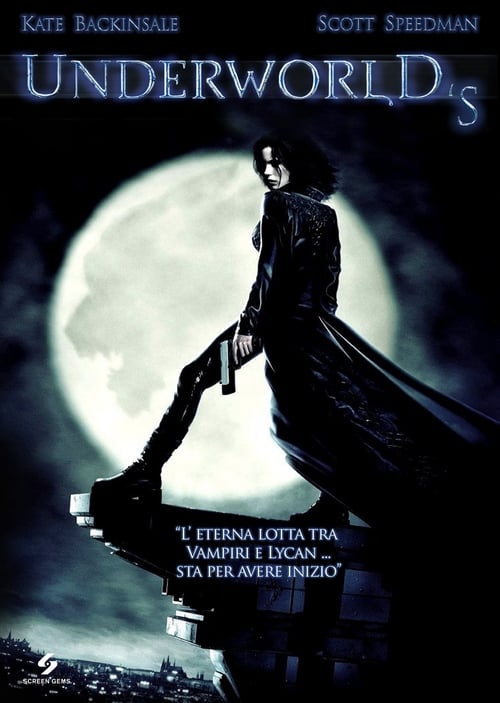
There are three main categories of cinematic vampire: the classic, the modern, and the postmodern. The first, as you can imagine, is the elegant, noble vampire, preferably of literary origin, of which Dracula is the father and the greatest exponent; the second is the ugly, dirty, and mean vampire, a bloodthirsty beast born from the punk counterculture of the 1980s of which "The Lost Boys", "From Dusk Till Dawn", "Vampires" and "30 Days of Night" are the most famous representatives. Then there is the postmodern vampire, a contemporary urban vampire (or of a near future) perfectly integrated into society, perhaps settled at the top of power and often identifiable within films that combine horror with action; we remember the "Blade", the first two "Underworld", that pop pastiche of "Ultraviolet". These last vampires belong to the years closest to us, to the era we are living in, to high-tech contaminations and often dystopian connotations of Dickian pessimism. These last are the vampires that also appear in "Daybreakers", the latest effort from Lionsgate that sees the return of the Spierig brothers, already authors of the cult zombie/splatter/sci-fi "Undead".
The Spierig brothers, who in addition to directing are also authors of the script, seem intent on revisiting the icons and genres of the horror imagination from a new perspective. If with "Undead", in fact, they managed to avoid falling into the usual zombie film by using clichés to their advantage and reworking the material with humorous and scientific contaminations, with "Daybreakers" they do the same with the vampire and manage to make an inventive and original story that on paper was shrouded in an aura of déjà-vu.
What convinces in a work that nevertheless has several strong points is precisely the mix of elements and the way they have been developed, making sure there was room for both entertainment and the development of intelligent themes. Starting from this premise, we will find an adventure that leaves room for social criticism by launching jabs at the power of lobbies, their speculation on primary goods, and the concealment of the weakest on the social scale (the repellent subsiders as well as humans) who, in the scent of revolt, become the protagonists of public executions. At the same time, "Daybreakers" does not skimp on action scenes (which are perhaps the least interesting and all in all useless) and explosions of ultraviolence that reach unexpected heights of splatter, as in the successful finale that features a scene of mass dismemberment in slow motion with human limbs and organs flying through the air.
What perhaps leaves something to be desired is the superficiality with which all the characters have been described, from the main ones to the secondary ones. If, despite its banality, the evil financial businessman played by Sam Neill ("Jurassic Park"; "The Dead Zone") works rather well, particularly well cast in the role, the hematologist protagonist Ethan Hawke ("Assault on Precinct 13th"; "Training Day") and his marine-republican brother played by Michael Dorman ("Triangle"), as well as the human Claudia Karvan ("Long Weekend"), are rather evanescent. The figure of Elvis, leader of the revolutionaries and the first human cured of vampirism, played by Willem Dafoe ("Spider-Man"; "Antichrist"), the typical character with guaranteed charisma who here oscillates between some funny lines and a somewhat uncertain characterization in the role of leader or sidekick, also leaves somewhat perplexed.
Some interesting insights give particular originality to the work and take shape in the idea of showing an involution of vampires in abstinence from human blood, who transform into animalistic subsiders, who are nothing more than the representatives of the proletariat (not by chance, the first to transform before the eyes of the viewer are the homeless and the gardener of a residential complex), the last wheel of the cart and the first to feel the scarcity of "food". The scene of the revolt of the bourgeoisie in front of a blood coffee kiosk is also representative, an additional anomalous image of a general malaise that seems to spread to more social levels.
Despite this, there are some recycling ideas, such as the cultivation of humans, literally squeezed to obtain blood, already seen in "Blade: Trinity" and in a certain sense in "Matrix", and the synthetic blood that brings to mind the "True Blood" of the TV series of the same name.
Thumbs up also for the direction of the Spierig brothers, fresh and dynamic without ever resorting to the overused music video effect for the most heated scenes, to which is added the indispensable contribution of the photography (by Ben Nott) that underlines with effectiveness the contrast between the human condition and the vampiric one through the alternation between warm and cold colors, between ochre yellow and metallic blue.
With greater care in the characters, we could have bid farewell to the last great vampire film, but "Daybreakers" is nevertheless a valid example of cinema with ideas, well crafted and capable of adding interesting details to the already vast mosaic of cinema dedicated to bloodsuckers.
It deserves half a pumpkin the most.
Comments
Comments (0)














Comments