













The Verdict
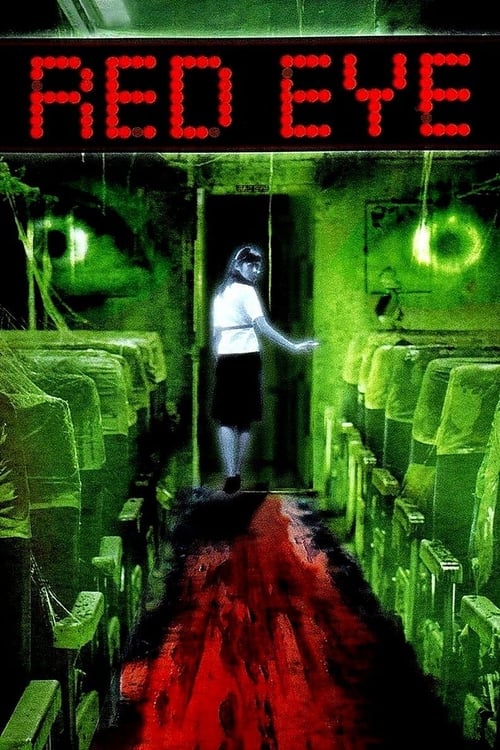
It is Oh Mi-sun's first day at work: her task is to distribute food supplies to passengers in the carriages of a train. Her first working shift takes place during a night run that will immediately give rise to unusual situations.
It is Oh Mi-sun's first day at work: her task is to distribute food supplies to passengers in the carriages of a train. Her first working shift takes place during a night run that will immediately give rise to unusual situations. Mi-sun will not be late in noticing that something unsettling is happening on that train, something that seems linked to the tragic railway accident that occurred years earlier on the same line. All the souls of those who found death in that tragic accident now seem intent on crossing the threshold between the world of the living and that of the dead.
There is not much to say or great introductory sermons to expose to comment on "Death Train" ("Redeu-ai"), a 2005 Korean horror film directed by Dong-bin Kim, the only thing that can be easily and certainly said is that it is a film in which, during the viewing, the minutes pass slowly... really very slowly.
The Japanese horror, at its first debuts in Italy, had led us to believe that it would be capable of offering new life and new frontiers to our favorite genre, but, in the long run, we have had the opportunity to realize that Eastern cinema is a cinema, most of the time, enormously overrated for two reasons: firstly, it suffers from a total lack of fantasy (at least according to the substantial portion of works that arrive on our continent) such as to make the films all damnably similar and predictable; moreover, it is a particularly pretentious cinema that tends, most of the time, to hermetism, to create situations that tend to complicate unnecessarily and that only have the purpose of leaving the viewer perplexed, confused and forced to find a logical interpretation (an interpretation that, with good probability, does not even exist).
"Death Train", unfortunately, does not differ from the mass of mediocre Asian Horror and does nothing, absolutely nothing, to grow respect and trust in Asian horrors. One must start from the fact that, in "Death Train", everything smells of already seen thanks to the use (I should say the misuse) of a plot that had good cards in its favor (a location different from the usual to start with) but that decides to play them in the worst way by taking a road that has already been beaten millions of times and that is no longer capable of arousing any interest. But as if that were not enough, it was decided to make everything even more indigestible thanks to an allucinating narrative slowness that will make the film a sort of psychological torture towards the viewer who will complete the viewing (if they manage to) with suffering and struck by countless yawns (it is necessary to inform the reader that, for the "first" 85 minutes, absolutely nothing important happens for the plot). Furthermore, there is a total absence of suspense and tension: the appearances of the ghosts are very rare and, when they occur, they are dull and boring because they lack that certain pathos essential to a horror film, especially if it is a ghost story.
The cherry on top, the film tends to conclude in total confusion: everything suddenly becomes complicated, illogical situations are introduced at full speed just to weigh down the whole thing, since they will then be quickly overlooked or little explored; moreover, there are no lack of hermetic concluding scenes that clash with the logic and intelligence of the viewer. This time, the hermetism, or the nonsense, that is generated at the end is not a choice dictated by the author's will but rather by the incompetence that he has manifested in the exposition of the facts: the explanations are there but they appear confused and poorly assembled.
The only thing that can be minimally salvaged is Dong-bin Kim's direction, which, in the end, is quite diligent and intent on finding sought-after shots or bizarre camera movements; but certainly, the direction alone will never be able to save a film like this from complete failure.
In conclusion, "Death Train" is the usual Eastern film with vengeful ghosts (a theme also entirely intrusive in this case) that, never as this time, appears terribly soporific, confused, and inconclusive. A real case in which, at the end of the viewing, no knot comes to light.
Absolutely to avoid.
Comments
Comments (0)






Comments