






The Verdict
Dawn is a sweet girl in full development phase, rich in healthy principles and a supporter at school of the movement in favor of premarital chastity. Like all her peers, she has entered the phase where she gradually begins to discover her body and feel the first changes brought by the adolescent age.
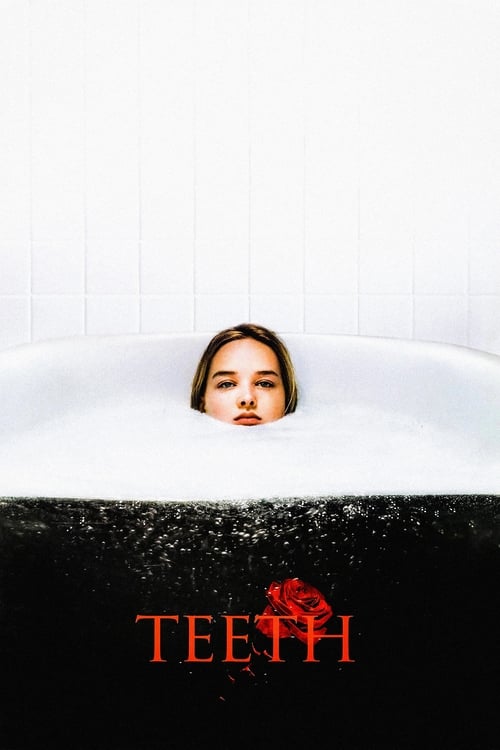
Dawn is a sweet girl in full development phase, rich in healthy principles and a supporter at school of the movement in favor of premarital chastity. Like all her peers, she has entered the phase where she gradually begins to discover her body and feel the first changes brought by the adolescent age. One day, however, after concluding with drastic results what should have been her first sexual experience but which turned into a rape, Dawn will make a terrible discovery about her body: her vagina has its own will and is "equipped" with sharp teeth.
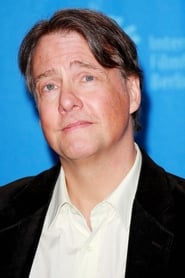
Acclaimed and awarded at the Sundance Film Festival, "Teeth" is an unusual 2007 film directed by Mitchell Lichtenstein. It is a film capable of playing very skillfully with genres, succeeding in merging in a single and admirable work typical elements of the horror and dramatic genres, without disdaining, at the right moment, some small winks to comedy (more precisely speaking of black comedy).
What most strikes in a film of the caliber of "Teeth" is undoubtedly the innovative and bizarre story that serves as the basis for the plot, a highly over-the-top story that could give rise to hasty prejudices pushing the viewer to form a wrong idea of the film, thinking that it is a carefree movie that makes demoralizing and large-scale humor its daily bread. Wrong! However absurd it may seem, Lichtenstein's film has a very serious creative vein and is therefore absolutely not classifiable or reducible to the adjective "trash"!
The idea of the "vagina dentata", although it constitutes the innovative element of the film, cannot be properly considered original since it draws inspiration from various myths and legends from the folklore of even distant areas (such as the northwest coast of North America and Southeast Asia) that resorted, and still resort today, to this figure to symbolize the multiple risks of contracting diseases through sexual intercourse. But this Latin locution, "vagina dentata" precisely, finds its greatest fame in the famous psychoanalyst Sigmund Freud who used this figure to represent in an emblematic way what is the anxiety of castration inherent in man.
The film brings this figure back into vogue by appealing, for the most part, to the landscape of horror productions, thus highlighting scenes that are sometimes shocking and difficult to digest visually, but thanks to an effective screenplay, it does not appear to be a simple horror film but is capable of offering much more following the appreciable choice to deepen and give depth to the frustration of the young protagonist, a girl who has just entered the adult world and wants to discover her body and satisfy her first libidinous desires. Unfortunately for her, but especially for her partners, she will not be able to satisfy these needs due to a dangerous anomaly of her body that turns her, against her will, into a dangerous killer at the moment when sexual intercourse is consummated.
In addition to an admirable screenplay capable of arousing interest, deepening characters and situations without ever falling into the predictable or worse still into the banal, the direction of Mitchell Lichtenstein (more famous as an actor and here for the first time tackling a feature film) is also praiseworthy, which turns out to be sober, effective, little experimental and more inclined towards classic tones but certainly suitable for the spirit and dynamism of the work. But beyond demonstrating a good craftsman, Lichtenstein also demonstrates being a true fan of the genre capable of offering, on multiple occasions, interesting contributions to the science fiction cinema typical of the 1950s, that cinema that entertained itself by staging fantastic giant monsters, often the result of excessive exposure to radiation, ready to symbolize themselves, in a post-cold war era, the most relevant fears of man.
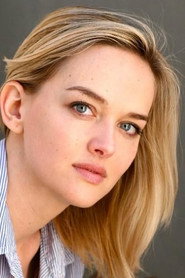
Thumbs up also for the cast, mostly made up of young, little-known actors but all particularly convincing and in their roles; among them, special mention goes to the protagonist Jess Weixler (Special Jury Prize at the Sundance Film Festival 2007 as the female protagonist), suitable in the role of frustrated and melancholic Dawn and capable, in addition to moving with great ease and naturalness in front of the camera, of giving excellent depth to her character. Dawn, in fact, in her apparent formal simplicity, turns out to be a very deep and complex character capable of redeeming the female figure within the horror genre. Lichtenstein, on more than one occasion, has stated that he hates films in which the female sex identifies with the "weaker sex" and in which women, stereotyped to the extreme, end up being simply the victims of the situation.
In "Teeth" none of this happens and Lichtenstein, with his Dawn, stages a kind of "heroine", a character capable of capturing in a singular way the empathy of the viewer and capable, despite her nature, of configuring herself as a model with which the viewer (predominantly female, obviously) would like to identify.
As mentioned previously, although the film tries to blend multiple genres, what seems to attract the most attention is the horror genre and thus, the director, to give more "vivacity" to the scene, does not spare us a handful of brutal, bloody and borderline scenes and between eviscerations, mutilations and human members given to dogs, the film will appear as a succulent dish even for the most sadistic horror fan.
In short, "Teeth" is not only a film to keep an eye on but a film capable of approaching perfection: brutal, cruel, excessive but at the same time sad and reflective. Such courageous and carefree films in the treatment of certain delicate themes like this one are not seen often; it is not excluded that over time, through a fair and deserved word of mouth, "Teeth" may become a true cult of the genre.
Film of rare beauty. Unmissable.
Comments
Comments (0)











Comments