










The Verdict
The Godsend Clinic is a private facility with an unspecified scientific location. Officially, it is a sort of super laboratory where research on DNA and therefore cloning is conducted.
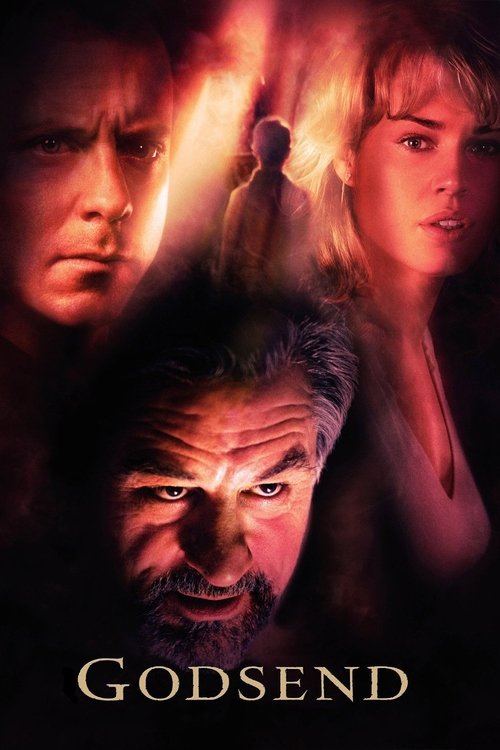
The Godsend Clinic is a private facility with an unspecified scientific location. Officially, it is a sort of super laboratory where research on DNA and therefore cloning is conducted. The institute will enter, and along with it the shady figure of Dr. Richard Wells (the surname perhaps taken from the English writer author of The Time Machine), into the lives of the spouses Paul and Jesse Duncan when, due to a tragic fatality, they will prematurely lose their little son Adam, who is only eight years old. The Duncans are desperate, especially Jesse, and the diabolical Wells takes advantage of this state of mind to convince them, while they are visiting their son's grave, to undergo an innovative cloning experiment. At the Godsend Clinic, in fact, the dead can come back to life thanks to genetics. Little Adam also comes back to life and for a while everything seems to go well, but strange dreams and dark omens cloud the mind of the reanimated child, which his parents will soon realize... A cathartic ending and the revelation of Wells' true nature will give the audience moments of pure suspense. The second horror film for the Englishman Nick Hamm after the mediocre "The Hole" (2001), this film is the opportunity to see an unprecedented Robert De Niro as a mad doctor who showcases his solid acting skills, even when he has to perform an ending that is openly inspired by "Angel Heart" (1987) by the certainly more talented Sir Alan Parker. If we exclude the performance of the former Taxi Driver and that of the small and unsettling Cameron Bright, who seems to be auditioning for Birth – I am Sean while in the film he plays Adam, who can only be biblically named as such, since the girl cloned by the Rahelites was named Eve, "Godsend" turns out to be a mediocre film, played in a subdued manner by the couple Stamos and Kinnear, who are unable throughout the film to convey the dramatic intensity that their roles, as parents destroyed by tragedy, would have required. Nick Hamm gives us some good scenes built on the visionary, in the style of "Gothika" and "Identity Violated," with editing that livens up the high-suspense scenes. Too bad the "trick" only works for the director the first few times; from the middle of the film onward, he constructs the scenes so mechanically that they no longer impress the viewer. Varying on the screenplay by Mark Bomback, it is not clear whether the film has at least, especially in the unexpected mystical ending, social intentions and values. Critique of the society of replicants, in-depth study on bioethics, or simply a product studied at the table to ride the wave of information (Dolly the Sheep? The Rahelite sect?). "Godsend" is certainly not the best horror of the season, but it is surely one of the most watchable and better made, which makes one reflect bitterly on the current state of the genre. Born from a Canadian co-production, a nation that is increasingly venturing into fantastic cinema, it recycles a rather tired De Niro, impeccable from a technical point of view but absolutely incapable of true acting exploits. His exorbitant cachet alone makes it clear that Godsend is not a low-budget film in intention but, at least, in results. Curiosity: The screenplay is shadowed by the film "The Godsend" (1979) by Gabrielle Beaumont, where the forces of evil use as a vehicle an unsuspecting blonde girl, just adopted. Before the film's release, a fictional website for the Godsend Clinic was opened, promising to bring the deceased loved ones back to life through genetics. Incredibly, the website had many contacts and several reports (unfortunately real) of people who would have wanted to actually undergo Dr. Wells' experiment.
Comments
Comments (0)







Comments