
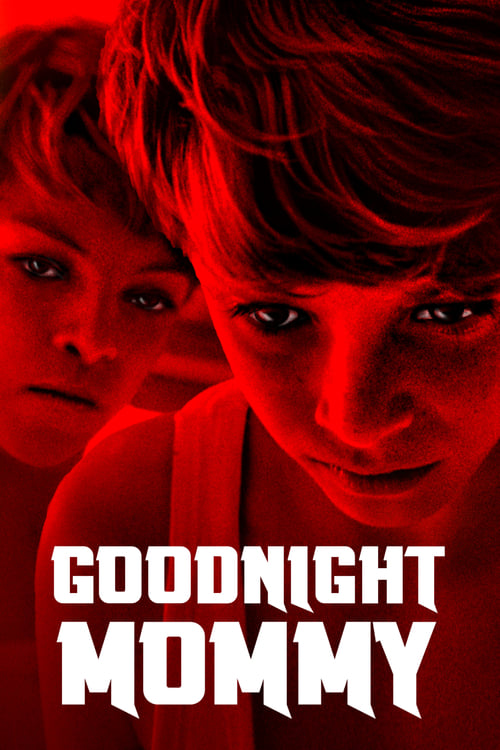





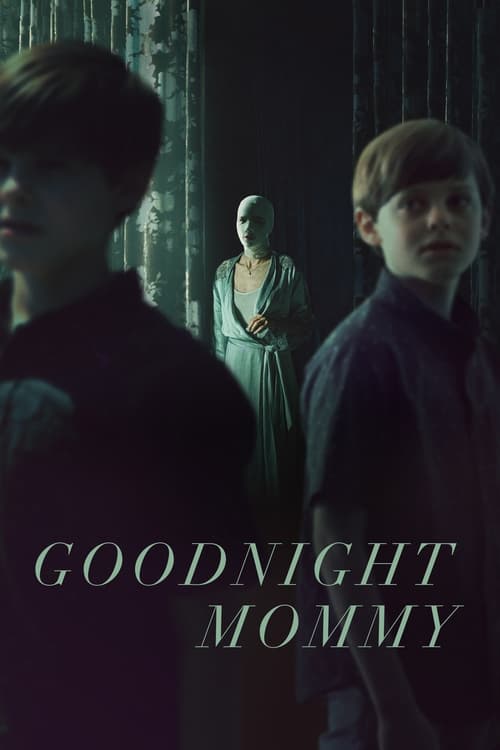
Two twins welcome the return of their mother, finally home after an accident that forces her to wear bandages on her face following a plastic surgery procedure. The woman is severe and cold towards her children, who, convinced that she is not their real mother, will do everything to uncover the truth.
The Austrian director Ulric Seidl produces this singular film premiered at the 72nd Venice International Film Festival in 2014, directed and written by his wife Veronika Franz (here in her directorial debut) and Severin Fiala. The film was nominated for the Austrian Academy Award for Best Foreign Language Film; the trailer was viewed by millions of people and described as "the most frightening ever made." Indeed, the premises of "Goodnight Mommy" left much to be desired, and expectations were partly met.
"Ich Seh Ich Seh" (original title) is a sort of psychological horror built around an ambiguous and frightening duality, constantly highlighting the confrontation between the protagonists of the story: three of those we see on screen, but with an amletic doubt that should accompany us throughout the duration of the film. "Should" because in reality, the solution to the enigma is simple and too early: the not always perfect screenplay scatters revealing clues from the first minutes, eliminating the suspense element. Initial minutes that pass with an exasperating and exasperating slowness, difficult to digest but propaedeutic to the understanding of family dynamics. These are staged through a series of suggestive snapshots, almost without continuity, that immortalize the life of the two twins (Elias and Lukas Schwarz) and their mother, with framings that constantly and insistently emphasize the aesthetic research of the work. Which, however, shows at times a sterile and non-functional pretentiousness to the narrative development. This authorial touch opens the way to elegant and oniric scenarios, immersed in a mysterious and anguishing atmosphere, mirror of the characters' lives. The latter, isolated in an enormous villa surrounded by untouched nature, express their unease using more body language than words: the few dialogues leave in fact space to an expressive gesturality made of investigative looks, signs of understanding and sometimes indecipherable plastic poses.
Although the female protagonist - played by an excellent Susanne Wuest - is forced to show her face completely bandaged for most of the film, her figure manages to unsettle and impose herself with impetuous security, revealing an apparently disturbed and perverse personality, in support of the thesis of the two little brothers. The film mixes the cards on the table, making us guess that not everything is as it seems, a concept on which the entire plot is based and which will give rise to the drama within the drama: after overcoming the initial difficult phase, the film finally takes off thanks to an acceleration of the rhythm and therefore of the narration. The unexpected and shocking role reversal gives rise to a fierce spectacle, punctuated by abuses and violence. The innocent cruelty is somehow justified by that unconditional love that binds mother and children, a feeling desperately pursued and clouded by the non-acceptance of a reality too harsh and unjust. The executioner, in this case, does not derive pleasure from the pain he inflicts but suffers with the victim, in a state of unconscious lucidity.
In an imaginative clean and white context, dominated by cold colors and supported by a crystalline and refined photography, the physical and psychological horror is consumed, conceived with surgical detachment and dictated by the desire for truth and reconciliation. "Goodnight Mommy" is a film that dangerously ostentates a morbid attention to form rather than substance, creating a certain imbalance between the various phases of the film. Overall, it is a work of high pretensions, which manages to captivate the spectator with its sophisticated and fascinating patina and is able to represent the family tragedy through spiritual anguish and physical violence. One of the most interesting and noteworthy releases of the recent period. Engaging viewing but warmly recommended.
Review originally published on the blog M'illumino di Horror
Comments
Comments (0)








Comments