









The Verdict
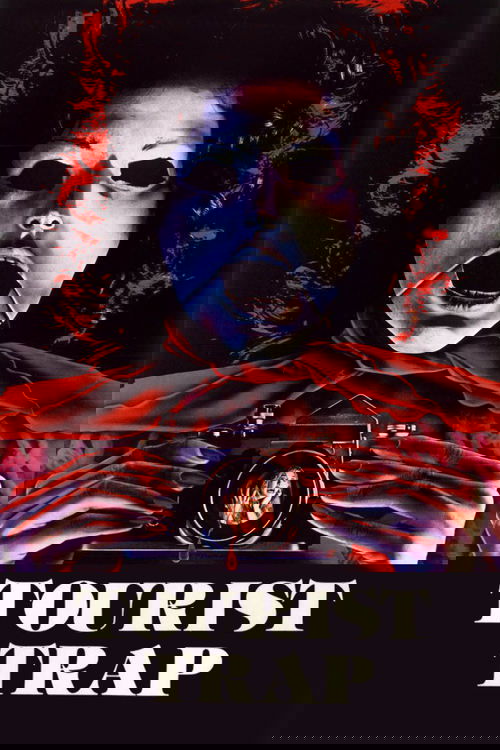
A group of young people on a pleasure trip soon find themselves having to deal with the inconveniences caused by a punctured tire. One of the five leaves the group to go look for help, but never returns.
A group of young people on a pleasure trip soon find themselves having to deal with the inconveniences caused by a punctured tire. One of the five leaves the group to go look for help, but never returns. As the hours pass, the remaining four decide to go look for him, but they encounter Mr. Slausen, a kind middle-aged man who invites them to spend the night in his home, once a museum of mannequins. Slausen, however, does not live alone, with him is his brother, a psychopath obsessed with the dolls that decorate the house, to the point of using tourists as "models" for his creations.
Today we know that in a horror film being young, attractive, and a tourist can attract the worst species of monsters, psychopaths, serial killers, and infernal creatures; and if it happens that the car breaks down… well, at that point you are really doomed. But they also knew that in 1979, the year when Charles Band's production company gave birth to "Horror Puppet" ("Tourist Trap" in the original), a tasty b-movie that owes more than the symbolic "coffee" to Hooper's "The Texas Chain Saw Massacre."
"Horror Puppet" makes things clear from the start with a classic survival horror situation, this time curiously contaminated by the supernatural. Characters and plot development are among the most overused things in horror cinema, but back then, in 1979, there was not yet the survival inflation we are used to today, so, after paying the debt to Tobe Hooper's cinema, there is also a certain interest in a singular exploration of the myth of the idealized family. "Horror Puppet" presents a reality in which the family is absent, both in the context of the victims and that of the perpetrators: Mr. Slausen has been deprived of his wife and maintains a schizophrenic complicity/rivalry relationship with his psychotic brother to the point that the lack of affection and human warmth has led him to idealize a family made of wood and plastic, mannequins (one has the features of his deceased wife) and human masks that make him believe he "exists."
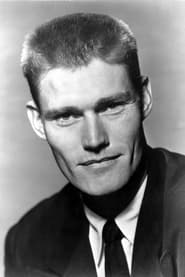
Naturally, as almost always happens in this kind of film, it is the boogeyman who steals the show, completely stealing the scene from the young protagonists. In this case, the task of portraying the mysterious and ambiguous Mr. Slausen was entrusted to Chuck Connors, a great character actor who in the 1950s and 1960s was involved in many westerns and cult TV series, here really excellent in the role.
Director David Schmoeller, also the author of the screenplay together with J. Larry Carroll, handles this, his first feature film, admirably and partly anticipates the themes he will address in his subsequent "Striscia ragazza, striscia" and especially "Puppet Master – The Puppeteer." Very good the photography by Nicholas Josef von Sternberg.
What little convinces is the look of the psychopath, really too similar to Leatherface of "The Texas Chain Saw Massacre," and leaves a bit doubtful also the choice to endow him with telekinetic powers that seem almost intrusive in the story. Demerit note also to the gore and violence department, little present even if it would not have been out of place in a film of this kind.
In general, however, "Horror Puppet" is a film worth recovering, aged very well and today more fascinating than it was back then.
Note the great similarity of "House of Wax" version 2005 with this film. Coincidence?
Comments
Comments (0)










Comments