



The Verdict
A serial killer roams the streets of Detroit; his targets are exclusively members of the clergy. They die in order: an elderly sick priest, a young nun who wanted to leave the community, a priest in the confessional…
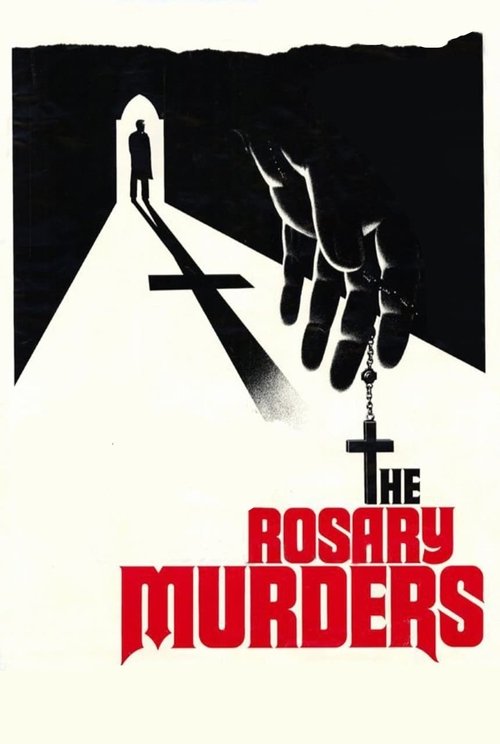
A serial killer roams the streets of Detroit; his targets are exclusively members of the clergy. They die in order: an elderly sick priest, a young nun who wanted to leave the community, a priest in the confessional… all found with a black rosary in their fingers; until Father Koesler hears the confession of a man who reveals himself to be the killer. Torn between the obligation to keep the seal of confession or reveal everything to the police, Father Koesler decides to investigate alone, starting from a mysterious suicide of a girl that happened some years before and which the killer had mentioned in the confessional.
Based on the novel by William Kienzle, Fred Walton stages a routine thriller that is not exempt from really interesting points to resolve itself, then, as a somewhat incoherent and weak television-like mystery. The fundamental problem of "The Rosary Murders" lies in the same story staged by Walton, at times little credible, and in the screenplay (written by Elmore Leonard, author, among other things, of the novel that inspired Tarantino for "Jackie Brown") that sometimes shows the limits of the story itself narrated through a series of glaring holes that appear especially in the final part: elements will be introduced that are apparently indispensable for the resolution of the story, but that will then be completely abandoned; we will see the protagonist arrive at conclusions in a completely artificial and unbelievable way. Furthermore, the killer himself, although shrouded in mystery regarding his identity, will be easily guessed, due to the small number of characters involved in the story and the too obvious trail that the protagonist will follow; not to mention then the motive behind the series of murders, entirely illogical for the sequence of events narrated.
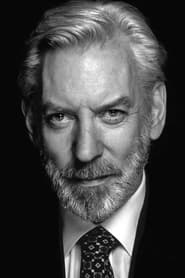
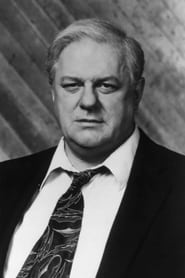
Therefore, if one considers the narrative aspect of "The Rosary Murders", one will be largely disappointed, not only for the evident logical limits, but also for a rhythm at times very slow, probably due also to the literary origin of this film text. But not everything is to be discarded in this film; "The Rosary Murders", as previously mentioned, starts from some points of sure interest and enjoys an effective urban setting and of great impact, capable of framing the ecclesiastical world from a different and unusual perspective. Also, the work of character development is of quality, then surely enhanced by the cast involved in the project, among whom stands out, in the role of the protagonist, Donald Sutherland, dealing with the character of a modern priest, with broad views, perpetually indecisive whether to follow his faith or his rationality as a human being. The supporting characters are sometimes functional, as in the case of the odious Father Nabors (Charles Durning), sometimes well developed but not particularly functional for the economy of the story, as in the case of the journalist Jimenez (Anita Barone), other times essential for the story but not particularly characterized, as happens for the detective Harris (John Danelle).
The direction of Fred Walton ("When a Stranger Calls"; "Jolly Killer") is solid and professional, to which can be recognized the sure merit of a good direction of the actors. The rhythm, however, often lags and scenes of strength and violence are completely excluded, proceeding on the line of the "film for all".
In conclusion, "The Rosary Murders" is a mystery that is at times gripping, thanks to original and interesting points, but too often ruined by screenplay holes and incoherent narrative choices, as well as by a rhythm that is far too slow. Given the names involved, more was expected.
Comments
Comments (0)









Comments