
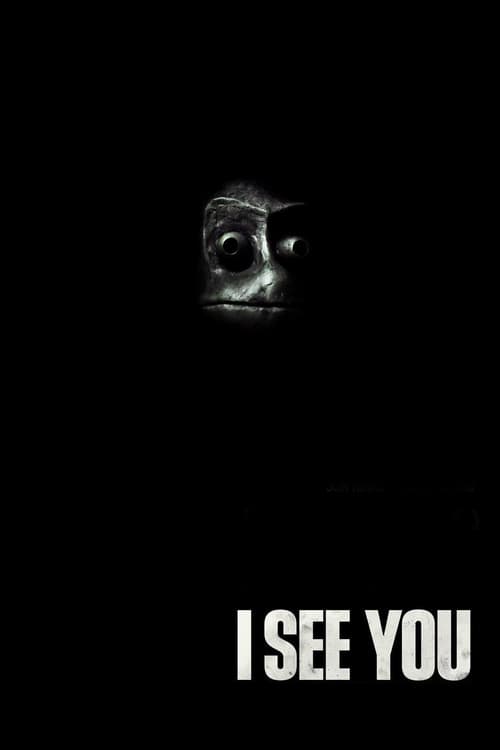
















The Verdict
I See You is a clever thriller: it starts as a tale of domestic unease, almost “small” and everyday, and then slowly expands the scope to transform into a much more ambitious narrative device than it seems at the beginning. Adam Randall works primarily on the unsaid and the cracks: a house, a broken family, an apparently normal community, and that insistent feeling that there is someone (or something) too close.
A Puzzle-Thriller That Disturbs and Surprises, but Falls Short of Greatness
I See You is a clever thriller: it starts as a tale of domestic unease, almost “small” and everyday, and then slowly expands the scope to transform into a much more ambitious narrative device than it seems at the beginning. Adam Randall works primarily on the unsaid and the cracks: a house, a broken family, an apparently normal community, and that insistent feeling that there is someone (or something) too close. There’s no need to exaggerate with horror: here, the tension arises from the detail, the suspicion, the things that move half a centimeter but make you doubt everything.
The film’s strength is its structure. It is one of those titles that build their charm on how they tell the story, more than on what they tell: the screenplay uses changes in perspective, ellipses, and calibrated revelations to make you continuously rethink what you are seeing. It works because the direction accompanies this game with remarkable control of the rhythm: it doesn’t rush when it should insinuate, and it accelerates when needed to build anxiety. The result is that even when you guess there is “a trick,” it doesn’t mean you can predict how it will be executed. And when the pieces come back together, the effect is really satisfying: you find yourself mentally rewinding, retrieving scenes, and rereading them in a different way.
Visually, I See You is more solid than many “catalog” thrillers. The house becomes a small emotional and spatial labyrinth: corridors, rooms, framings that suggest presences at the margins. Randall works well with spaces and off-screen elements, and knows how to build the idea of intrusion without having to show it in a flashy way. It’s a film that puts you in a state of alert, and it manages to do so with relatively simple but well-managed means.
That said, the film has a rather clear limitation: the characters. The story has ambition and a potentially interesting subtext (guilt, responsibility, family dynamics), but the characterization often remains more functional than truly in-depth. The protagonists have conflicts and fragilities, but they remain partly “sketched”: you understand them, but you don’t always feel them. And it’s a shame because a denser writing would have given the film greater emotional weight, making some turns even more incisive. Instead, sometimes, you have the feeling that the plot comes before the people, which is perfectly legitimate for a thriller, but it is also what prevents it from becoming something more memorable.
That’s also the other side of the coin: when a film relies heavily on twists and puzzles, it risks that someone might perceive certain solutions as a bit “adjusted,” or that the ending will feel more mechanical than natural. I See You holds up well in the game, but at times you feel the desire to surprise at all costs. Fortunately, the construction of tension and the effectiveness of the story compensate: the film entertains, surprises, and stays in your head long enough to make you want to discuss it (or watch it again to notice the details left along the way).
In summary, I See You is a very interesting thriller, well-directed, and intelligently structured: a puzzle that works, capable of creating atmosphere and using narration as a tool of unease. If it had dared more on the emotional side and the depth of the characters, it would have made a leap in category. As it is, it remains a recommended viewing: tense, clever, and decidedly more intriguing than the title might suggest.
Excellent tension and perspective mechanism, penalized by somewhat light characters and an emotional potential not fully exploited.
Comments
Comments (0)









Comments