







The Verdict
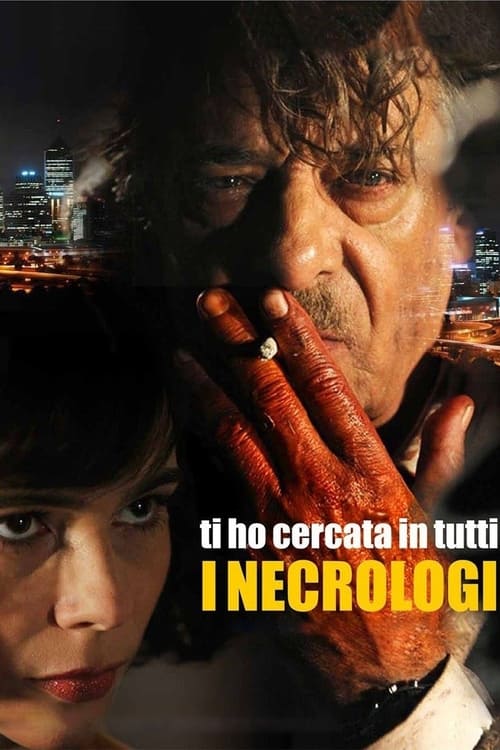
Nikita works as an employee of a funeral agency. One night he is invited to a poker game by Braque, a rich man he met at a funeral.
Nikita works as an employee of a funeral agency. One night he is invited to a poker game by Braque, a rich man he met at a funeral. Nikita is winning almost everything, which pushes him to keep going, until he loses a hand he had bet everything on and finds himself having to pay a debt too large for his pockets. To be able to pay off his debt quickly, the attendees propose a manhunt: Nikita will have to survive for 20 minutes in the forest of the estate where he is located while the creditors hunt him armed with rifles. The man succeeds, he survives, but seems to have enjoyed this experience and asks Braque to involve him in other manhunts where he can always be the target, earning lavish rewards. The beginning of this activity on Nikita's part also coincides with the meeting of a mysterious and fascinating girl named Helena.
Twenty-six years after his debut behind the camera with "Ternosecco", the actor Giancarlo Giannini returns as a director with "I Searched for You in All the Obituaries", a grotesque-toned thriller based on a subject by Lorenzo Cairoli. If the subject is the strong point of this film, which clearly refers to "The Dangerous Game" by Irving Pichel and Ernest B. Schoedsack, mixed to good effect with a lot of cinema about deadly games – "The Implacable" first and foremost – and with a curious mystical subtext... unfortunately it is everything else that then collapses inexorably under the weight of a really bad film.
"I Searched for You in All the Obituaries" – a compliment must be made to the title creators – is a schizophrenic film, constantly balancing between the genre film and the author's delirium. Looking at the result, it is evident that some narrative follies that probably in the intentions would have had to raise the film from a simple action thriller to something more "high". The result is exactly the opposite, because if at the beginning the story promises well and the story holds the attention until almost halfway through, at a certain point everything goes to waste and often any logical connection that links the events is lost, as is the behavior of the characters which has almost of the surreal. But beware, it is not that wanted surreal flavor that gives the film a tone of crazy poetry, rather it is that surreal given by a poor management of the characters and the awareness that the screenplay is very poorly written.
Author of the script is Luca D'Alisera, whom someone will remember as the screenwriter of the slasher "Camping of Terror" directed by Ruggero Deodato, here in collaboration with Ludovica Rampoldi and Massimo Gugliemo. "I Searched for You in All the Obituaries" presents a series of dialogues that to define bad is an euphemism, certainly penalized also by an Italian dubbing sometimes amateurish (the film is shot in English), but which often and willingly turn even dramatic scenes into ridiculous ones. As ridiculous, or rather incomprehensible, are some behaviors of the characters who do and say things without there being a narrative utility, a real consequence on the events and in this the character played by Silvia De Santis is often involved, a woman wrapped in mystery more for a lack of screenplay than for a real narrative need. Moments like the first encounter in the car between Nikita (Giannini) and Helena (De Santis) reach very high peaks of involuntary comedy, as does every exchange of lines between Nikita and his woman (Mary Asiride) and even the mystically grotesque ending, made with a strange (and useless) computer graphics.
One constantly asks "Why" in this film: why do the characters do this? Why do they say this other thing? Why throw in the theme of reincarnation if you can't handle it? Why does Silvia De Santis have the role of the female protagonist if she doesn't have the skills? Why does F. Murray Abraham continue to throw himself away in less than mediocre Italian productions?
"I Searched for You in All the Obituaries" doesn't work: it starts from a good subject and enjoys good means to then throw everything away. An unfinished work that seeks to reflect on too many things, from the search for one's own dimension using the metaphor of the fugitive to the possibility that there is a life after death, mostly using the language of thriller and horror cinema.
Giannini confirms being an excellent actor capable of making his characters rich in nuances, but perhaps it is better that he continues on this now well-worn path because as a director he does not express the best of himself, at least not if he has a screenplay like that of this film as a basis.
Comments
Comments (0)
Comments