










The Verdict
A genetically modified snake escapes from a laboratory following a fire caused by a clumsy scientist. Dr.
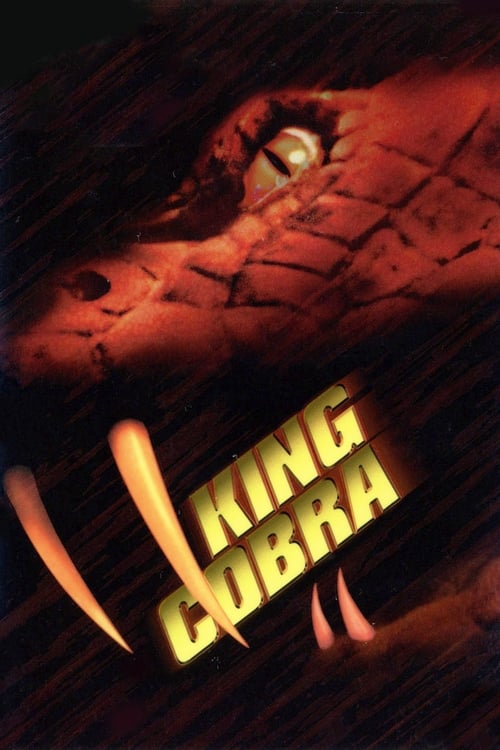
A genetically modified snake escapes from a laboratory following a fire caused by a clumsy scientist. Dr. Burns, one of the scientists who survived the disaster, in which his daughter also lost her life, manages to track down the snake which, two years later, has grown to a length of nearly ten meters. The monstrous reptile has settled in the woods surrounding Filmore, a picturesque mountain town that is preparing to start the annual Beer Festival.
No, we are not talking about a metal group from the 80s, but one of the many beast movies with a genetically altered serpent, ravenous and murderous. It must be said immediately that "King Cobra" is a bad film, and it is difficult for the opposite to occur when dealing with a beast movie made on a low budget for the home video market only. However, unlike many "cousins" that monthly invade video stores, "King Cobra" has something more that makes it a decidedly more enjoyable and appreciable product than most of its peers.
Produced in 1999, when "Anaconda" had recently revived the genre (and indeed one of the alternative titles of "King Cobra" is "Anaconda 2"), the film in question is based on a very thin story that attempts to blend everything possible regarding the topic "killer animals".
We have a genetic experiment, here focused on the hybridization between two of the most lethal snake breeds, the king cobra and the rattlesnake, which inevitably escapes human control, thus leading to the classic eco revenge moral where when man replaces nature, he only causes damage. We also have the classic town festival that seems to be the only reason for the life of a sleepy local community, inevitably marred by the actions of the "monster" but carried on by the obstinacy of those who count, as it has been since a giant white shark threatened the safety of the bathers of Amity during the beautiful season. Fortunately, however, not much weight is given to this characteristic introduced by "Jaws" and we are thus spared the usual "ramanzina" about the human being's thirst for power and money.
The true strong point of a film that makes the already seen its banner is the excellent realization of the creature, fortunately made rigorously with mechanical effects by the Chiodo brothers, directors of the fanta-cult "Killer Klowns" and creators of the mythical Critters.
The characters that populate "King Cobra" represent a bit the sum of the classic attendees of this type of film: there is the doctor protagonist, played by one of the two director brothers (Scott Hillenbrand), his policewoman companion (Casey Fallo), the scientist who wants to make amends for his guilt (Joseph Ruskin) and the herpetologist called in to capture the snake (played by the likable Pat Morita of "Karate Kid"). In a cameo in the role of a caricatured homosexual advertiser also appears Erik Estrada, the Poncherello of "CHiPs".
Directors and screenwriters of the film are the brothers Scott and David Hillenbrand ("Pinata - The Island of Terror"), who manage to build decent suspense scenes and give the film a good pace.
"King Cobra" is therefore superior to many representatives of the same genre released on home video in recent years, but it remains a negligible and objectively ugly little film.
Only for herpetologists and fans of low-budget beast movies.
Comments
Comments (0)







Comments