









The Verdict
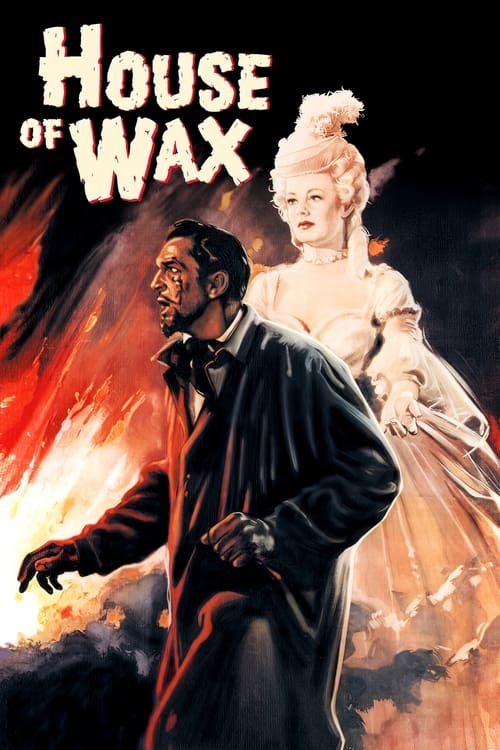
A wax statue sculptor, immediately after securing funding to exhibit his works, is engulfed in an intentionally set fire by a dishonest partner. The laboratory and the statues are completely destroyed, and the sculptor is severely injured.
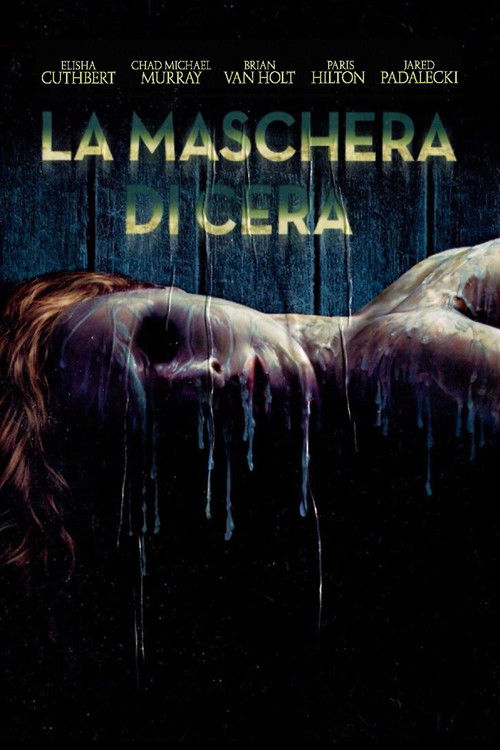
A wax statue sculptor, immediately after securing funding to exhibit his works, is engulfed in an intentionally set fire by a dishonest partner. The laboratory and the statues are completely destroyed, and the sculptor is severely injured. Several years later, the sculptor, confined to a wheelchair and deprived of the use of his hands, opens a new wax museum, and at the same time, brutal murders occur, followed by the theft of the bodies from the morgue. Who is the mysterious disfigured killer? And why do the statues of the wax museum bear a great resemblance to the bodies stolen from the morgue? A rather faithful remake of the 1933 film of the same name directed by Michael Curtiz, "House of Wax" is also the film that launched Vincent Price as an icon of fantasy cinema (before this film, he had acted in "The Invisible Man Returns", a sequel to the famous "The Invisible Man" of 1933) after playing roles in films of the most varied genres. Moreover, this film also has the merit of being one of the first films to be shown in 3D, a technique that has since been widely used in fantasy/horror cinema, up to recent years, to counter the appeal that television was gaining with the public. "House of Wax" is a small classic of 1950s horror/thriller cinema, but unfortunately, it has not aged very well, unlike its contemporaries. To the modern viewer, this film may sometimes seem cloying, but it is undeniably full of charm for numerous stylistic solutions that, even today, remain highly valid. The strong stage presence of Vincent Price dominates the entire film, perfect in the role of the ambiguous sculptor, who from this moment will become a true star of the genre. Dutiful is the direction of De Toth, who in several points manages to create a perfect atmosphere of unease (above all, the scene of the morgue), supported also by an effective photography and a suggestive soundtrack. In contrast to these positive elements, some less fortunate solutions are found: some script choices are poorly aimed, especially building the story on the mystery related to the identity of the killer, when then the final solution turns out to be the most obvious and predictable, thus nullifying the sense of surprise that could have been induced in the viewer (but this is not an exclusive of this remake, since the original script of Curtiz's film also provided for it). Moreover, this film, despite its brief duration (just over 80 minutes), has some heavy drops in rhythm, especially in the central part, which do not manage to keep the viewer's attention and involve them properly. It is needless to underline the fact that this film, despite the theme treated and the ban on minors, is completely devoid of "strong" scenes, considering the period in which it was produced. In conclusion, "House of Wax" is a fascinating and generally well-made film, but, at times, not very engaging and not particularly suitable for viewers accustomed to the frenetic and visceral horror of the postmodern/contemporary era.
Comments
Comments (0)







Comments