



















The Verdict
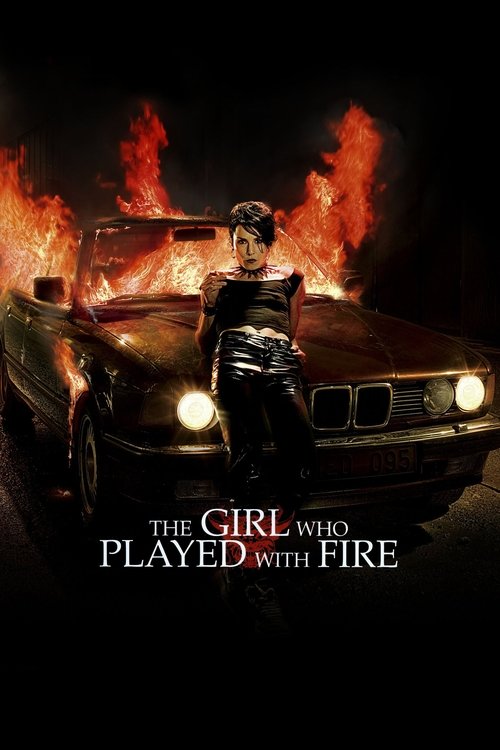
Two journalists from the Millennium magazine are killed just before publishing explosive revelations about the sex trafficking in Sweden. Lisbeth Salander's fingerprints are found on the murder weapon, making her immediately wanted but currently untraceable.
Two journalists from the Millennium magazine are killed just before publishing explosive revelations about the sex trafficking in Sweden. Lisbeth Salander's fingerprints are found on the murder weapon, making her immediately wanted but currently untraceable. It will be up to her and her friend Mikael Blomkvist (director of the Millennium magazine) to prove her innocence and uncover the real culprits. As Lisbeth proceeds with her investigations, however, she realizes that she will have to face the ghosts of her past once and for all.
Less than a year after the theatrical release of "The Girl with the Dragon Tattoo," the second installment of the saga created by Stieg Larsson hits the big screen. Behind the camera, we no longer find the talented Niels Arden Oplev but Daniel Alfredson (whom we will see again in the third chapter "The Girl Who Kicked the Hornet's Nest"), who gives the film a deliberately more frenetic and fragmented style, suitable for an extremely important and multifaceted chapter of the saga that, however, failed to do justice to its literary counterpart.
Numerous details from Larsson's book have been omitted (it is still 754 pages) and what emerges is a film undeniably successful, especially for those who have not read the writer's work, but less cohesive and convincing than the previous one due to the numerous cuts made in the screenplay, despite the runtime being relatively high on this occasion as well (124 minutes).
The film, however, still appears well-crafted on the technical side: Alfredson's direction is very different from that of his predecessor, but manages to give a certain dynamism to the narrated events and also allows for some well-executed moments, while the photography abandons the dark and cold tones of "The Girl with the Dragon Tattoo" for a more gritty and "direct" approach.
At the center of the events remains the Salander/Blomkvist duo, once again brought to the screen by the talented Noomi Rapace and Michael Nyqvist, but this time things are more complicated as the two continue their investigations separately: this will allow Lisbeth to employ unconventional investigation methods and, at the same time, delve deeper into her tragic past and confront the demons of her childhood, which have suddenly and violently returned to her life.
A winning team doesn't change, and once again the two work perfectly together: besides them, there are a couple of new extremely interesting characters, among whom stands out the huge blond and childish Niederman who does not feel pain, a real tough nut for Lisbeth but a mere arm of a much more slippery and dangerous criminal mind.
The theme of violence against women remains at the heart of the story, this time further expanding the discussion on sexual violence, and the film itself maintains a brutal and direct charge like a punch in the stomach until the inevitable showdown finale that, however, leaves room for a TV-series-like cliffhanger.
This is because "The Girl Who Played with Fire" is, especially in its cinematic essence, an intermediate work, but obviously necessary, that paves the way for what will happen in the third and final episode.
The film, therefore, maintains its importance in the economy of the cinematic saga, but one gets the impression that during the editing phase important elements were omitted, leading to rushed and superficial passages that, on the contrary, would have deserved to be further addressed in order to do justice to Larsson's work.
In short, compared to what was done with "The Girl with the Dragon Tattoo," Alfredson's work represents an evident step backward due to a screenplay that is sometimes rushed and a couple of not entirely successful passages (the confrontation between the boxer Paolo Roberto, who plays himself, and Niederman seems a bit parodic), but still indispensable to prepare for the upcoming chapter.
"The Girl Who Played with Fire" is worth watching and represents a good product, once again distant from Hollywood logics and endowed with a personality of its own, which, given the times, is not something so common.
Comments
Comments (0)








Comments