
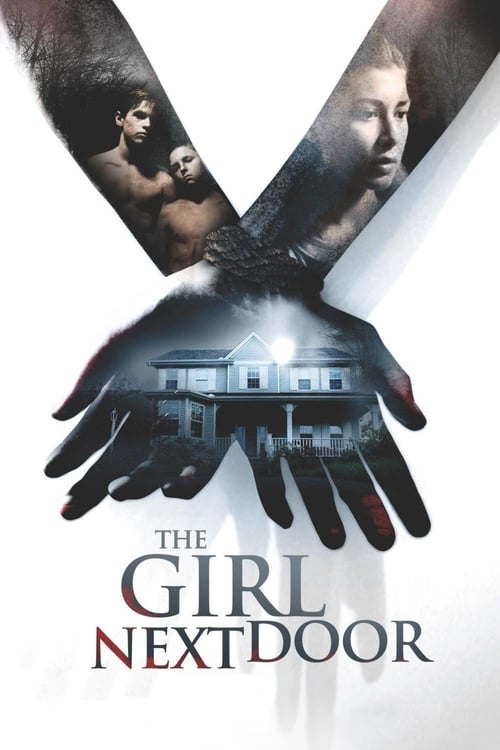
















The Verdict
Meg, a city teenager, and her younger disabled sister Susan were entrusted to the care of Aunt Ruth, a sort of educational stepmother who oversees all the neighborhood kids. The woman's antipathy towards the newly arrived girl is evident, but it erupts into pure madness when Meg forms a tender friendship with David, the neighborhood nice guy.
Meg, a city teenager, and her younger disabled sister Susan were entrusted to the care of Aunt Ruth, a sort of educational stepmother who oversees all the neighborhood kids. The woman's antipathy towards the newly arrived girl is evident, but it erupts into pure madness when Meg forms a tender friendship with David, the neighborhood nice guy. With the help of some children from the country, Ruth hatches a mephistophelian plan against the girl, keeping her segregated in her basement. In 1965, Indiana, USA, a girl named Sylvia Likens was held prisoner by Gertrude Baniszewski, a woman who was supposed to take care of the girl and her sister. With the collaboration of some neighborhood kids, the woman kept the girl prisoner, torturing her and finally killing her in such an atrocious manner that they described the case as the most terrible crime ever committed in the state of Indiana. A gruesome true story, really happened fifty years ago. "The Girl Next Door", in turn based on the novel of the same name by Jack Ketchum, tells precisely the events inspired by the brutal murder that occurred in the 1960s against the girl. Stephen King has expressed more than positive opinions about the film. He seems to have said that it is the first truly shocking film since the times of "Henry: Portrait of a Serial Killer", a sort of dark version of his "Stand By Me". Perhaps the King of Horror exaggerated in saying so because many disgusting, unpleasant, and unhealthy films have come out in recent years, but it is known that he knows about horrors, so we can do nothing but trust him. That said, anyone who has seen the film knows very well that getting to the end of the film is not a walk in the park. Set in the 1950s, the film starts as an amarcord, not the Fellinian one nor the nostalgic one of Peggy Sue and drive-ins, but memories of a childhood that marked the lives of many people, ghosts of the past that can never stop manifesting themselves, inextricable tumors that pulse under the skin. The adult David, in the very first scenes of the film, hints that his childhood-related memories are not rosy and that his life has been ruined by something that still lives inside him, in advanced age. All the fault of Aunt Ruth, a middle-aged woman who welcomes into her home all the neighborhood kids. And also the two new girls just arrived in the city, Susan and Meg. With a story like that, in which the main elements are a perverse woman, violent children, sexual immorality, and abuse against a fourteen-year-old (in reality, Blythe Auffarth was twenty-two years old at the time of the film), the possibilities of creating a film that would talk about itself for exaggeration and that would generate a horde of curious perverse-minded people were within reach. In reality, the depravities are more told than shown (once again, show, don't tell proves to be an effective card to play), so do not expect to see blood or nudity because you chose the wrong story. This does not make the film any less valid. On the contrary, the violence, some of which are truly terrible, are only glimpsed and contribute to the result towards a non-negligible effectiveness. A good directorial effort for Gregory Wilson, in his first work of some substance, a work for a few pennies shot with a coldness worthy of a professional in the genre. There is also good management of the actors, young unknowns and not always up to the task, but who seem credible in their disgusting roles as tormentors and slaves of a diabolical perverse witch. Every now and then, the attention wanes, especially during the long monologues (crazy enough) of Aunt Ruth about the education and respect that Meg should have, but everything picks up in the last part, where the violence explodes.
Comments
Comments (0)














Comments