







The Verdict
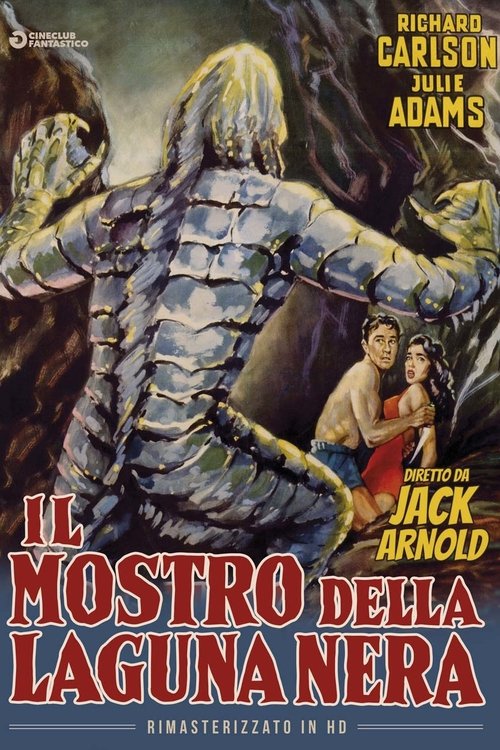
A group of scientists travels to the black lagoon to attempt to capture the amphibious monster that inhabits it. After several failed attempts, the monster is captured and brought to the city where it is imprisoned in an aquarium to be studied and serve as an attraction for tourists.
A group of scientists travels to the black lagoon to attempt to capture the amphibious monster that inhabits it. After several failed attempts, the monster is captured and brought to the city where it is imprisoned in an aquarium to be studied and serve as an attraction for tourists. Here, the monster begins to become attached to Helen Dobson, the attractive young woman who works at the water park. During a demonstration, however, the monster manages to free itself and, after causing panic among the people, it flees into the sea. The authorities are on the trail of the creature which, meanwhile, attacks anyone who crosses its path with the intention of finding Helen.
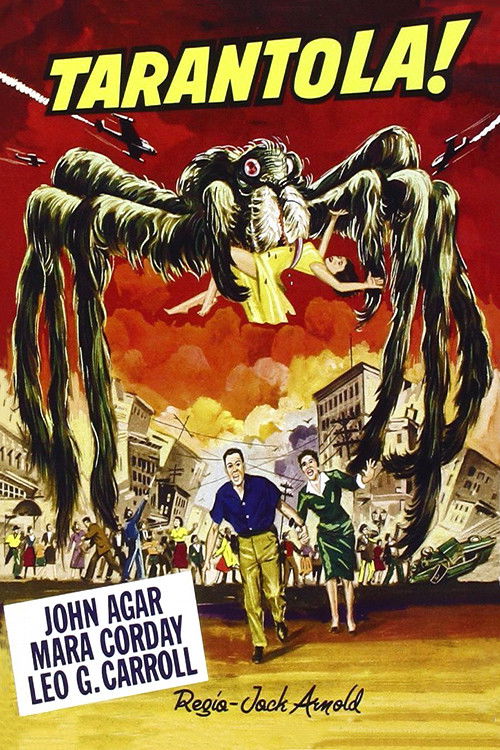
After the enormous success achieved in 1954 by "Creature from the Black Lagoon", which in a short time had become a cult film capable of reviving the old horror glories of Universal Pictures, the famous production studio immediately puts a sequel into production and in 1955 "Revenge of the Creature" is released in American theaters. At the helm of the operation is once again Jack Arnold, who at that time was a true celebrity of fantasy cinema (a few months later he will also direct "Tarantula" and "The Beginning of the End"), before moving almost full-time to television.
Watching "Revenge of the Creature" one immediately realizes two things: the greater wealth of the budget compared to the previous film and the scarcity of ideas at the base of the screenplay.
"Creature from the Black Lagoon" was a small film for Universal that made a lot of money worldwide, a simple and not very original idea (the adversity of nature in contrast with civilization and the relationship between the beautiful and the beast) that gave rise to a beautiful example of horror cinema, rich in humanity and adventure, in which the invention of the amphibious monster will weigh heavily on the cinema to come. It was a small film, as I said, in which the appearances of the monster were dosed to create tension, surprise and hide the rubber suit worn by the actor; in the sequel, however, Gillman, as the monster is called, is not only on stage from beginning to end, becoming the true protagonist of the story, but is also very well realized, with a "functioning" respiratory apparatus. It goes without saying that "Revenge of the Creature" loses that more markedly horror aura focused on mystery and tension to devote itself to spectacle and wonder given by the presence of the creature. The problem is that the monster is shown on screen so often and so well that the sense of threat is immediately lost: Gillman, although perceived as dangerous by the film's protagonists, is never really so for the viewer. In this sense, Arnold has rightly focused on the tragedy of Gillman's figure, taken away from his habitat, subjected to experiments and used as a circus attraction, in order to justify his "revenge" and bring the viewer to take his side.
In many ways, "Revenge of the Creature" tries to imitate the plot of the conflict between primordial nature and metropolitan modernity, as had happened in past fantasy cinema successes like "King Kong" and "The Lost World", but unlike these titles, "Revenge of the Creature" lacks epic, the conflict between the two realities does not actually occur and anyway the reduced dimensions and humanoid features of Gillman do not favor the destructiveness of the creature in its irruption into the metropolitan environment.
We talked about the lack of ideas, in fact this sequel made in haste and in a hurry when the previous chapter was still in cinemas, tends to reprise the plot of the other film (with Gillman's infatuation with a human and confrontation with a brave action man to fight over the girl), reiteration of themes already used previously by other monster movies (the already mentioned conflict with the urban dimension and subtraction from the natural environment) and above all a too static and repetitive central part, visibly lengthened to reach a cinematic duration. The beginning in the black lagoon, in fact, is very nice especially because it recalls the previous film, as is the high level of the final part with the monster's ambushes, certainly more horror. The central part in the water park, on the other hand, is repetitive and even boring, lacking memorable moments and focused only on Gillman's growing interest in Helen.
Overall "Revenge of the Creature" is an enjoyable film but far inferior to "Creature from the Black Lagoon", with frequent moments of stagnation and a standardization to the fanta/horror genre of those years that underscores its creative haste.
In a small role appears a young Clint Eastwood in the role of a scientist.
Shot in 3D. A third and final chapter titled "The Creature Walks Among Us" will follow, directed in 1956 by John Sherwood.
Comments
Comments (0)







Comments