





El Veredicto
Tres historias que tienen en común la secta psico-religiosa Taylor-Errickson. «Shakti».
Tres historias que tienen en común la secta psico-religiosa Taylor-Errickson.
«Shakti». Una periodista, decidida a escribir un dossier sobre el asesinato de un adepto de la secta Taylor-Errickson ocurrido en 1988, se dirige al hospital psiquiátrico donde está recluida la mujer que se consideró responsable del asesinato; pero la mujer afirma ser inocente y que el verdadero autor del asesinato fue un espíritu maligno.
«Devi». Un joven, obligado a consultar a un psiquiatra debido a problemas de manejo de la ira, se encuentra en tratamiento con un médico que aplica métodos bastante discutibles.
«Kalì». Un conocido sanador se encuentra curando a una mujer de un doloroso rígido de la columna vertebral, pero al enderezar la espalda de su paciente libera un espíritu parásito que se había instalado en el cuerpo de la mujer.
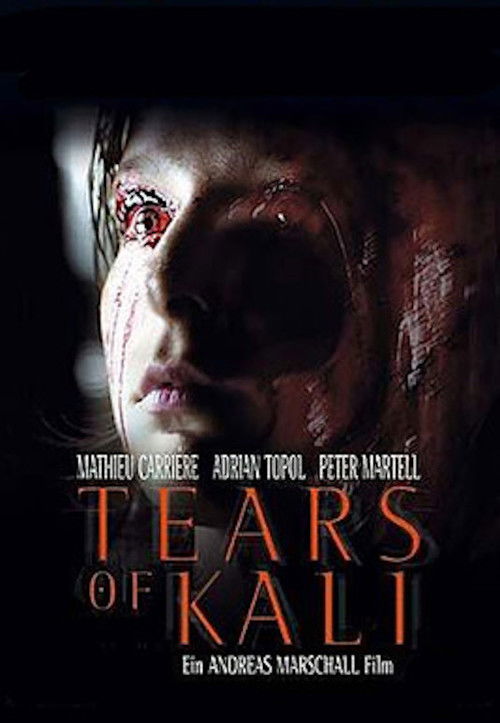
«Lágrimas de Kalì» es una pequeña película alemana de 2003, filmada con pocos recursos pero con gran maestría; las tres historias que la componen son un concentrado de sadismo y crueldad, definitivamente poco adecuadas para estómagos débiles. La película tiene claras intenciones de crítica hacia las numerosas sectas pseudo-religiosas que proliferaron entre los años 70 y 80 en medio mundo y su resurrección conceptual en la segunda mitad de los años 90 a través de la moda oriental del new age; en este caso vemos ascender al papel protagonista a una secta india (pero fundada por occidentales) que tiene como punto focal el logro de un éxtasis místico que pone en comunicación espíritu y cuerpo, pero lo hace con medios a menudo tan drásticos como crueles y autolesivos. Veremos entonces a una chica que se corta los párpados de los ojos para poder «ver», un tipo que sale literalmente de su piel y así sucesivamente, en un torbellino de sangre y locura.
Las tres historias son muy variadas: la primera tiene una estructura narrativa y algunas soluciones visuales que recuerdan de cerca los horrores orientales modernos, con una escena de infarto ambientada en un ascensor; la segunda historia es la narrativamente menos articulada, pero probablemente la más impactante; la tercera es la más clásica, digamos casi «Creepshow», con demonio invisible, muertos vivientes y algunos guiños a «Evil dead» de Raimi.
Diversas y sabrosas son también las citas del cine de género italiano, con claras referencias a las películas más conocidas de Fulci (los ojos que gotean sangre y la astilla de madera en el ojo, respectivamente provenientes de «Paura nella città dei morti viventi» y «Zombi 2») y una cita explícita también al western espagueti (se habla de «Keoma»).
«Lágrimas de Kalì» es pues un ejemplo maduro de horror low budget que celebra la tradición de las películas de episodios, tratando la materia disponible de manera cruda y repulsiva. Vale la pena darle un vistazo.
Comentarios
Comentarios (0)









Comentarios