


The Verdict
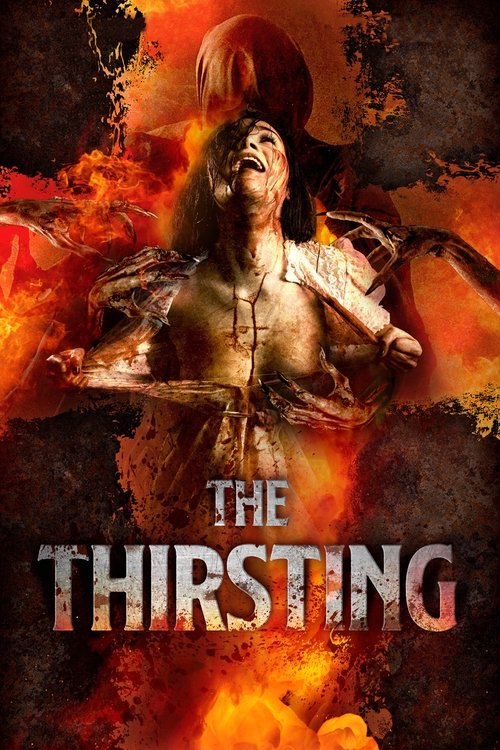
The tormented Sister Catherine assigns her students a research project on pagan deities, in order to conduct a comparison with the Catholic religion. The five girls come across an ancient book that talks about the figure of Lilith, mother of all demons and symbol of lust and sin; Clarissa pushes her friends to invoke the spirit of Lilith, as described in the book, to make their erotic desires come true.
The tormented Sister Catherine assigns her students a research project on pagan deities, in order to conduct a comparison with the Catholic religion. The five girls come across an ancient book that talks about the figure of Lilith, mother of all demons and symbol of lust and sin; Clarissa pushes her friends to invoke the spirit of Lilith, as described in the book, to make their erotic desires come true. It seems that nothing has happened, but in reality the girls have actually succeeded in contacting Lilith, who now animates their dreams and turns them against them.
According to the Qabbalah, Lilith was the first woman that God placed beside Adam. The myth tells that Lilith, tired of being subjugated by her companion, rebelled and invoked the name of God, with the consequence of being cast out of Paradise and replaced by Eve. Lilith then dedicated herself to sin and vengeance, united with the demon Asmodeus and thus engendered most of the demons of Jewish mythology. But Lilith, or rather a proto-form of her, already appeared in Mesopotamian mythology with more "monstrous" characteristics and later became a universal symbol of seduction and lust, as well as, in more recent years, of female revolution. There are many films in which this demon is cited as a synonym for evil (we remember, for example, among the most recent, "The Chronicles of Narnia"), but few in which it appears in the flesh to bring destruction and seduction, among which we can remember "Tales from the Crypt: The Pleasure of Blood" and the recent "Succubus".
The director and screenwriter Mark Vadik decides to debut by bringing to the cinema once again the myth of the mother of all demons, promoting her as the sole focal point around which the entire film revolves. Justifiably, Vadik chooses to delve into the aspect that makes Jewish Lilith distinctive from the vast sea of mythology, namely the erotic subtext that arises from her image, and to do so he decides to create a quasi-slasher in which everything is subordinate to eroticism. If from a certain point of view Vadik's approach might seem fascinating, in reality the film turns out to be a bit too ramshackle and sacrificed to the onanistic fantasies of the potential viewer. The story soon appears to be a simple pretext to bring young actresses ready to undress at every opportunity and gyrate in "forbidden" fantasies that include lesbian acts, sadomasochism, fellatio, rapes, incestuous couplings and more, all filmed with such complacency that it forcefully brings the film close to that type of films that walk the thin line separating soft-core from hard-core.
The screenplay is full of inconsistencies and superfluous elements, often made such for the simple reason of being mentioned and never explored, despite their potential narrative importance. Sister Catherine's past, made up of violence and pagan rites, is suggested by some intrusive and frankly useless flashbacks that lead nowhere, as well as Father Palmer's ambiguity, present in three or four scenes then inexplicably abandoned. Ridiculous and gratuitous to the extreme the two cameos of the usual "tramps" found in the forest or at the corner of the street put there only to warn the protagonists that they are destined for a bad end. Then it turns out to be completely insufficient what could have been the key element of the story, namely the theme of the relationship between religion and sexuality, something that would have found very fertile ground here. Giving a young and attractive nun one of the main roles and setting the entire film in a Catholic girls' school could have given the screenwriter the opportunity to develop the theme of sexuality also at a more "deep" level and not only devoted to the prurient curiosity of accatto, but nothing, the road is not even considered and another example is the total lack of psychological construction of any character.
The horror aspect is represented by the contrappasso inscribed in the girls' sexual fantasies, but in the end it is an element of little importance for the story, which always and anyway prefers erotic suggestions to blood and violence.
It is worth noting the extreme low-budget with which the film was made and evident from too many elements, starting from the locations (the school is inexplicably and ridiculously represented by a cabin-accommodation of the five students only, the lessons are held outdoors, among the woods, and almost always they are physical education!), the poverty of the actresses' acting and the film's extremely squalid aesthetic, which makes it look like a low-budget film from the late 1980s.
In a cameo appears incredibly Mickey Rooney.
Comments
Comments (0)


Comments