













The Verdict
The corpse of a handcuffed woman is found in the Hudson River. A few hours later, the corpse of a man, also handcuffed, is found at the bottom of a public swimming pool.
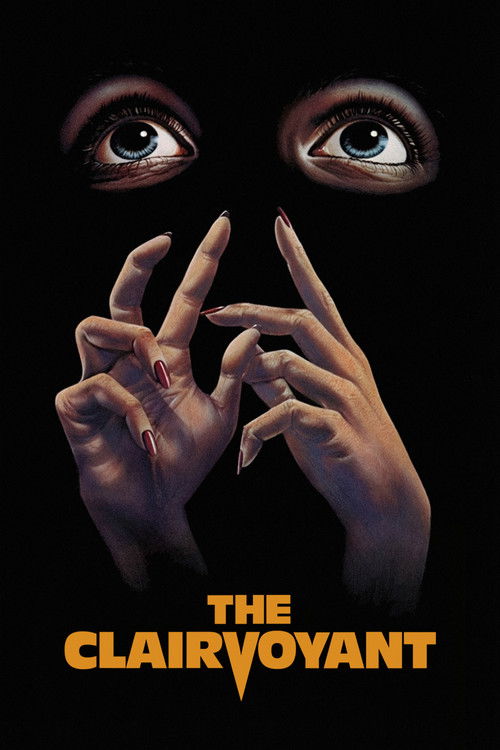
The corpse of a handcuffed woman is found in the Hudson River. A few hours later, the corpse of a man, also handcuffed, is found at the bottom of a public swimming pool. The police set out to track down the killer, and a paranormally gifted artist warns them that she had predicted the murders by perfectly drawing the event. Meanwhile, another handcuffed man is found dead in a hotel room, and the artist depicts what appears to be her own death.
Dated 1982 – though one would give it at least 10 more years – « The Hour That Kills » (known in its home country also with a more pertinent title « The Clairvoyant ») is a made-in-U.S.A. thriller that, seen today, inspires much sadness. No, in this case, it is not a matter of regretting the good old days, but rather enduring over 90 minutes of boring and unlikely investigations into a case that, if handled differently, would undoubtedly have been very interesting.
The subject of « The Hour That Kills » is not bad at all, a story that promised well on paper, a mix of horror and thriller that recalls the atmospheres of some old albums of the nostalgic « Dylan Dog », with a final solution that perfectly puts all the elements back in place. The presence of the psychic who helps in the investigations is here more functional than in other films (and there are many!) especially for the « novelty » of the premonitory drawings that will be taken up in almost identical manner in the series « Heroes ». Unfortunately, this film does not keep its promises and, in the end, shows itself for what it is, namely poor under almost all points of view.
Let's start by saying that the means were few and it is clearly visible, since the photography and the sets are really bad. The film is set mostly indoors and the decor always looks rather shabby as if they tried to recycle sets from other films or, more likely, rented apartments for a few days (or a few hours, depending on the cases). The same photography, sometimes washed out and sometimes too dark, makes this film, as we said, look much older than it actually is. The film times do not fare well either, here stretched to the extreme, with worrying dead spots and rhythms of a TV movie. Not surprisingly, in fact, the Italo-American director Armand Mastroianni has a filmography composed almost exclusively of TV movies and series, including the well-known « Friday the 13th », « Dark Shadows » and « Nightmare Café ».
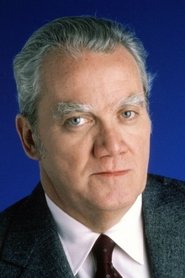
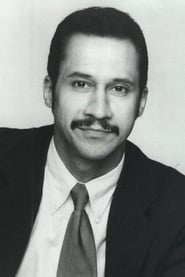
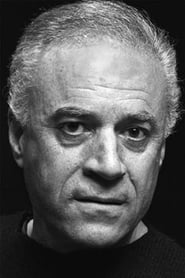
Surprisingly, however, there is a rather convincing cast composed of Perry King (« The Day After Tomorrow ») in the role of the journalist looking for a scoop, Norman Parker (« The Falcon of Vanity »; « Bullworth – The Senator ») in the original role of the detective with the hobby of cabaret, and Elizabeth Kemp (« Faceless Visions ») in the role of the psychic artist.
The screenplay, written by Mastroianni himself along with Johnathan Ringkamp, presents several flaws that take shape especially in banalities that clash with the serious tone of the entire film; above all, it seems highly unlikely the way the investigation is conducted by the New York police who, instead of collecting evidence and working seriously, carry out the investigation by examining only the drawings of the psychic. And what if she was taking them all for fools? These are minor details (not so minor!) like this that completely collapse a film. Otherwise, the conclusion is satisfying, although highly predictable, it gives a sense of satisfying completeness to the story and the characterization of some characters, such as the aforementioned policeman with a marked sense of humor, is also good.
One has the general impression that « The Hour That Kills » is a definitely wrong film, a wasted opportunity, a bad film that starts from an interesting premise. Perhaps it is films like this, unknown and objectively poorly made, that today would deserve a remake.
Comments
Comments (0)





Comments