











The Verdict
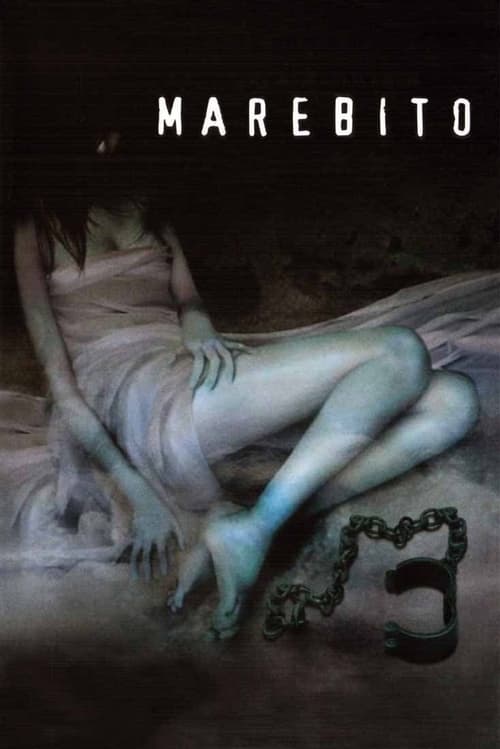
Masuoka, a former TV cameraman, is now a lonely man with no job or family; he spends entire days locked in his small apartment filming and observing, thanks to a series of cameras installed by him in various points of the city, images that manage to show the origin of terror.
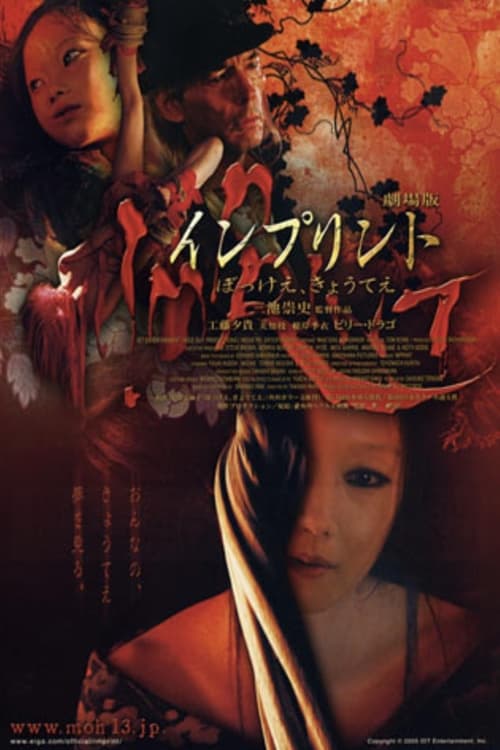
Masuoka, a former TV cameraman, is now a lonely man with no job or family; he spends entire days locked in his small apartment filming and observing, thanks to a series of cameras installed by him in various points of the city, images that manage to show the origin of terror. One day he comes across the suicide of a man in the subway and thus, to conceive and see the horror that drove the man to commit that crazy act, Masuoka goes to the place. Exploring the undergrounds of the subway, he discovers that beneath the city extends a mysterious underground world where he finds a girl, completely naked and chained to the wall, who seems to have never had any kind of education. Masuoka decides to free the girl and take her to his apartment, he will begin to educate and raise her, but he will soon discover that the girl is a terrible creature that finds in blood her only nourishment. Presented in competition at the 61st Venice International Film Festival 2004 in the "Digital Cinema" section, "Marebito" is perhaps one of the best works from the East and certainly one of the most intriguing and unsettling Japanese films to have reached us today. Shot in just eight days and entirely in digital, the film is a double reflection: on the one hand, it seeks to meditate on loneliness, on the other, it carefully reflects on what the concept of terror, of fear is. Regarding the first point, loneliness, it has never been represented so masterfully; "Marebito" narrates in a sublime way the deeds of a man who is really "alone", who does not play any useful role in society, which is seen as a vast and cold ocean in which each life is completely independent of the others, and is of no importance to anyone; a man who has no way to converse with anyone except himself; a man who has lost the primary purpose for living for years and thus wanders, doing what he can, filming everything that manages to communicate terror and suffering to him in order to better conceive the genesis of fear. Regarding the second point, the concept of fear, it is expressed in forms that are both evident and poetic, clearly showing horror in its most primitive and innocent forms; it is thus that we appear "F", the girl, a being who embodies evil par excellence but who is shown in primitive forms (she cannot communicate, moves with difficulty and can barely stand upright) and extremely innocent. But this concept is also more clearly expressed by the figure of Masuoka, who is in a position of continuous search for terror and by the frequent detailed shots on the gaze (one of all, the initial and final shot) that manage to portray the concept of "fear" in full. But behind these double meanings there is not a poorly made, pretentious product whose only strong point would be philosophical and abstract reflections, this "Marebito" uses these concepts to highlight and exploit to the best a story that already has excellent potential from the start, so much so that, even by analyzing only the horror aspect of this work, one is left astonished and terrified, because one is faced with a product that shows horror in forms different from the usual Japanese horrors, a more fantastic and unsettling horror represented by the "Dero" terrifying, viscous and quadruped creatures that live in the dark abysses of the city and that manage to evoke the terrifying creatures of that British horror which is "The Descent". But let's move on to the technical aspect; the film bears the signature of one of the most famous Japanese directors, namely Takashi Shimizu, a director who has always been only and exclusively involved with the "Ju-on" series, directing TV versions, cinematic versions, sequels, and even remakes, and who has given with this "Marebito" the proof of being an excellent director capable of visually representing a screenplay that has nothing to do with the "Ju-on" saga. For this film, Shimizu adopts a remarkable directorial tactic, he does not limit himself to a banal and elementary representation of the screenplay, but always seeks particular and effective shots that considerably raise the level of the film. Besides Shimizu, great merit goes to the leading actor, Shinya Tsukamoto ("Tetsuo - The iron man"; "Ichi the killer"), in that the entire film is entirely entrusted to his performance and his great ability to communicate much more visually than verbally because in sporadic occasions he will find himself making a "two-person" conversation but he will always be facing monologues, between him and his mind and that is why in "Marebito" there is a massive dose of voice-over. But also regarding the photography, one is left amazed; one would expect the worst for a work entirely shot in digital, but excellent work has also been done under this aspect that manages to give the work a particular and very effective photography. In conclusion, "Marebito" turns out to be a remarkable product, fascinating but above all poetic from all points of view. A film that has demonstrated Shimizu's great directorial talents and also that in the East, films with astonishing results can be produced even by moving away from the usual and now worn-out ghost story themes. A film absolutely worth seeing.
Comments
Comments (0)





Comments